Giorgi Khmaladze
World-renowned Georgian Architect
For Georgian architect Giorgi Khmaladze, architecture is a process of thought and research. In our interview, we discussed his vision of modern architecture, the principles that guide his work, and why he strives to ensure that none of his projects repeat one another. For Giorgi Khmaladze, passion lies in both the process and the result — the journey from idea to reality, where the outcome becomes part of diversity and experimentation, creating a new story within the space.
How do you begin the process of creating a space — from idea to sketch, or from sketch to sensation?
Architecture is a multifaceted field. For me, the starting point of spatial planning is the environment in which I must fulfill the design task. At the initial stage, I familiarize myself with the project’s content, purpose, the client’s wishes and requirements, as well as all limitations and frameworks, to determine the main accents and understand how and to what extent I can express architectural freedom and ambition.
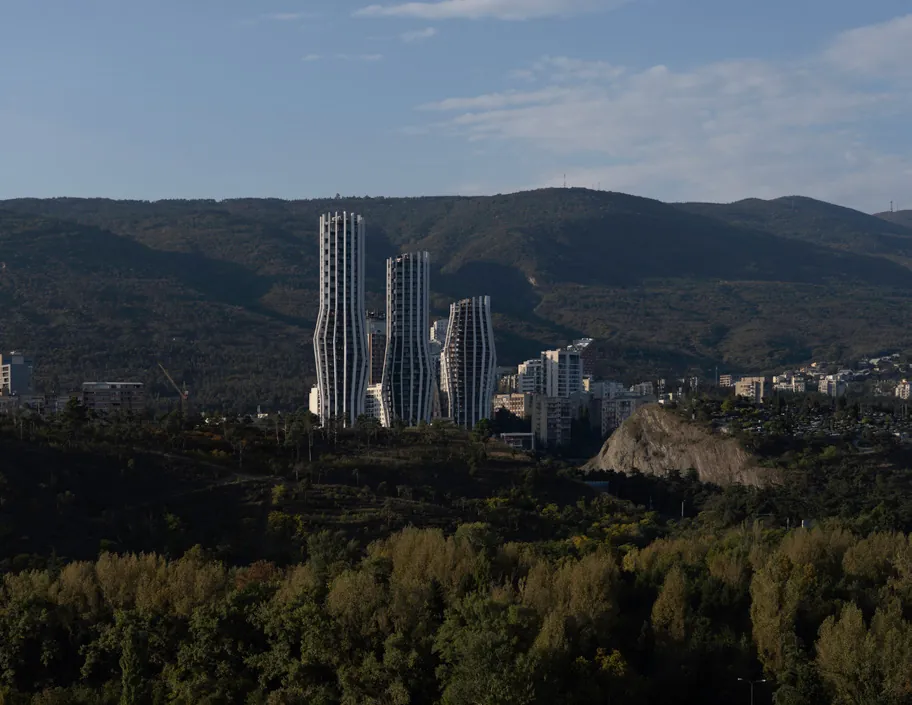
The buildings you’ve designed have introduced a new language into Georgian architecture. What do you think they say about the cities in which they were built?
Buildings and the material environment in general are a direct reflection of the time, environment, and society in which we live.
Do you see a building as a living organism, and how does it change over time?
Certainly! A building is a living organism that, over time, reshapes the city’s image and human consciousness. If the project is successful, it brings happiness to both society and the city.
When working on a new project, what do you listen to most — the place, the people, or your own intuition?
Designing is not a linear process; it involves many details. There are often differences of opinion, discussions, and a search process that leads you in different directions. When working on a project, it is important to listen to external data first, as it makes it easier to hear your own voice later. I do not like repetition, so I always try to create something new, as much as the project’s content allows. With this approach, it is difficult to determine the final result, because there is no pre-existing formula.
What is your attitude toward trends — do you follow them, support them, or view them with suspicion?
Trends are formed according to the field’s main global challenges. Today, everything is united around the idea of harmonious coexistence between architecture and the environment: sustainable development, green archi- tecture, energy efficiency, sustainable solutions, and a whole range of stages involved in construction. In our current reality, it is difficult to consider all factors simultaneously due to economic and social conditions. However, there are aspects we do take into account and successfully implement in our projects.
Is there an element you always include in your projects?
I love nature very much and try to incorporate greenery and natural elements wherever possible.
How has your professional vision changed over the years?
I have worked in architecture for a total of 13 years. For a while, I was mainly engaged in design. I fulfilled my inner need for architecture by participating in various competitions, where I had more freedom. From 2010 to 2012, I completed my master’s degree in the United States and have been actively working in the field since then. Time changes many things. Every project brings a new experience. I have always sought, and still seek, diversity. When you try to create something new, you naturally move toward unknown paths and solve problems along the way. All of this has given me more courage, self-confidence, and public trust.
What is the greatest charm of architecture for you? Why did you choose it as a profession?
My father is an architect. Our entire childhood home was like a workshop, and I was part of it all. I helped my father, and I used to sketch and make models for myself, so I never really questioned my professional path— it happened naturally. As for the main charm, I enjoy both the process and the result.
Tbilisi is a city that grows, changes, and sometimes loses itself. How do you, as an architect, see it?
Tbilisi’s architecture is eclectic. It is a good time for those who have the passion, energy, and desire to put effort into creating many interesting projects.
Your projects have received great international recognition. What does this success mean to you?
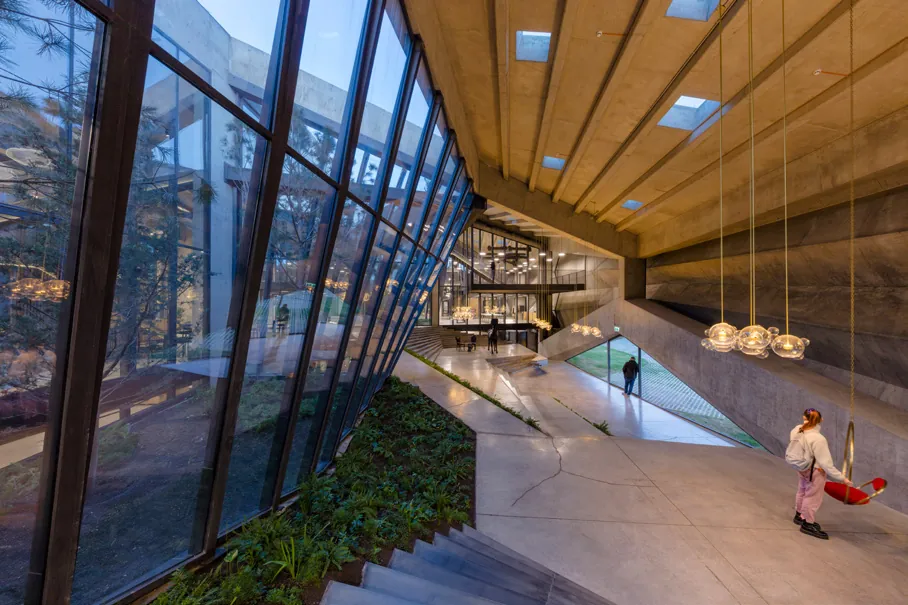
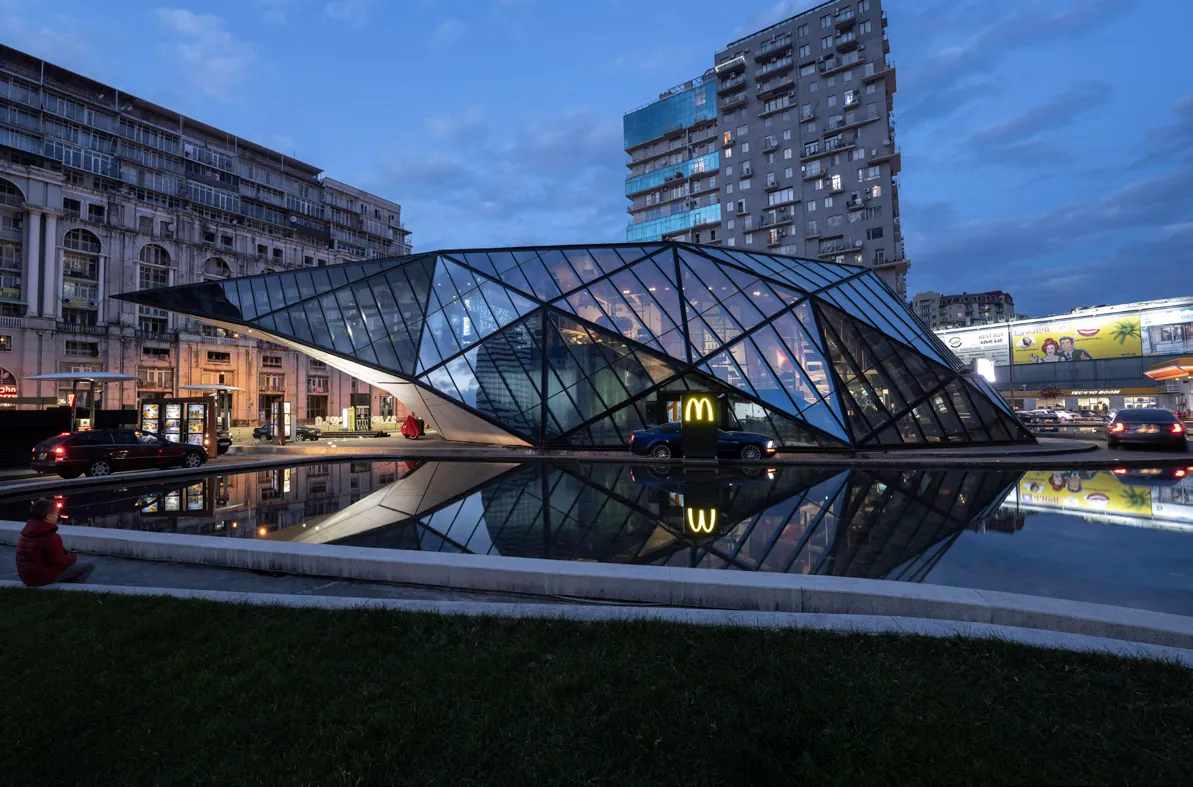
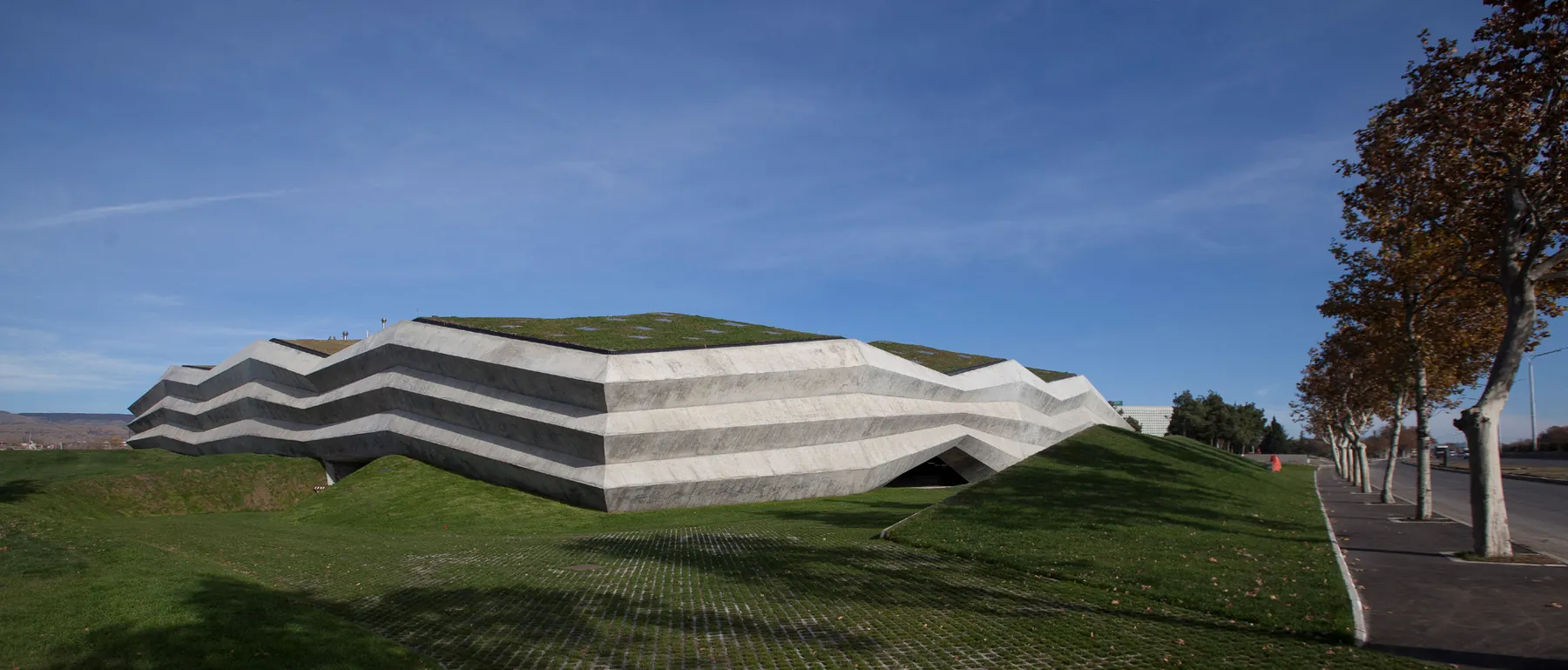
Three of my completed projects have achieved international success: the Batumi SOCAR Gas Station + McDonald’s and the Meama Coffee Factory. International success is an additional source of motivation, incentive, and energy for me. The competitions were hosted on online platforms. ArchDaily and Architizer are among the world’s largest architectural platforms that host annual competitions. The SOCAR and McDonald’s project won in Architizer’s Commercial: Retail category. The Meama building received awards across multiple disciplines. In 2023, at the FIABCI World Prix d’Excellence Awards in
Miami, the MEAMA Coffee Production Plant won the World Silver Award in the Office category. On Architizer, MEAMA received awards in the Office Interior, Low-Rise Office Building, Factory, and Architecture + Concrete categories, as determined by both the jury and public online voting.
Do you have professional boundaries — is there a point beyond which architecture no longer works for you?
Of course. I consider many factors before taking on a design task. Sometimes, when the existing data and my vision are radically different, I choose not to participate in such a project.
What kind of space do you live in now?
At the moment, it feels cramped because my family has grown. We are currently expanding. I’m involved in the spatial planning myself, but due to a lack of time, I can’t fully devote attention to other areas, including the interior.
Do you have an unrealized idea, a project you haven’t yet brought to life?
I would be happy to be involved in any cultural or public project.