The King of Wines, Kept in the Family
A Q&A with Valentina Abbona of Marchesi di Barolo, on 100 years of family winemaking, adapting to a changing climate, and why work is its own kind of nobility
Where Barolo Was Born
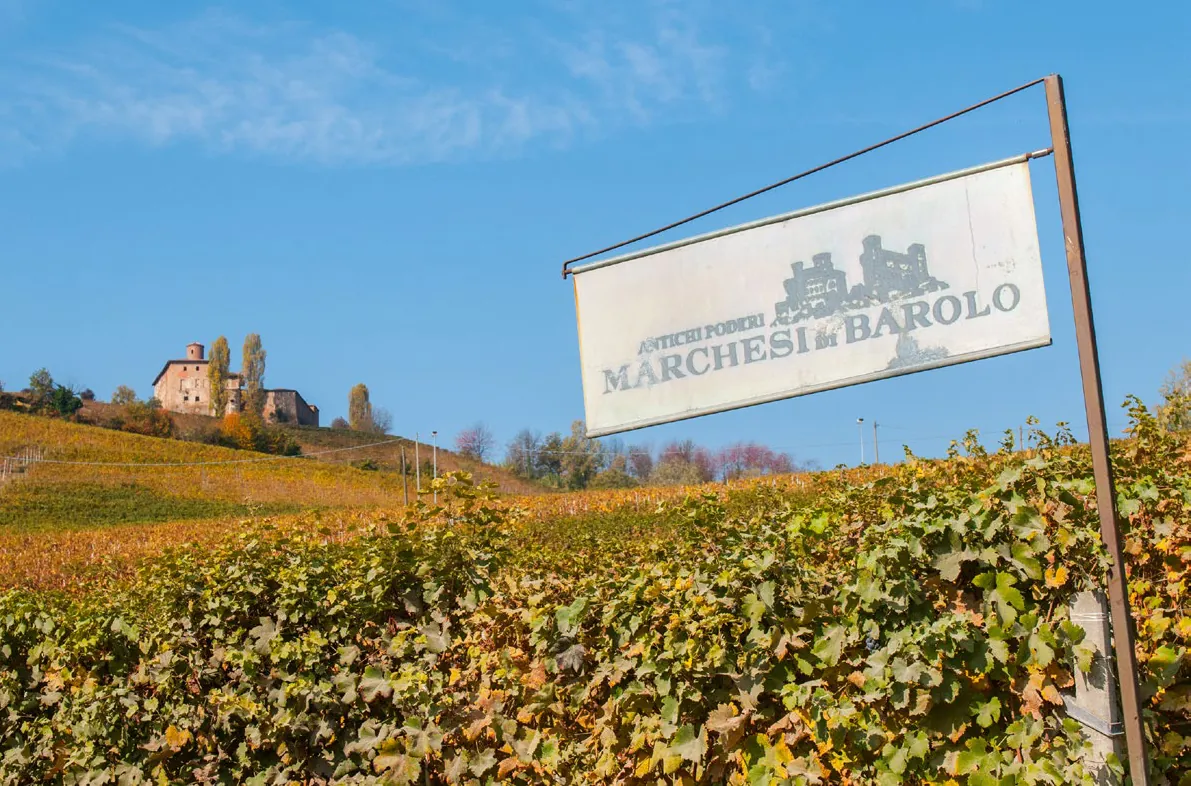
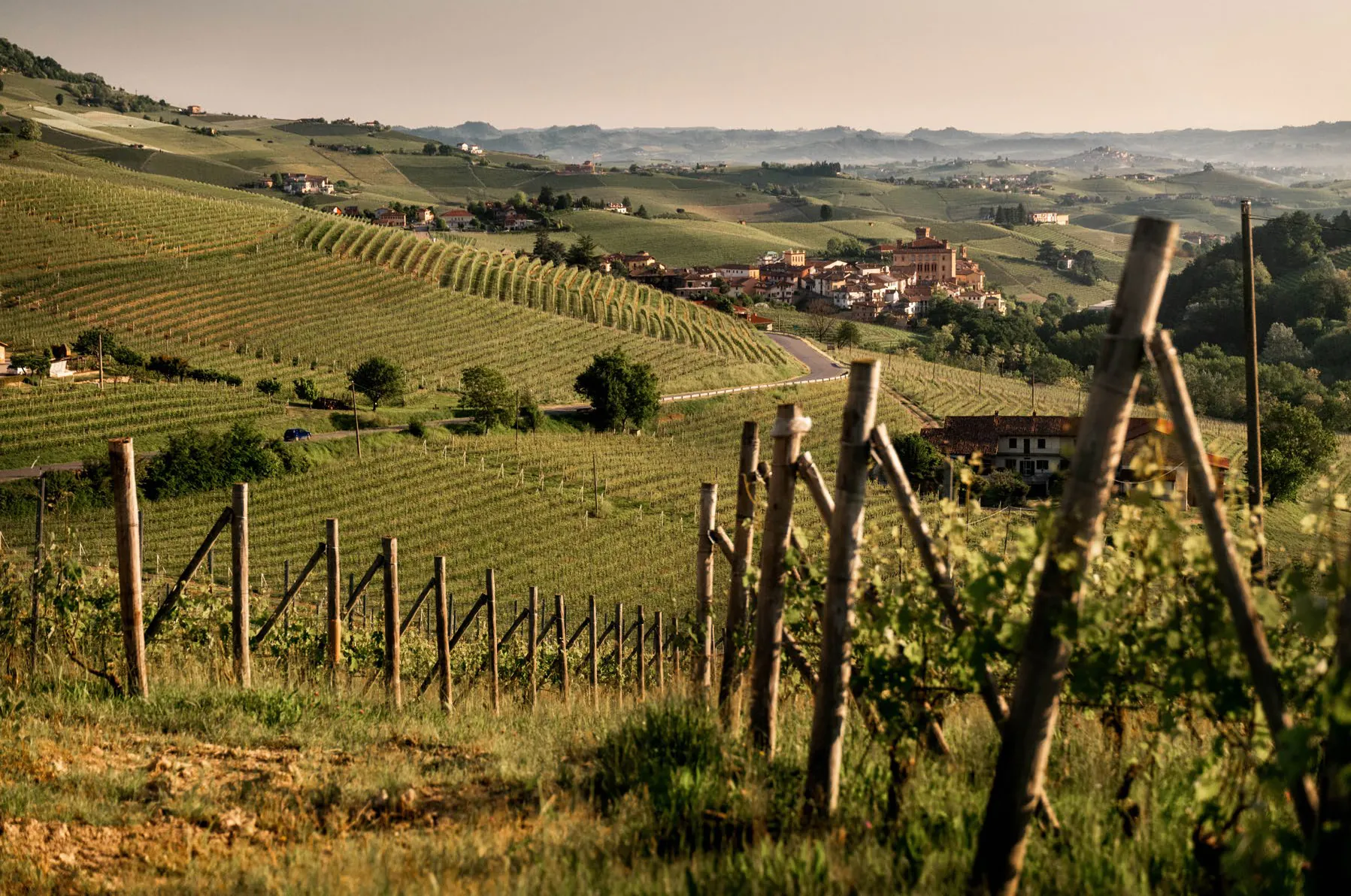
Tucked into the rolling hills of the Langhe, in Italy’s Piedmont region, Barolo is a wine defined as much by scarcity as by reputation. The DOCG zone covers around 2,200 hectares across eleven villages south of Alba, yet wines made from Nebbiolo grown here rank among Italy’s most celebrated reds, often called “the wine of kings, the king of wines.” The soil shifts noticeably from one commune to the next, from the sandier, more fragrant terrain around La Morra and Barolo itself to the denser, more structured ground around Serralunga d’Alba and Monforte, a patchwork that gives even neighboring vineyards distinct personalities in the glass.
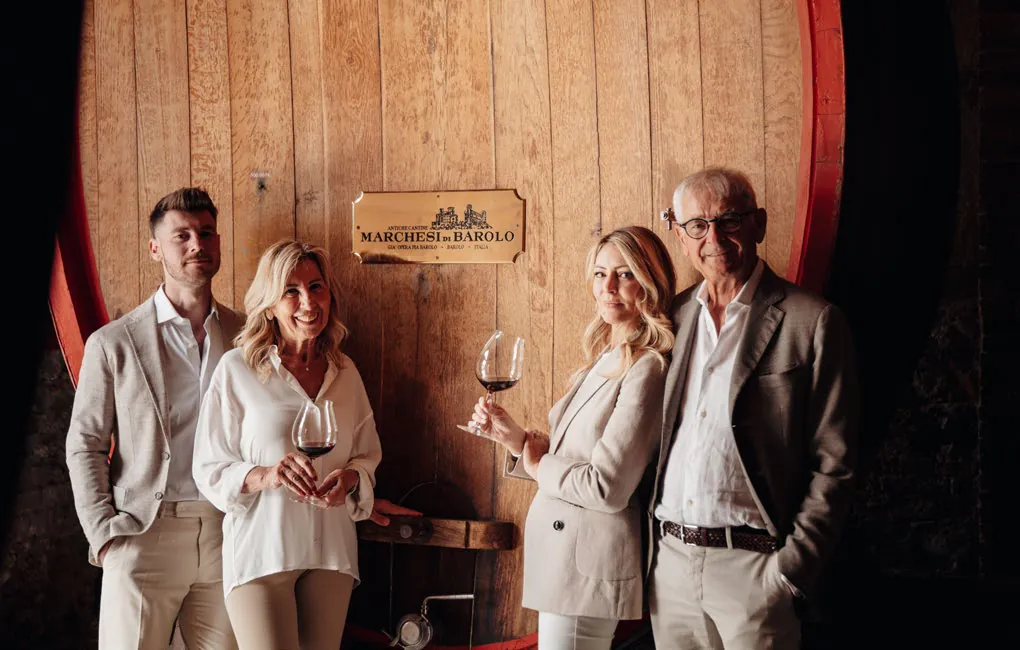
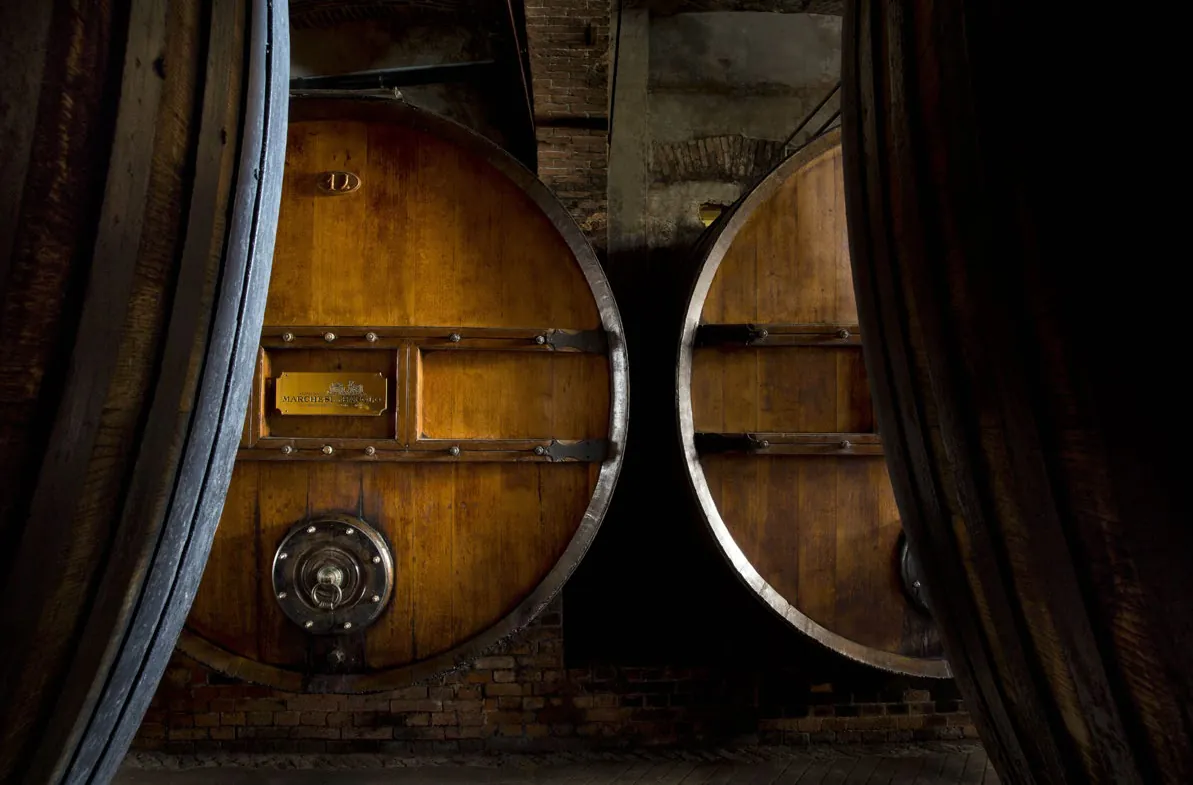
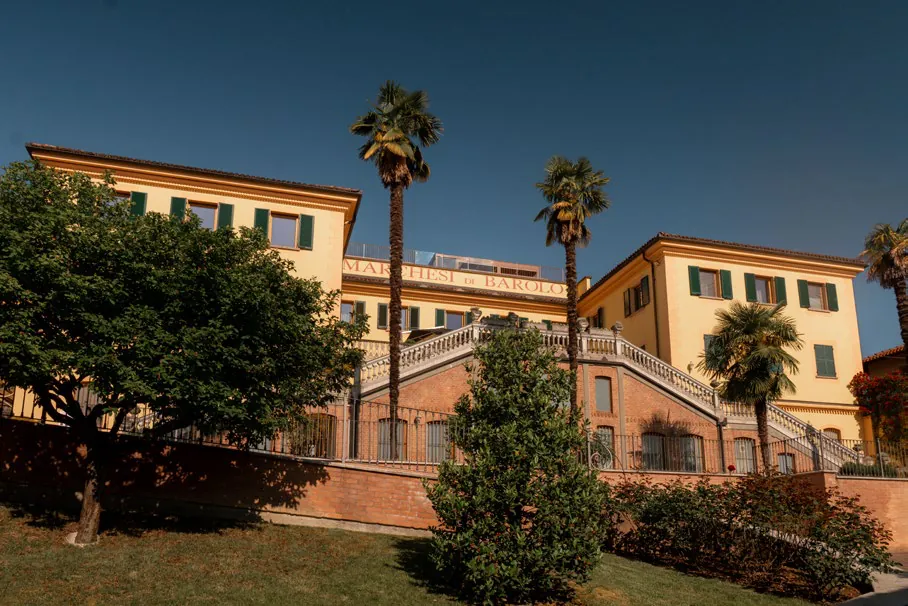
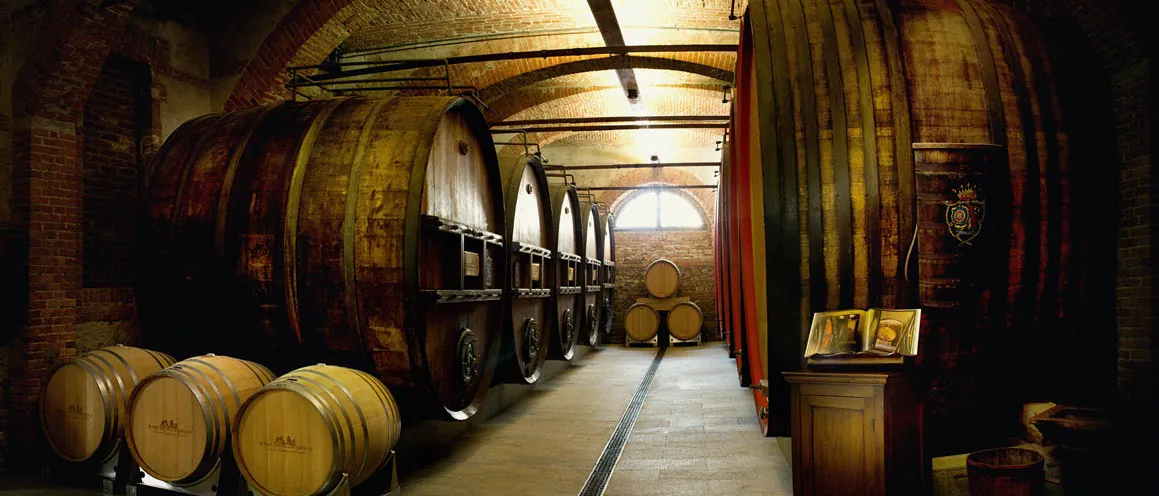
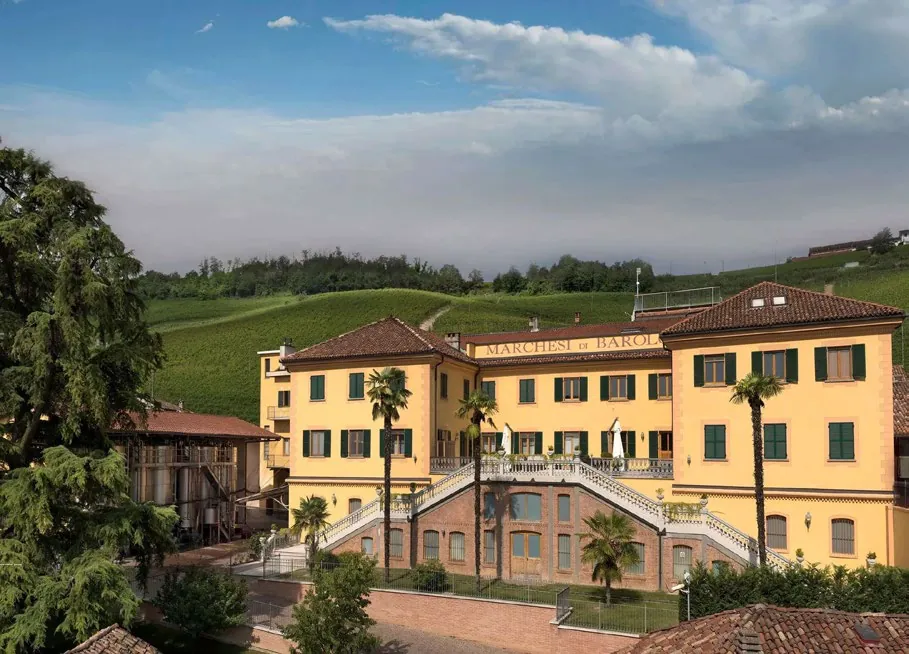
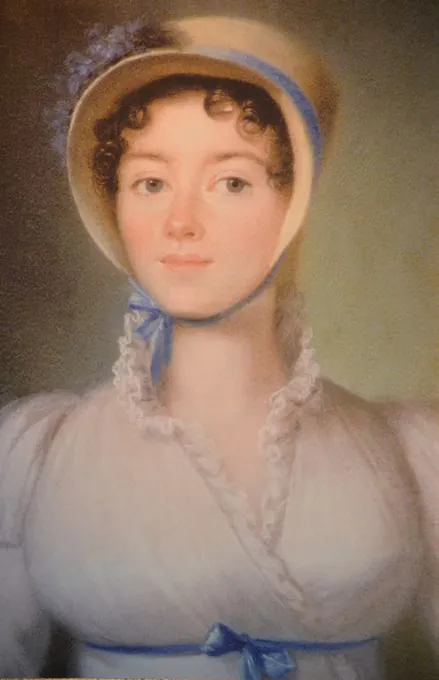
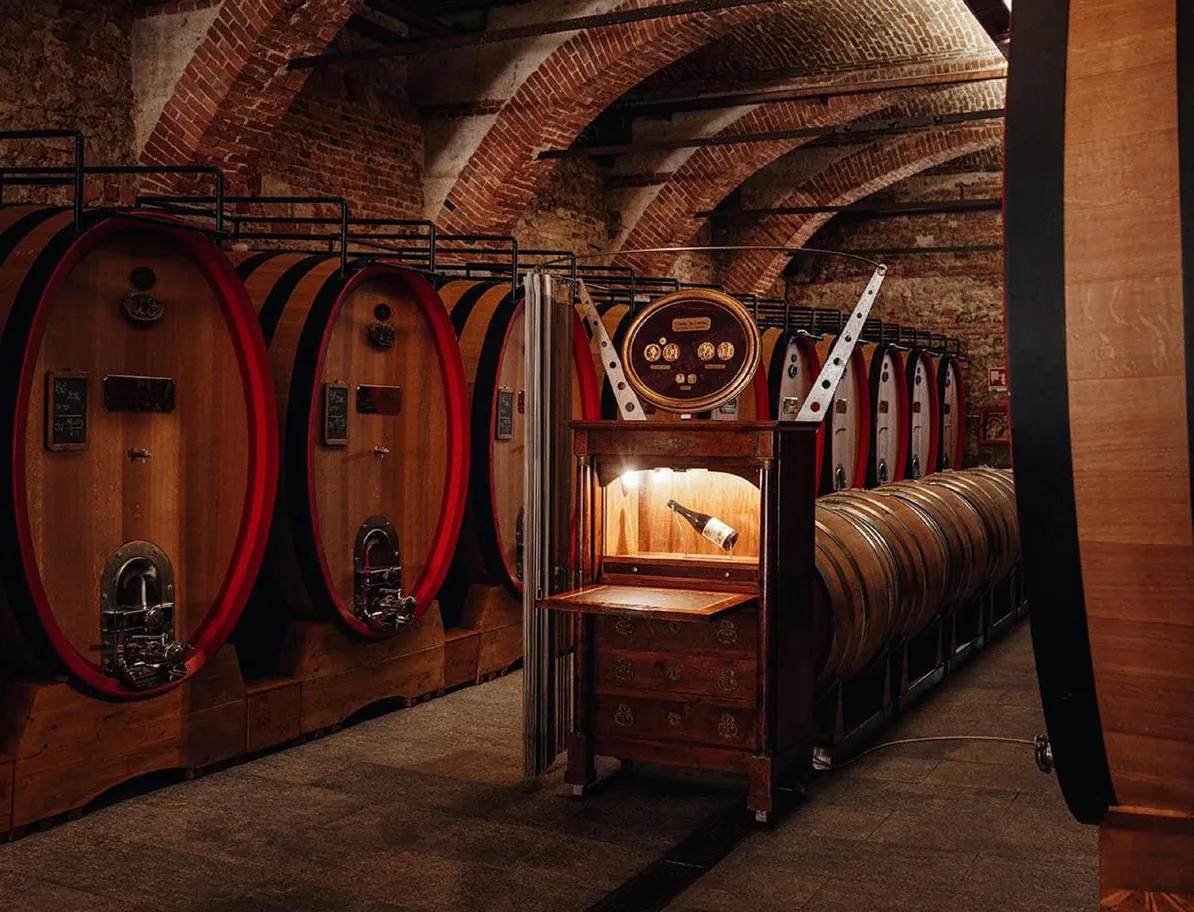
Marchesi di Barolo sits at the very center of that story. Its cellars, in the town of Barolo, are widely credited as the place where Barolo, the wine as we know it today, dry and age-worthy rather than sweet and lightly sparkling was first made in the first half of the nineteenth century, under Marchesa Giulia Falletti. The Abbona family has owned the estate since 1929, when Pietro Abbona acquired the historic cellars with his brother Ernesto and sisters Marina Abbona and Celestina Abbona. Today it is run by fifth-generation winemakers Ernesto and Anna Abbona, alongside their children Valentina and Davide, the sixth generation to carry the estate forward.
Valentina Abbona joins the call from the middle of harvest. Tractors roll past, unloading grapes behind her. It’s the fourth week of the 2026 season at Marchesi di Barolo: the white varieties, Dolcetto, and Barbera are already in, and Nebbiolo, the grape that becomes Barolo, is just beginning. She eventually steps into an office to talk properly, but the timing feels fitting for an estate where the work and the story have always been the same thing.
Your family has owned Marchesi di Barolo since 1929. What does that kind of heritage feel like from the inside?
It’s both a privilege and a responsibility. My great-grandfather bought the estate in 1929 together with his brother and two sisters, and one phrase has been passed down through every generation since. It came from my great-aunts, who worked incredibly hard to pay off the estate’s early debts while also holding other jobs: “Work
gives you nobility.”
That idea has stayed with us ever since. It reminds us that what we have today was built through hard work and dedication, and that we have a responsibility to carry that same spirit forward. It still shapes the way we approach the estate today.
You and your brother Davide now run the estate alongside your parents. How does that compare to previous generations?
My father and my grandfather both lost their own fathers at a young age, so they had to take on the responsibility of running the estate without that guidance. Davide and I are in a very different position. We have the opportunity to work alongside our parents, Ernesto and Anna, and to learn from them while gradually taking on more responsibility ourselves.
I think that kind of continuity is incredibly valuable. In multi-generational family businesses, one of the biggest challenges can be keeping the family united as the business evolves. For us, that is really the most important thing: working together, learning from each other, and making sure the family remains stronger than the business itself.
This year’s harvest has come during some serious heat. How is Davide adapting in the vineyard?
A wet winter left the vines with good moisture reserves in the soil going into a hot and dry summer, while the rainfall on August 7th was particularly helpful in preserving grape quality during the crucial weeks leading up to harvest.
To protect the vines from the excessive heat, my brother Davide introduced several manual techniques in the vineyard. We kept the leaves on the sun-exposed side of the canopy to provide natural shade, particularly on the parts of the vines exposed to the morning sun in our southand west-facing vineyards. We also kept the grass as tall as possible, helping to keep the soil cooler and reduce the impact of the heat on the vines.
These are simple, hands-on measures, but in a year like this, they can make a real difference.
You now produce seven distinct Barolos in a single vintage, up from just a few. Why the shift?
It comes down to understanding our individual vineyard plots in greater depth. Over time, we have learned to recognize the differences between them and to let each one express its own terroir. That’s why we now make several distinct Barolos: each wine is designed to reflect a specific vineyard rather than simply a single house style.
The aging process is part of that approach, too. We
first use smaller French oak barriques for six to twelve months, mainly to encourage oxygenation and color stability. We then move the wine into larger, neutral barrels, where it can continue aging without the wood overpowering the character of the wine.
So the shift is really about giving each vineyard its own voice, rather than trying to make every Barolo taste the same.
There’s a lot of talk about younger people not gravitating toward wine in the same way earlier generations did. Does that worry you?
I think that as long as knowledge and culture continue to exist, wine will always have a place. What makes wine so fascinating is precisely the way it brings together so many different worlds: geography, history, chemistry, and art. But beyond all of these, wine is also a form of art in itself, something that people can connect with, understand, and cherish in their own way.
Wine has always been part of our cultural history. From the ancient Greeks to the present day, it has appeared in literature, poetry, paintings, rituals, and everyday life. Think of the role wine has played throughout history, from religious ceremonies to the tables of kings and emperors, or the way it has been represented in the works of artists. It has always been much more than a beverage; it has been a part of the way societies have expressed themselves and understood the world around them.
And perhaps this is where the real challenge for the wine industry lies. When competition becomes overly commercial and the market is flooded with an abundance of products, there is a risk that we lose sight of what makes something truly valuable. When everything becomes readily available, it can become harder to appreciate its uniqueness, its story, and ultimately its worth.
Tell us about Barolo Chinato. What’s the story, and how should someone enjoy it?
I’m very happy you asked this question, because very few people outside Piedmont are familiar with Barolo Chinato. For us, it is a real local tradition, usually enjoyed after dinner. It has traditionally been appreciated for its digestive qualities, but there is much more you can do with it. You can enjoy it on its own, of course, but it can also be used to create beautiful and sophisticated cocktails.
The starting point is Barolo wine, then blended with an alcoholic infusion in which different herbs, roots, and flowers macerate, allowing their aromas, flavors, and properties to be extracted.
Historically, Barolo Chinato was also regarded almost as a medicinal drink. People would use it as a remedy for things like colds, or simply as a tonic after a meal. The addition of alcohol also gave it excellent longevity: once opened, a bottle can easily be kept for months.
In a way, Barolo Chinato sits somewhere between an amaro and a vermouth. It has something in common with amaro because of the herbs, roots, and flowers used in the infusion, while, like vermouth, its base is wine. But unlike vermouth, the base wine here is Barolo DOCG, so we have to be careful not to overwhelm it with too many botanicals. We generally use no more than twenty different herbs and roots because the wine itself is already so complex and expressive. The botanicals should complement it, not cover it up.
And then there is the pairing. With dark chocolate, Barolo Chinato is simply wonderful. The sweetness and bitterness of the chocolate bring out the complexity of the wine and the herbal notes of the infusion. For me, it is the perfect way to finish a light dessert – or simply to end a meal on its own.
In your opinion, how should a glass of Barolo truly be enjoyed – the right glass, the right temperature, the right moment?
First of all, I would say: in company. A wine that is shared always tastes better than a wine enjoyed alone. That would be my first piece of advice, and probably the most important one. As for the right moment, I think that is really up to each person. There are so many reasons to open a good bottle of wine, or sometimes, no reason at all. You simply have to feel like it.
As for the glass, I would recommend a large one, with enough room to allow the wine to breathe and open up. Nowadays, I don’t think decanting is always necessary. If you have a large enough glass, it can almost work like a decanter, giving the wine the space it needs to develop.
I would also recommend taking your time with it. Barolo is a complex wine, and it needs time to reveal itself. It changes gradually, glass after glass. If you follow a bottle from the first glass to the last, you can really experience how the wine evolves throughout the evening. For me, that is one of the most fascinating things about Barolo.
When it comes to temperature, we used to say that red wine should be served at room temperature. Personally, I prefer to serve Barolo slightly cooler, around 15–16°C, because it will naturally warm up in the glass as the evening goes on and reach the temperature where it shows itself at its best. But I wouldn’t be too fixated on the exact temperature. What matters most is the overall experience: the wine, the food, the atmosphere, and, above all, the people you are sharing it with.
And when it comes to food, it really depends on the Barolo you’re drinking – its structure, its age, and the characteristics of the vintage. Generally speaking, an older Barolo tends to work beautifully with more delicate dishes, while a younger, more structured Barolo can stand up to richer and more flavorful food.
Are there pairings you’d actually recommend people avoid?
Food is very personal. And don’t quote me on this, but I don’t like anchovies. Most people love them, but I don’t. So, for me, anything with anchovies would probably ruin the experience. But that’s exactly the point: there are no absolute rules when it comes to taste.
I think the only thing you really need to be careful about is having too many flavors that clash with each other. The food shouldn’t overpower the wine, and the wine shouldn’t overwhelm the food. They should work together and create a balanced experience.
That said, I think we have become much more open-minded about pairings. Sometimes the most beautiful and unexpected combinations come from breaking the traditional rules and simply being curious. So I wouldn’t tell people to avoid a particular food. I would encourage them to experiment and find what works for them.
What’s the single biggest misconception people still have about Barolo?
I would say temperature. If I asked for an ice bucket for a bottle of red wine, most people would probably look at me as if I were crazy. But Barolo is often served too warm, and that can really affect the experience. Serving it slightly cooler allows the wine to show more freshness, balance, and complexity.
Another common misconception is that Barolo always needs to be paired with a very rich or heavy dish. That’s not necessarily the case. It really depends on the particular Barolo you’re drinking. Its age, structure, and the characteristics of the vintage. A younger, more powerful wine may work beautifully with something richer, while a more mature Barolo can be surprisingly elegant with a lighter dish.
When your family took over the estate, there were far fewer winemakers in the region. Today, the wine world feels almost endless in its choice. How do you feel about that shift?
I think it’s exciting, because we’re essentially learning from others too. It’s beautiful to see how many opportunities there are, and how much excitement you can find in new wines, new expressions, new grape varieties, new terroirs, and new pairings.
Does more competition sharpen the craft, or dilute what makes a region like Barolo special?
This is specific to Barolo. Barolo is a very small appellation: there are only about 2,000 hectares in the entire world where it can be produced, translating into roughly 14 million bottles a year across all producers. So, while there is certainly competition in the wine industry as a whole, when you look at Barolo specifically, we are fortunate to be in a position where we are not feeling that pressure in the same way.
In fact, I think healthy competition is always a good thing. When great wines are made in other regions, they bring more attention to wine as a whole and, ultimately, to what makes Barolo unique. People discover that it is something different and extraordinary.
That said, I am speaking as a producer who is lucky to be part of a region that is blessed in this way, and I certainly don’t mean to suggest that we are disconnected from the challenges affecting the rest of the market. What concerns us most is the lower end of the market, where quality is generally lower to begin with. The negative sentiment surrounding that segment can have a ripple effect across the entire industry, especially when it is amplified by headlines portraying wine as an industry in decline.
And for us, it is not just about Barolo. We also produce Barbera, Dolcetto, and white varieties, and we believe quality has to be consistent across the entire range. Every wine we make, even a simple Langhe Nebbiolo or Barbera, has to meet the same standards. For us, quality is not about one prestigious wine, it is a commitment that runs through everything we do.
Where do you see Piedmont’s wine industry heading in the next decade?
I hope that Barolo becomes even more established, but I don’t think it needs to become “the next Burgundy,” with prices reaching sky-high levels. I don’t think that would necessarily be a good thing, because we want people to actually enjoy our wines. They should be fairly priced. Not cheap, but not unaffordable either.
I also hope there will be more attention and confidence in what comes from Piedmont. We have nothing to envy from other great wine regions; sometimes we just need to believe in ourselves a little more. Other regions may have greater fame or visibility, but every region has its own identity and its own place in the world.
Ultimately, I hope there is simply greater awareness of Piedmont and its wines, attracting people who genuinely appreciate Barolo and everything the region has to offer.
Georgia is often called the birthplace of wine, with its own ancient qvevri winemaking tradition. Have you tried Georgian wine, and if so, what did you think?
I have tasted Georgian wine. I have to be honest, I don’t remember exactly which label, but I found it fascinating because it is linked to such a specific culture and a distinctive winemaking tradition, very different from what we have here. I find it fascinating that every region and every culture can express itself through wine, and I think we should all have more knowledge and awareness of that.
Looking ahead, what does the sixth generation bring to the estate that’s different from the fifth?
My brother and I are quite different from our parents, although perhaps less than we think. As we get older, I think we are actually becoming more like them. I work closely with my mother in sales and hospitality, while my brother and my father are more involved in production. In terms of personality, though, I’m probably more similar to my father, while my brother takes more after our mother. I really like this combination of personalities and strengths, it creates a good balance within the estate.
The landscape has also changed significantly since our parents took over the business. There were opportunities that were easier to pursue back then, whereas today there is much more competition. You have to be more focused, precise, and strategic. I think that’s where our generation is bringing something different: a more technological and modern approach, while still building on the experience and values we’ve inherited.
Is there a project or ambition for the estate’s future you’re especially excited about?
We’re about to celebrate one hundred years of family ownership of Marchesi di Barolo, and I’m particularly excited about the opportunity to tell the story of what happened over those generations: the people, the vision, the tools, and the technology that shaped the estate.
My father has done a great deal of research into our family history because, unfortunately, his own father and grandfather passed away quite young. He had to piece the story together himself to understand where we came from and how we got to where we are today. That research has given us a much stronger awareness of our heritage, and I think it has also made us more confident in who we are.
One of the most fascinating things that emerged from this research is the confirmation that Barolo was, quite literally, born in our cellars. Earlier this year, a statue dedicated to Marchesa Giulia Falletti was inaugurated in Turin – the first statue dedicated to a woman in the city. Around the same time, completely independently of us, a book was published about her and the birth of Barolo. The timing was a remarkable coincidence, but it feels as though all these pieces of history are finally coming together. There is a growing awareness of the estate’s story, and for us, that’s incredibly exciting.
If someone had a full day, or even a short trip, to spend in Barolo, what would you want them to see, taste, and experience?
I would definitely recommend hopping from one town to another, because every village in the Langhe has its own character. It’s much more rewarding to explore several of them rather than staying in just one place. There are so many wineries to visit, stories to hear, wines to taste, and the landscape changes beautifully from one village to the next. My advice is simply to move around, take your time, and stay open to whatever you discover along the way.
And don’t come just for the day if you can avoid it. The Langhe has an incredible food scene, from Michelin-starred restaurants to authentic trattorias serving traditional, home-style cooking. Sometimes those simple dishes can be even more memorable than fine dining because they give you a truly authentic taste of the region.
My mother actually opened our own restaurant at the top of the estate, back in 1996. She created the recipes herself, with each dish designed to be paired with a different wine from our selection. It was her way of bringing together everything our family does. Our wines, our food, and our hospitality, and giving guests the chance to experience the estate in its entirety.