Soviet Tbilisi – Decades in Conversation
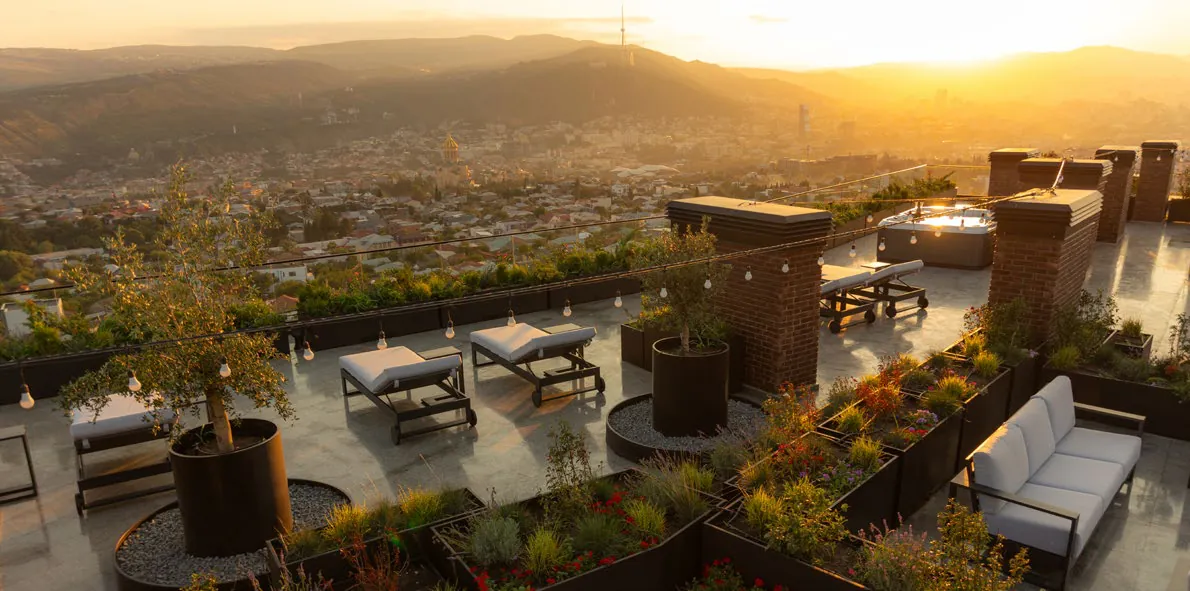
Tbilisi is a city where, between earth and sky, decades seem to speak to one another.
It is more than a mix of old and new architecture. Tbilisi is a living city where the monumental buildings, residential neighborhoods, factories, printing houses, and sculptures of the Soviet era have taken on entirely new meanings over time.
Today, as we walk through the streets of Tbilisi, we often pass familiar buildings without thinking about what was happening behind their walls decades ago. In some, people worked; in others, fabric was woven, or clothes were made. Elsewhere, newspapers read by thousands of Tbilisi residents rolled off the presses.
Some buildings have remained almost unchanged. Some now serve a different purpose. Others survive only in memory.
But each one is part of Tbilisi’s history.
The 1930s to the 1950s played an important role in shaping the architecture of Soviet Tbilisi. The buildings of this period were characterized by monumentality, scale, and the influence of classical architecture.
The IMEL Building on Rustaveli Avenue is one of the most distinctive examples of this era. Its scale and architectural style reflected the desire to transform the Tbilisi of its time.
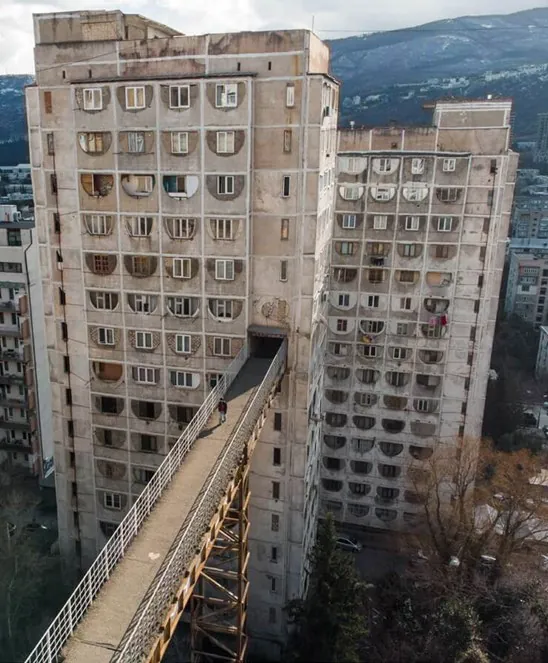
The city’s residential architecture later began to change as well. The era of mass construction brought the so-called Khrushchevkas to Tbilisi – standardized, relatively small apartments designed primarily to provide housing for large numbers of people as quickly as possible.
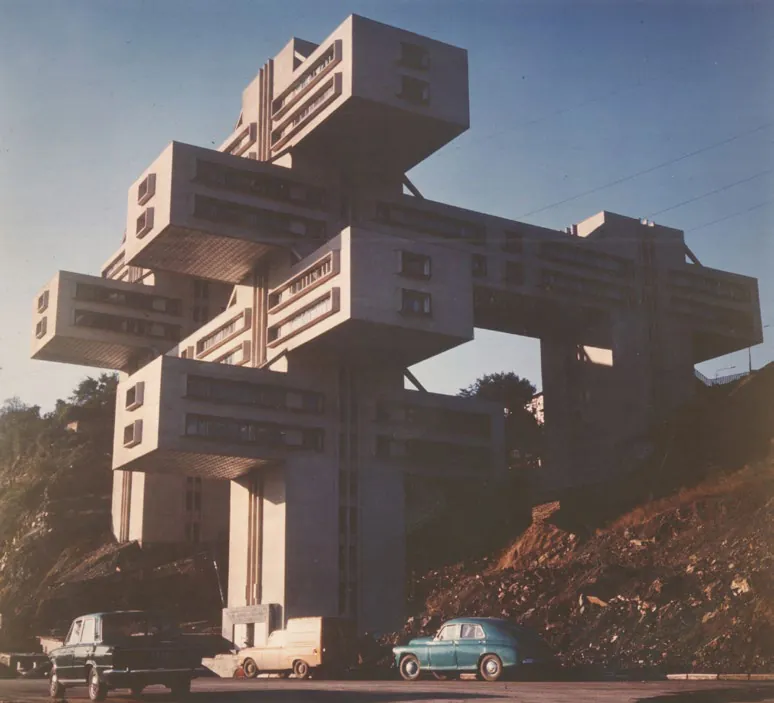
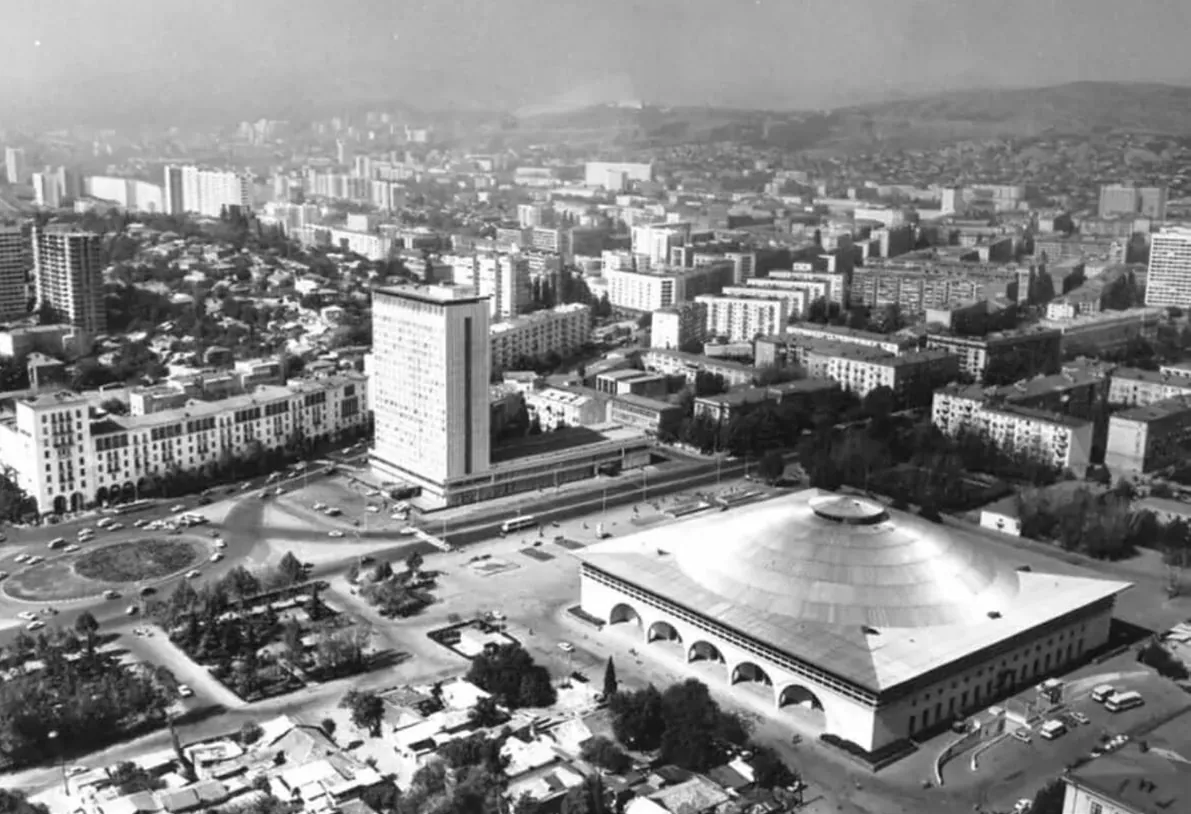
In the 1960s and 1970s, Tbilisi took on another architectural character.
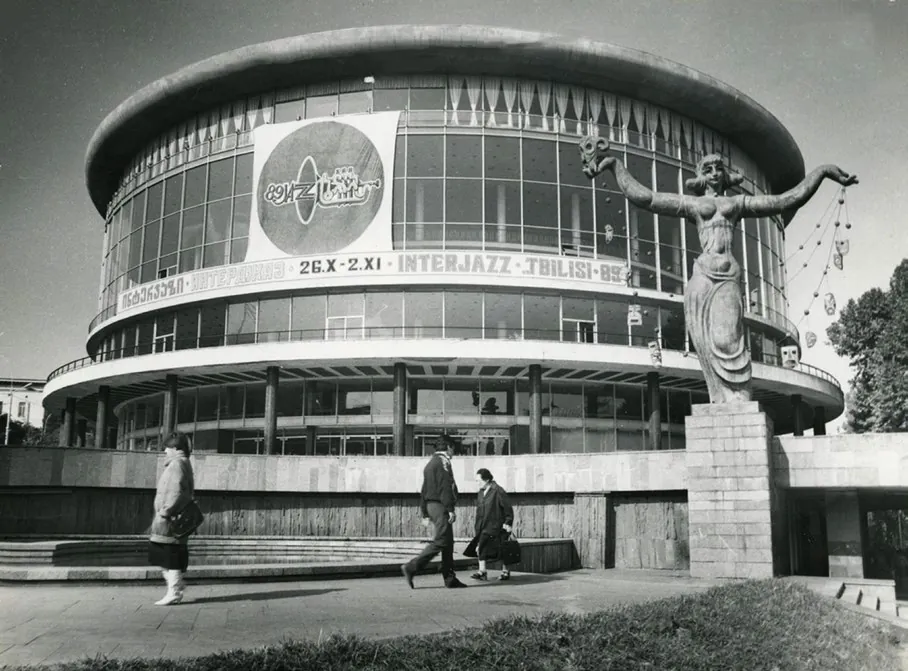
The Tbilisi Philharmonic (Concert Hall) and Tbilisi Sports Palace became distinctive examples of Soviet modernism – buildings that remain part of the city’s visual identity today.
The Concert Hall and Merab Berdzenishvili’s Muse, standing in front of it, have become almost inseparable. Created in 1971, the sculpture and the round building behind it have become one of Tbilisi’s familiar landmarks. The space is associated with music, culture, and the everyday life of the city, and has also appeared in numerous films.
The Sports Palace has its own sculptural symbol – Juna Mikatadze’s Mzechabuki, erected in 1965.
Here, architecture and sculpture come together to create a single urban scene.
It is a reminder that the architecture of Soviet Tbilisi was not simply a story of concrete and engineering. The character of the city was also shaped by art, sculpture, architecture, and public spaces created for people.
Much of everyday life in Soviet Tbilisi took place in buildings that we may know today for entirely different reasons.
People worked in factories where fabrics were woven, and clothes were made. The Tbilisi Silk Weaving Factory produced silk fabrics, while garment factories turned fabric into finished clothing.
These were more than places of production. They were an important part of city life – places where people worked and spent their days, forming friendships with colleagues and building careers that, for many, lasted for generations.
Looking at some of these buildings today, it is difficult to imagine how many people once worked behind their walls.
Time passed, and the city’s needs changed.
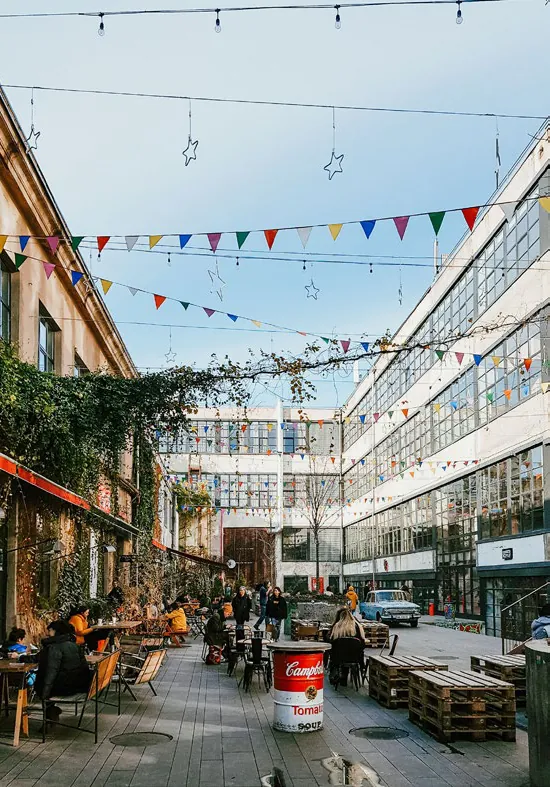
Soviet monumentalism, the simple facades of the Khrushchevkas, the Concert Hall and Muse, the Sports Palace and Mzechabuki, factories, printing houses, old industrial spaces, and the new life they have today – these are not eras that simply replaced one another.
They are different layers of Tbilisi.
The city changes, but its past never disappears completely.
It remains in its buildings, sculptures, streets, archival photographs, and people’s memories.
And that is what makes Tbilisi so special: it is a city where decades speak to one another.