Murtoli
A Different Idea of Luxury
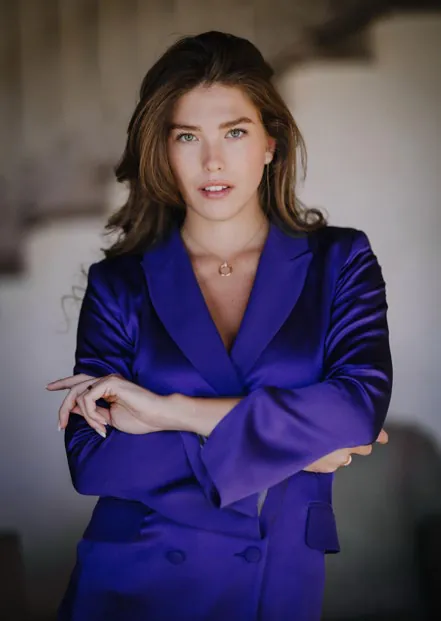
An interview with Santa Canarelli, daughter of founder Paul Canarelli and General Manager of Domaine de Murtoli
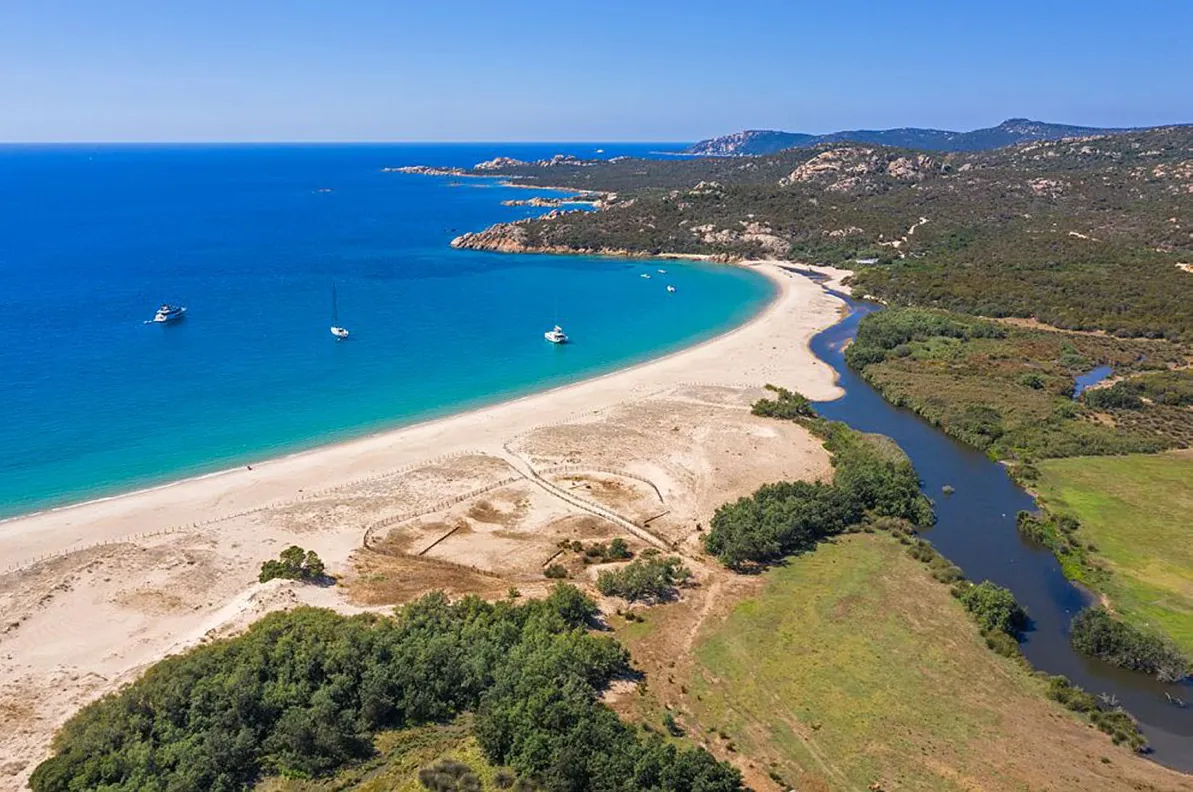
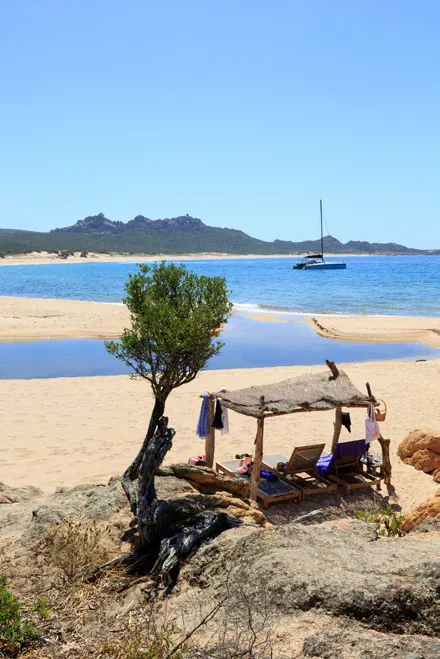
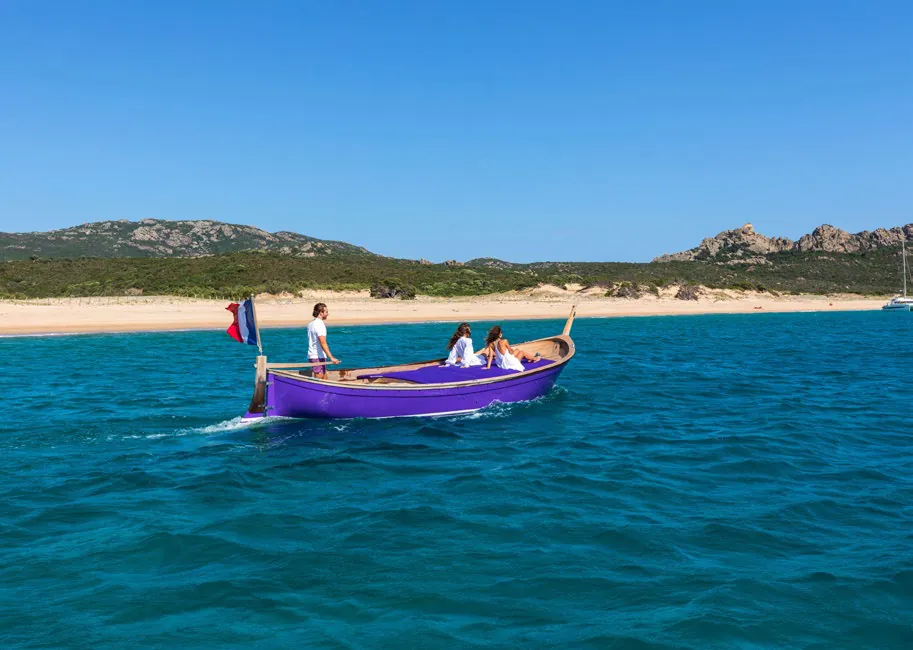
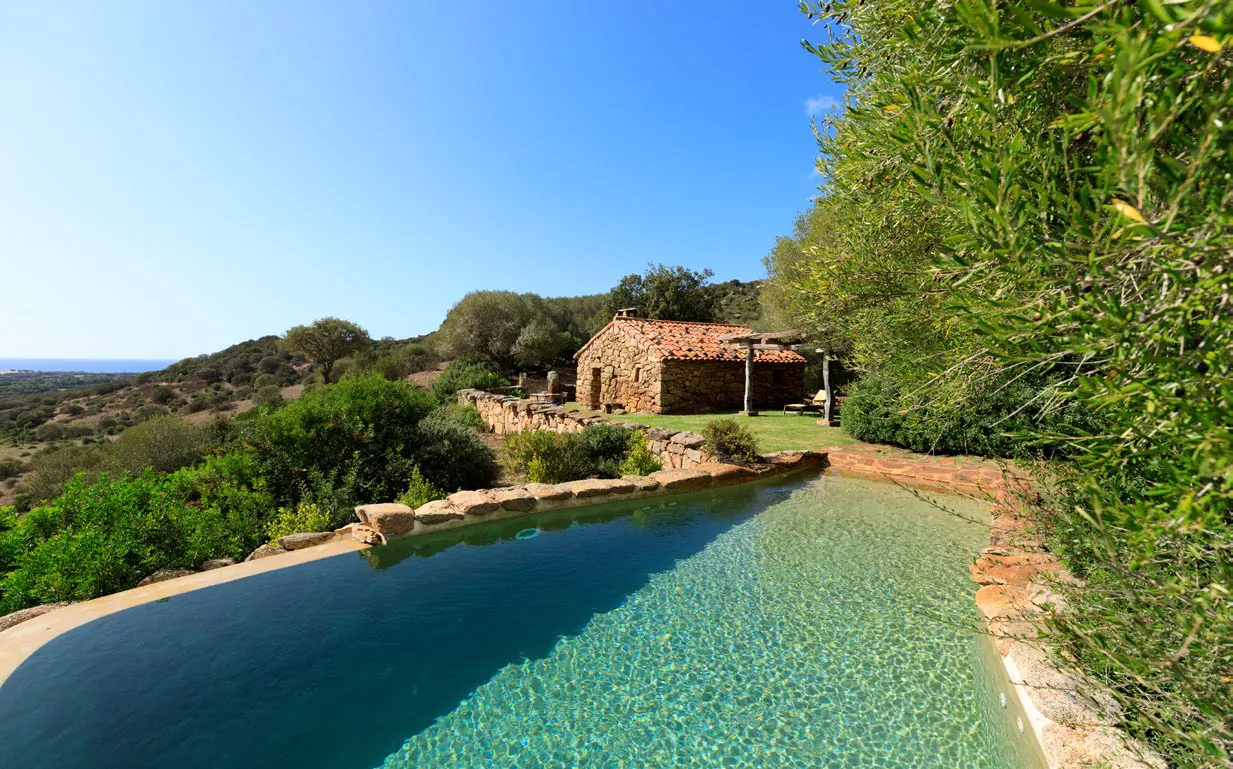
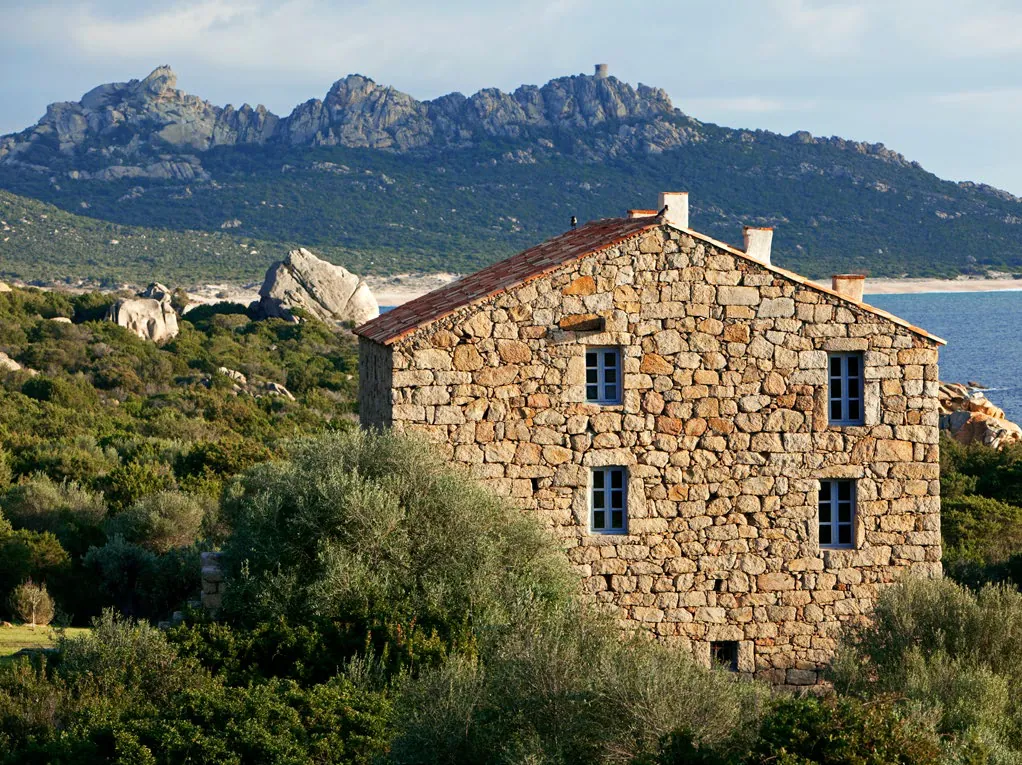
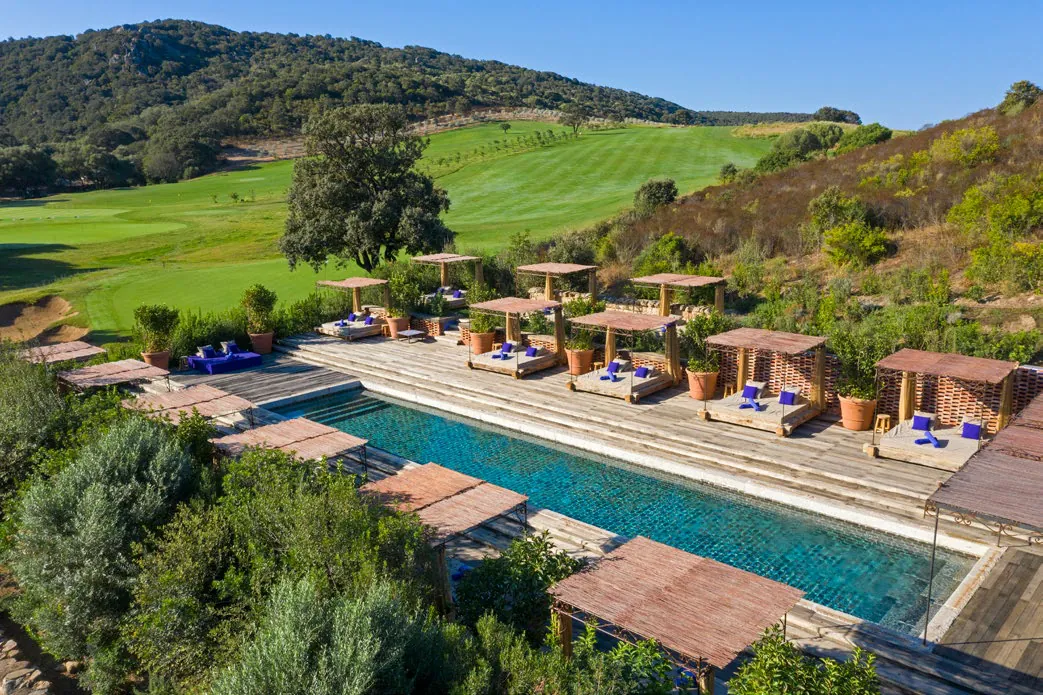
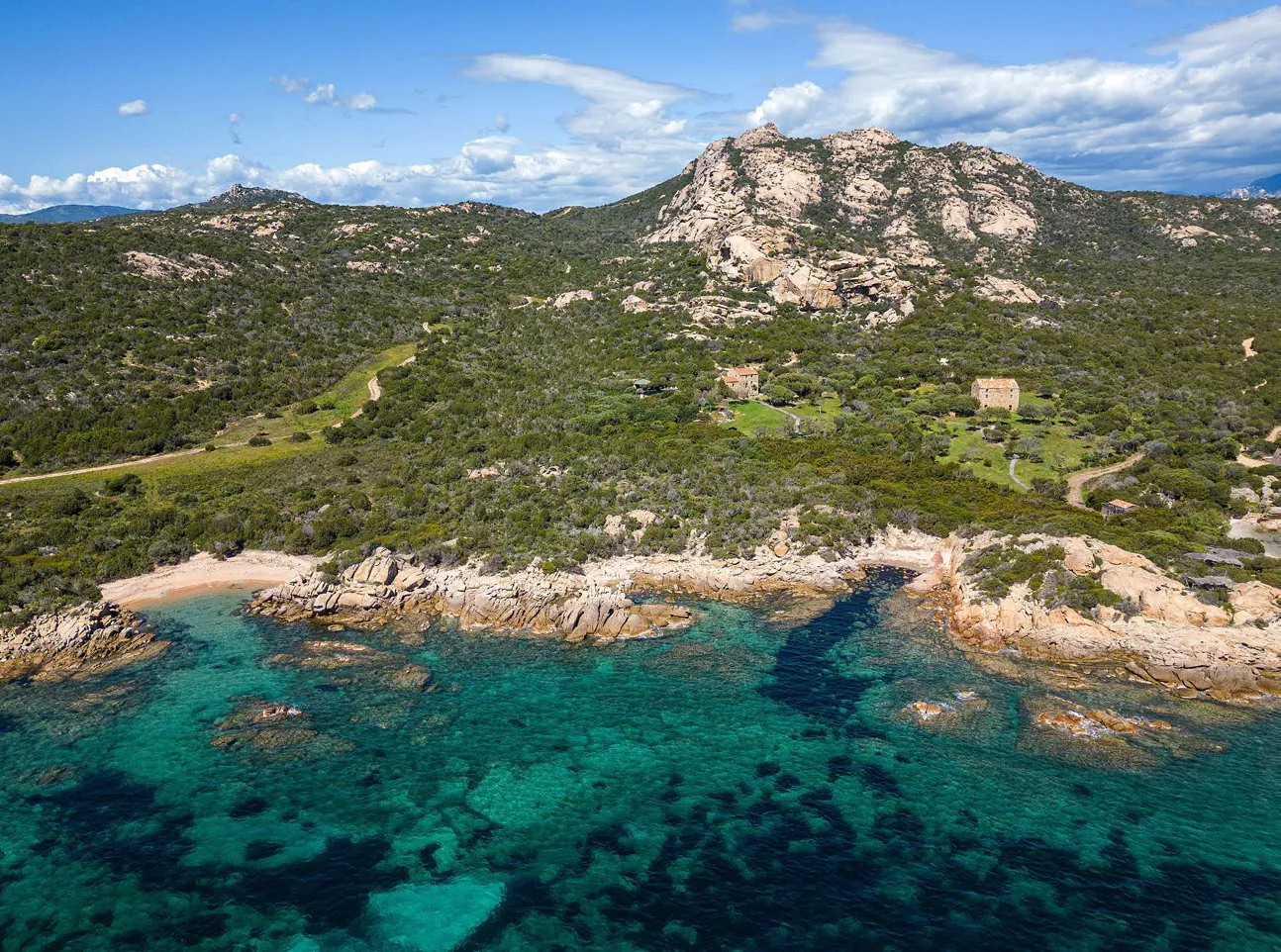
There is a particular kind of silence that settles over the Corsican maquis in late afternoon, somewhere between the scent of wild herbs and the first hint of salt from the sea. It was in that silence, in the valley carved by the Ortolo river, that our writer Ellen Dumbadze first encountered Domaine de Murtoli: 2,500 hectares of untouched coastline, shepherd’s houses dating back to the 17th century, and a philosophy of hospitality that refuses almost everything the modern luxury industry takes for granted.
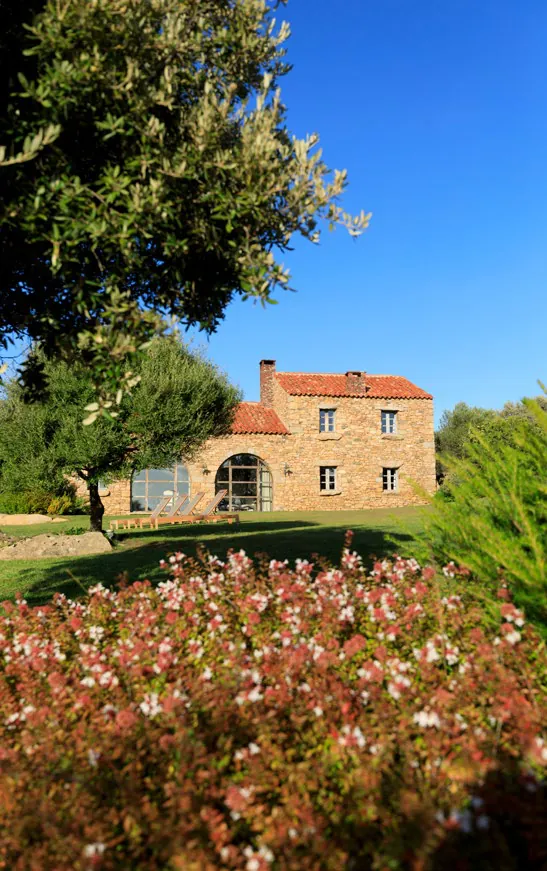
Hospitality runs deep in the Canarelli family. Paul’s own father founded the five-star Grand Hotel de Cala Rossa in Porto-Vecchio, and it was Paul’s grandfather who first worked this same stretch of land between sea and mountain, farming cattle and sheep here since the 1950s. Before he passed, he made Paul promise one thing: that whatever happened, the land would never be sold. Paul inherited it in 1993 and kept that promise, restoring a single shepherd’s hut for his own family at first, before slowly, over three decades, shaping the estate into what it is today, still a working farm at its core, still guided by the instinct to disturb the land as little as possible.
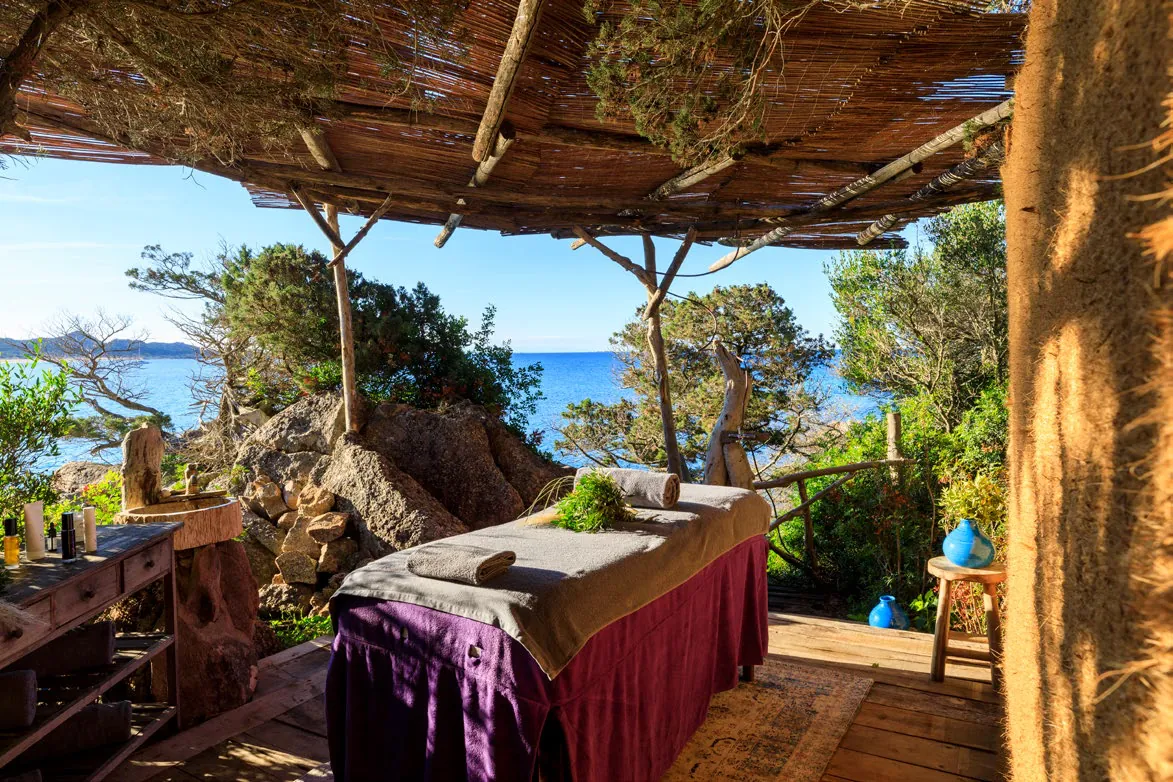
That instinct has stayed a family affair in every sense. Paul’s sisters, Helene and Lise, developed Murtoli’s Nucca spa line from herbs gathered in the surrounding maquis. His wife, Valerie, has long been part of the welcome guests receive on arrival. And today, Paul’s daughter Santa oversees the estate as General Manager, carrying that inheritance into its next chapter, alongside her brother Toussaint, who now manages the estate’s agricultural side.
There is no marble lobby at Murtoli. No concierge desk greets you on arrival. And that, as Santa explains, is precisely the point. We sat down with her to understand what luxury means when a place chooses to disappear into its landscape rather than dominate it, and what the Corsica beyond the beaches still has to offer those willing to look for it.
ON LUXURY, REDEFINED
Murtoli is often described as pioneering the concept of “anti-luxury.” How would you define true art de vivre today?
“I would not necessarily define Murtoli as ‘anti-luxury’,” Canarelli says. “I would rather say that we have always had our own definition of luxury. A more authentic form of luxury, based on conviviality, sharing, and the balance between exceptional service and total immersion in nature.”
That definition runs through everything at the estate, from the working farm that supplies its kitchens to the way guests are introduced to the island itself. “Our vision of luxury also comes through our land: working with exceptional products from our farm or from local producers, showcasing them through our gastronomy, and allowing our guests to discover Corsica through what is most genuine about it. More broadly, we want a stay at Murtoli to be an immersion in Corsican culture, its nature, gastronomy, know-how and way of welcoming people.”
The result, she says, is a balance rather than an opposition. “For us, Murtoli is ultimately the right balance between luxury and authenticity: offering excellence without ever erasing the true nature of the place.”
Unlike standard five-star resorts, there is no concierge desk, no marble lobby, no intrusive room service. Why is “disappearing service” the ultimate luxury for the modern traveler?
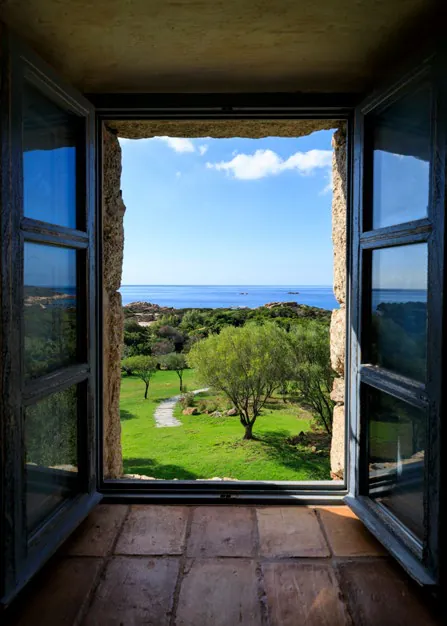
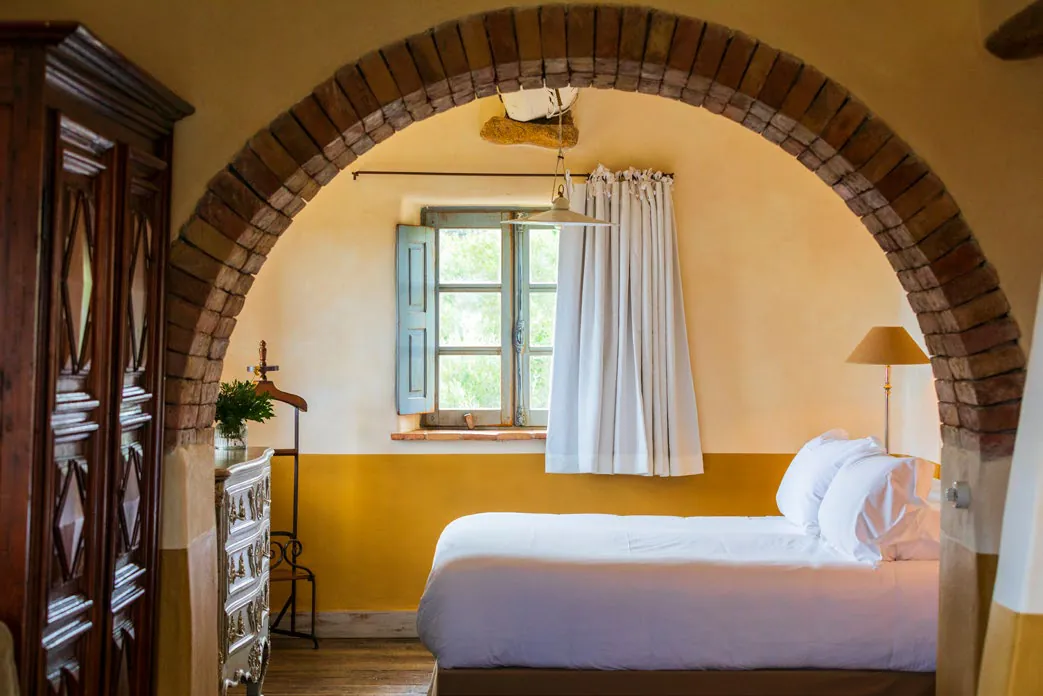
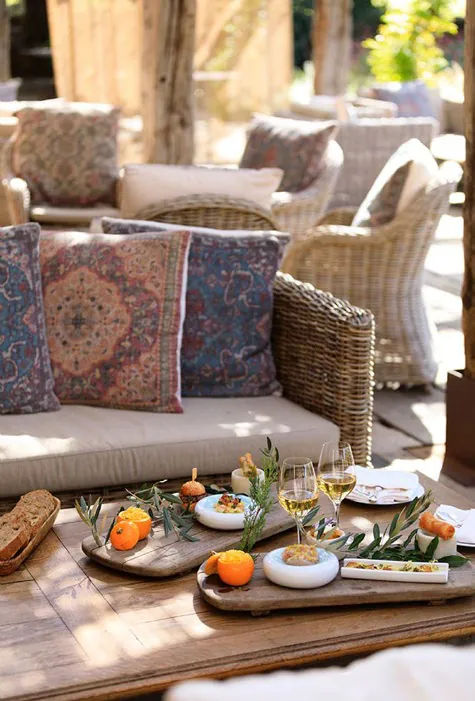
“Murtoli has always been conceived as a home before being conceived as a hotel,” Canarelli explains. “We want our guests to feel at home, to make the place their own and to be able to enjoy absolute privacy.”
That does not mean the service disappears entirely, only that it learns to anticipate rather than interrupt. “The service is always present, but discreet. Our concierge team accompanies each guest before and during their stay in order to understand their habits, their wishes and to anticipate their needs as best as possible. For us, that is also what luxury means: being present without ever being intrusive. The work of our teams is to make things simple and natural, almost as if they happened by themselves. This is the ‘magic effect’ that we seek to create at Murtoli.”
If you could change one major trend in modern hospitality, what would it be?
Her answer comes without hesitation: standardization. “We travel precisely to discover something we do not know. Yet today, it can happen that we travel through several countries and find the same codes, the same rooms, the same menus and sometimes almost the same experiences. I find that a shame. A hotel should have a strong enough identity for us to know where we
are without even needing to be told.”
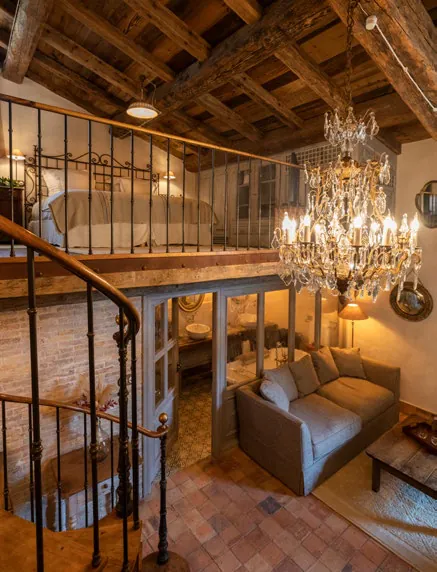
For Murtoli, that identity was never something to invent. “We are fortunate to have an identity that we did not have to invent: it was already there. The shepherds’ houses dating back to the 17th century, the dirt paths, the maquis, the animals, the sea, the cuisine. Ultimately, our job is not to change it too much.”
ON CORSICA’S SECRET RHYTHMS
Beyond the high season, when is the best time to experience Murtoli?
“I particularly like spring and autumn,” she says. “In spring, the maquis is in bloom, the valley is green and the temperatures are ideal for fully enjoying the Domaine. In autumn, Murtoli changes colour completely: nature gradually takes on shades of orange, the light becomes softer and the sunsets are exceptional.”
These quieter seasons, she notes, also reveal a different side of the estate. “These are also seasons that allow you to take the time to enjoy all the experiences of the Domaine: horseback riding, golf, hiking, visits to the vineyard and wine tastings, pottery classes, as well as workshops focusing on flowers and vegetation. Summer is obviously wonderful for enjoying the sea and the beach, but Murtoli is above all a 2,500-hectare territory. Spring and autumn allow you to discover another side of it, perhaps a more intimate and authentic one.”
What is the most magical, secret part of Corsica that visitors often miss entirely?
“Without hesitation, the interior of the island,” Canarelli says. “We talk a great deal about Corsica’s beaches, quite rightly, but I think it is a shame to come to Corsica without discovering the countryside and its mountains, with their villages, rivers and all those little roads that cross the interior.”
It is a part of the island that rewards those willing to leave the coast behind. “Corsica is an island, but above all it is a mountain in the middle of the Mediterranean.
ᲤᲝᲢᲝᲔᲑᲘ: © CAMILLE MOIRENC
And sometimes, all it takes is leaving the coast and driving for an hour without any particular plan to discover a Corsica that we could never have imagined. That is also the Corsica that I most enjoy introducing people to.”
How does Murtoli’s cuisine translate the wild character of the Corsican landscape onto the plate?
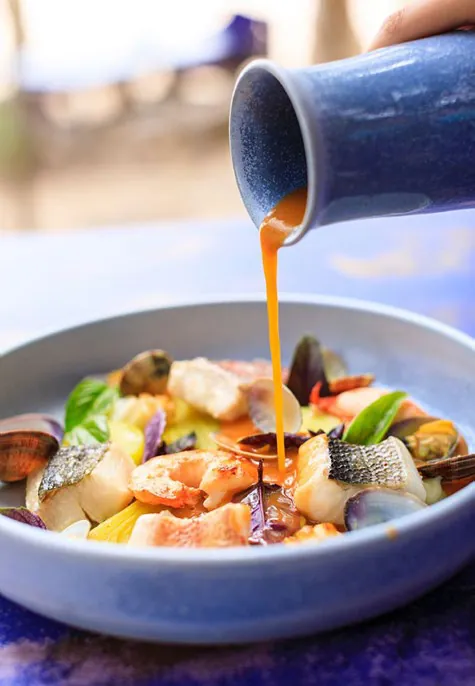
“Murtoli’s cuisine is deeply connected to the land, since many of our products come directly from the Domaine,” she explains. “Our vegetable gardens, our livestock, our olive oil, our honey and, more broadly, all the work done on the farm naturally set the rhythm for our kitchens.”
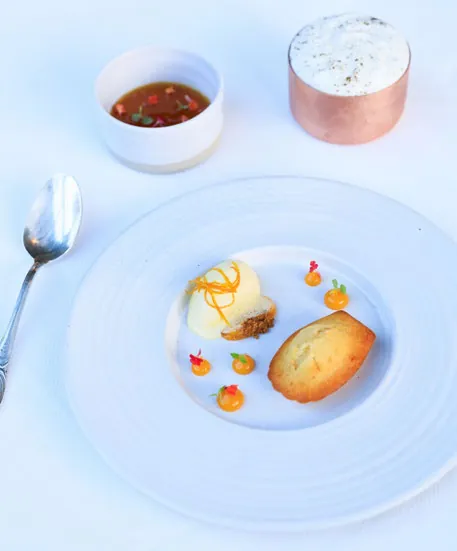
Each of the estate’s restaurants tells that story differently. “Each of our restaurants then has its own identity. At La Grotte, the cuisine is generous, sincere and rooted in tradition. At La Table de la Ferme, our Michelin-starred restaurant, it becomes more refined, precise and elaborate. At La Table de la Plage, it is fresh, Mediterranean and focused on the sea, while at L’Appuntamento, it is more sunny and convivial, with Italian inspiration.”
What unites them, she says, is a shared discipline. “But whatever the restaurant, the common thread remains the same: the product is always at the heart of the cuisine. Above all, we seek to respect its seasonality and origin and to showcase it without ever altering it. Ultimately, it is through very different cuisines that we tell the story of the same land.”
ON WHAT COMES NEXT
What is the long-term vision for Murtoli? Are there ways to enrich the experience without expanding the estate’s footprint?
“Over the years, we have restored all of the old buildings that could be restored, always trying to preserve their history and identity,” Canarelli says. “Today, our priority is therefore not necessarily to expand the Domaine or build more, but rather to continue enriching what can be experienced here.”
That means deepening rather than widening. “We want to develop new activities and new services around everything that makes up Murtoli’s DNA: nature, agriculture, gastronomy, well-being, sport, craftsmanship and Corsican know-how. We are fortunate to have a 2,500-hectare territory that still offers a great many possibilities. Our vision for the future is therefore above all to continue creating new experiences, while preserving the balance and authenticity of the place.”
Domaine de Murtoli is located in Sartene, in southern Corsica.
PHOTO CREDIT: © CAMILLE MOIRENC