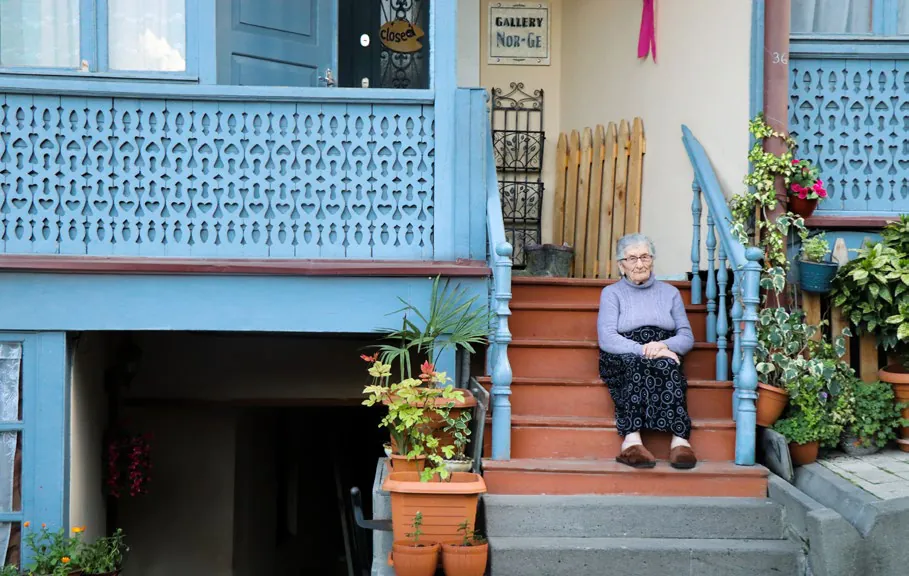
The Tbilisi Courtyard
If you want to love Tbilisi the way true Tbilisians do, step away from the city’s main avenues and pass through its carved wooden gates. Beyond them lie the old courtyards of Tbilisi, the city’s hidden heart, where time seems to have stood still for centuries.
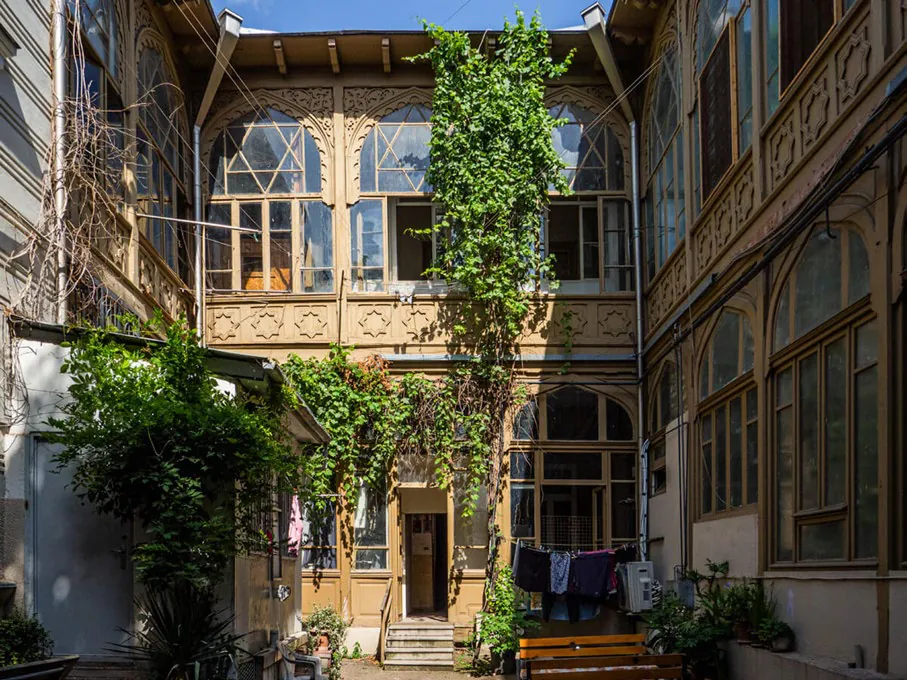
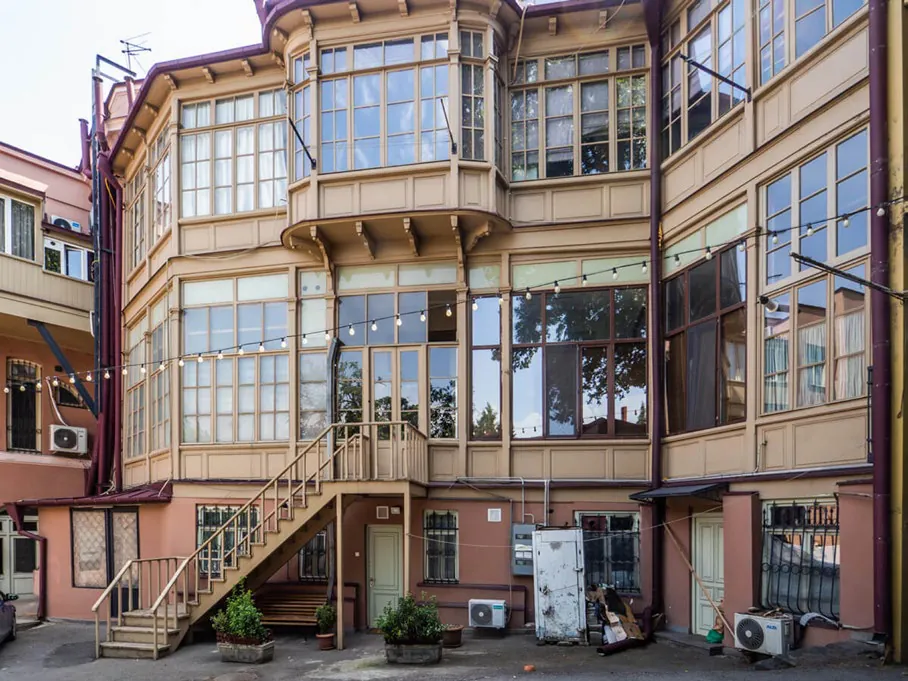
Wooden balconies tucked between narrow streets, intertwined staircases, sunlight filtering through gateways, and laundry hanging overhead create a unique atmosphere found nowhere else. Life here follows its own rhythm: neighbors greeting one another in the morning, the laughter of children, conversations called out from windows, and small tables set up in the courtyard. It is this spirit that many visitors remember long after leaving Tbilisi.
The old courtyards of Tbilisi are far more than architectural landmarks. They are the living memory of the city. Every balcony, gateway, and wooden staircase tells a story of different eras, cultures, and generations. It is here that Tbilisi’s identity as a meeting place between
East and West becomes most visible. For centuries, people of different traditions, languages, and faiths lived side by side, and the courtyards became the everyday setting of this remarkable diversity.
The old courtyards reveal the city’s most peaceful and human side. They remind us that Tbilisi is not merely a beautiful destination, but first and foremost a city of people - warm, vibrant, and just a little nostalgic.
Today, many people refer to these spaces as “Italian courtyards.” In reality, this label became popular during the Soviet period and reflects only the visual resemblance of their gallery-style architecture to similar structures found elsewhere. The phenomenon itself is uniquely Georgian and distinctly Tbilisian. Its origins lie in traditional Georgian housing, particularly the old “hallway houses,” where extended families shared a common living environment.
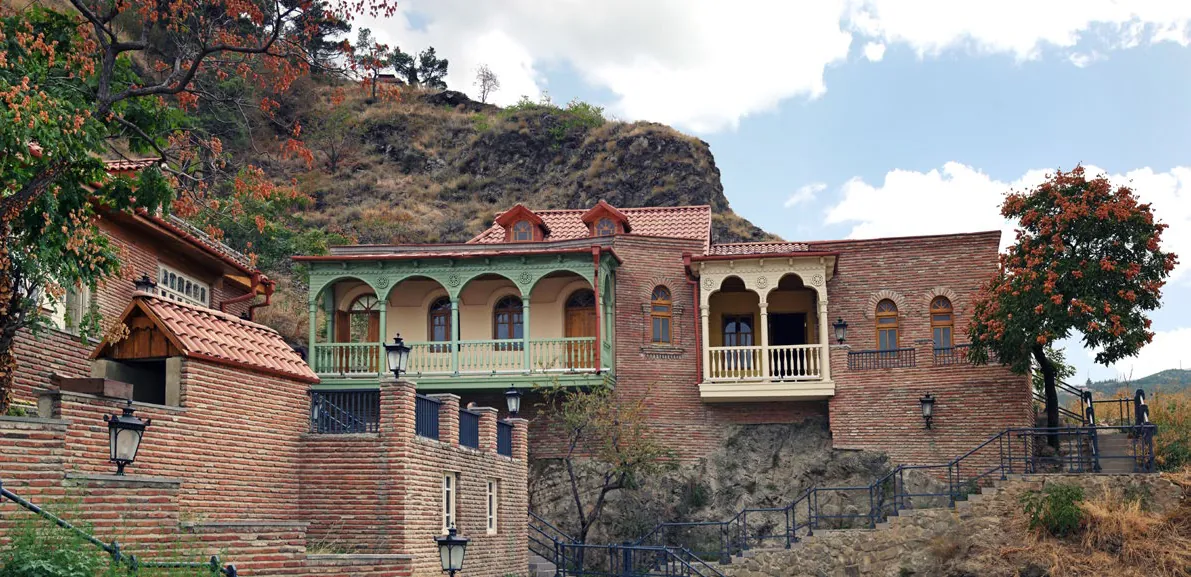
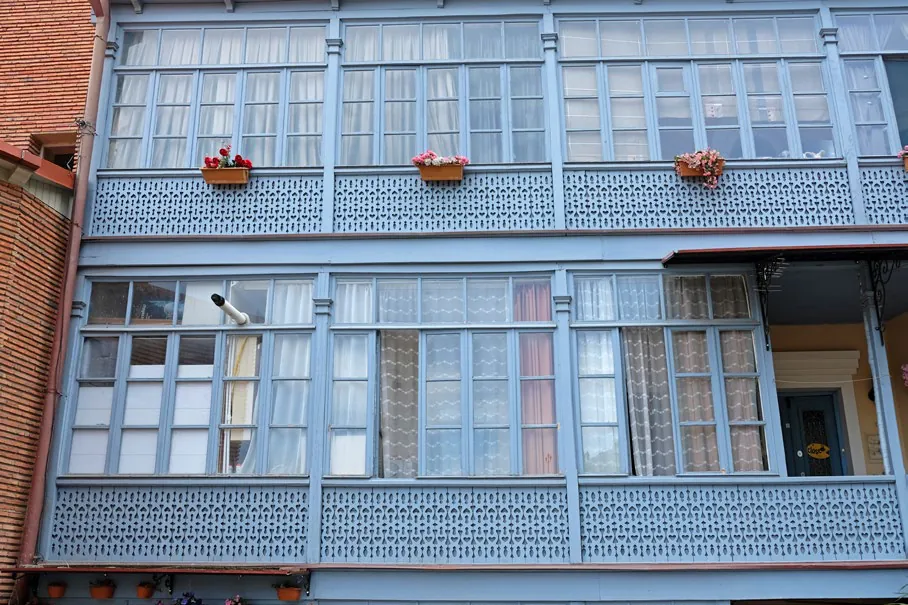
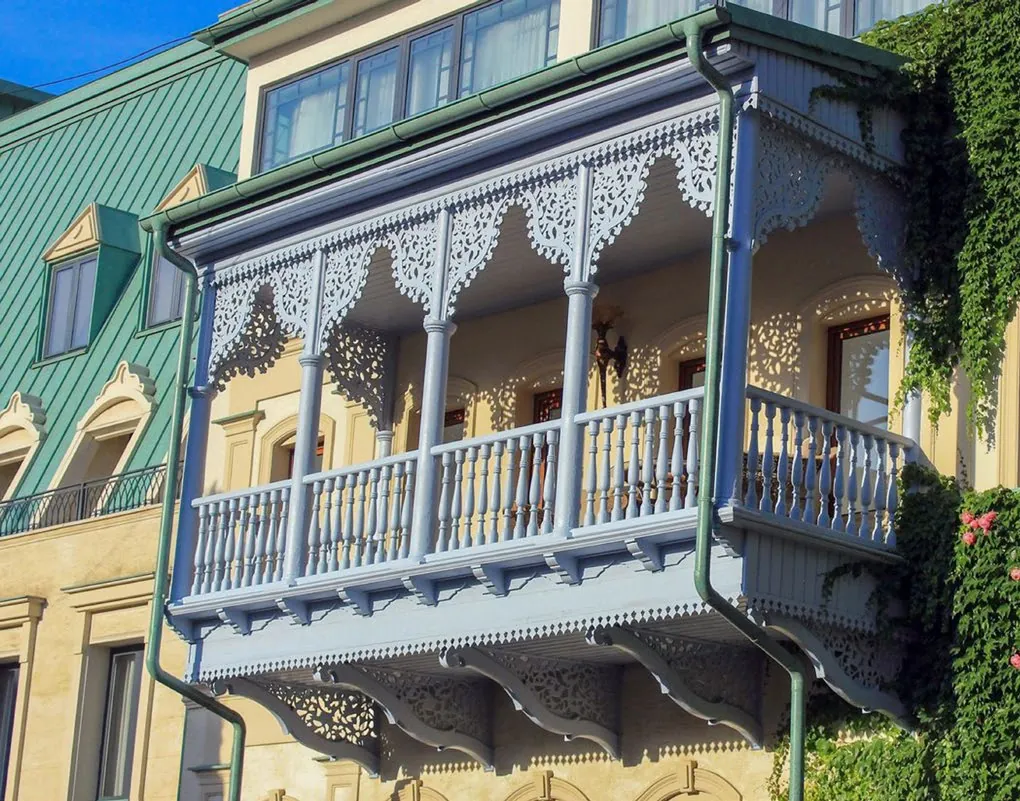
During the 19th century, as European architectural influences reached Tbilisi, local builders adapted this communal way of life to the growing urban landscape. Elegant European-style facades appeared along the streets, while behind them flourished warm Georgian courtyards surrounded by intricate wooden balconies. The result was a remarkable architectural blend unlike anything found elsewhere.
The signature feature of the Tbilisi courtyard is its wooden balcony. These were never merely decorative elements. They functioned as extensions of the home, where much of daily life took place.
During hot summer days, they provided shade and fresh air. Connected by a maze of staircases, the balconies transformed entire buildings into living communities. Family meals were shared here, guitars and pianos filled the air with music, and important news and stories passed from neighbor to neighbor.
These courtyards also became a cradle of cultural tolerance. In historic neighborhoods such as Sololaki, Avlabari, Kala, and Chughureti, families of different ethnicities and religions often lived together within a single courtyard. They not only shared the same space but celebrated one another’s holidays, from Easter to Hanukkah and Nowruz, around a common table. In many ways, the Tbilisi courtyard achieved what even great empires often struggled to accomplish: it united different cultures into one extended family.
Within this community, a special place belonged to Tbilisi’s Kurdish yard keepers, legendary figures remembered by generations of residents. At dawn, the sound of their wooden brooms sweeping the courtyards signaled the beginning of a new day. Despite the demanding nature of their work, they were beloved members of the neighborhood, close friends of local families, and an inseparable part of the great Tbilisi community that united people with equality regardless of profession or ethnicity. They cared for the city while others slept.
Today, when you step behind the centuries-old doors of the old neighborhoods, you may unexpectedly hear music, discover a small workshop hidden beneath a balcony, stumble upon an artist’s studio, or find a cozy modern café. The historic courtyards are gradually gaining new life, yet they continue to preserve their distinctive atmosphere.
Another almost mythical side of the Tbilisi courtyard can be found in Abanotubani and Leghvtakhevi, where houses and balconies cling dramatically to the old cliffs above the river. Here, water and stone were once inseparable from daily life. Local traditions flourished in these neighborhoods. According to a beloved Tbilisi legend, fishermen standing on balconies above the river would lower their fishing lines directly into the water below. When guests arrived, neighbors would pass freshly caught fish from balcony to balcony so the host could prepare a generous feast in true Tbilisi style.
This nostalgic scene was immortalized in the celebrated Georgian film “Mze shemodgomisa” (The Sun of Autumn). Watching the courtyards suspended above the Mtkvari River while listening to Vazha Azarashvili’s beautiful soundtrack offers a glimpse into what many consider the true essence of old Tbilisi: human connection, kindness, and a shared sense of one large courtyard.
Another essential element of old Tbilisi life was its bustling market culture. Markets were not simply places to buy goods; they were centers of communication, where people exchanged news, stories, and opinions. The legendary Vera Bazaar became one of the most vivid symbols of this tradition.
Although modern life is now dominated by supermarkets and fast-paced routines, Tbilisi’s nostalgia for these traditions remains strong. In recent years, the spirit of the old markets has reappeared in a new form. On Sundays, farmers’ markets are held in several historic courtyards of Sololaki. Surrounded by greenery and wooden balconies, local producers bring fresh products from villages and family farms. These gatherings are about much more than commerce. It is the revival of the spirit of the old Vera Bazaar and the traditional Tbilisi courtyard, a place where neighbors and visitors gather, drink coffee, exchange recipes, and restore the sense of warmth and community that modern life often lacks.
It is precisely these unexpected details and the seamless blending of old and new that create Tbilisi’s unique charm. The historic courtyards continue to develop, yet they never lose their original warmth.
They remain the city’s most intimate, authentic, and human spaces. The Tbilisi courtyard reminds us that this city is not simply a collection of streets, buildings, and monuments. Above all, it is a city of people, shared memories, and a special kind of love that is reborn every time a courtyard gate opens.