How to Stay Healthy at 10,000 Meters
EIGHT GOLDEN RULES FOR AIR TRAVEL
Travel is always filled with excitement and anticipation, but for our bodies, flying is far from an ordinary experience. For several hours, we are exposed to a completely different environment, where air humidity, atmospheric pressure, oxygen levels, and even our natural daily rhythm change. As a result, how you feel upon arrival often depends not only on the length of the flight but also on the small habits you adopt while you’re in the air.
Medical and physiological studies show that following a few simple rules can significantly reduce the discomfort associated with flying, help maintain your energy levels, and make the first day of your trip far more enjoyable.
At an altitude of around 10,000 meters, cabin humidity typically drops to just 10 - 20%, compared with the 40 - 60% humidity that is considered comfortable for the human body. In these conditions, the body loses fluids more quickly than usual, the skin and mucous membranes become dry, blood thickens, fatigue increases, and concentration may decline.
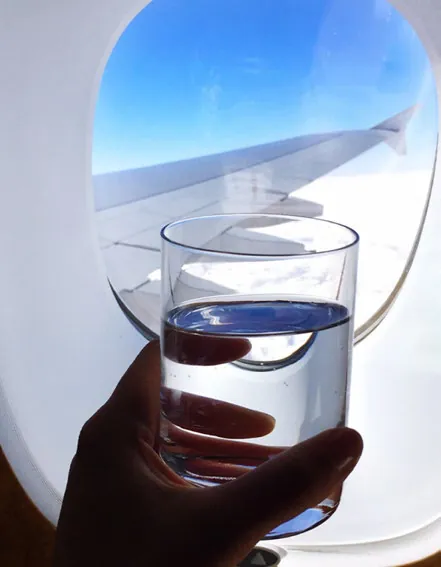
That is why the first and most important rule of air travel is staying hydrated. Drinking water regularly from the beginning of your flight is one of the simplest and most effective ways to help your body cope with the dry cabin environment.
Here are eight simple, science-backed tips that every traveler can benefit from.
1. Start Your Flight with Water, Not Coffee
The humidity inside an aircraft cabin is extremely low, causing the body to lose fluids rapidly. Dehydration can lead to fatigue, headaches, reduced concentration, and dry skin. For this reason, water should be your first choice of drink during a flight.
2. Get Up and Move Every Hour
Remaining seated for several hours slows blood circulation. Taking a short walk through the cabin or sim- ply stretching and moving your feet for a few minutes improves circulation, reduces swelling, and relieves the feeling of heavy legs.
3. Set Your Watch to Your Destination’s Time
Research suggests that your body adapts more quickly to a new time zone if you begin adjusting mentally from the start of the flight. Setting your watch and planning your meals and sleep according to your destination’s local time can help reduce the effects of jet lag.
4. Wear Comfortable Clothing
Tight clothing can increase discomfort and swelling during long flights. Loose-fitting clothes made from natural, breathable fabrics allow your body to stay more comfortable throughout the journey.
5. Keep Your Skin Hydrated
Many people notice that their skin feels tired after flying. The reason is not aging but the sharp drop in humidi- ty. Using a moisturizer and lip balm helps maintain your skin’s natural protective barrier.
6. Eat Light Meals
Your sense of taste and smell changes slightly at high altitude, often making you crave saltier or sweeter foods. However, heavy meals can leave you feeling sluggish and uncomfortable. Lighter meals rich in protein and vegetables are generally easier to digest and help you feel more energetic.
7. Daylight Is the Best Remedy for Jet Lag
After arriving in a new country, spending 20 to 30 minutes in natural sunlight helps your body’s internal clock adjust more quickly to the new time zone.
8. Don’t Overload Your First Day
Travel psychologists suggest that an overly busy schedule on the first day of a trip can increase stress and reduce overall enjoyment.
Sometimes the best way to begin exploring a new destination is with a leisurely walk, a good cup of coffee, and simply taking in the rhythm of the city.