Irakli Nassidze
The Georgian Soul of Paris Haute Couture
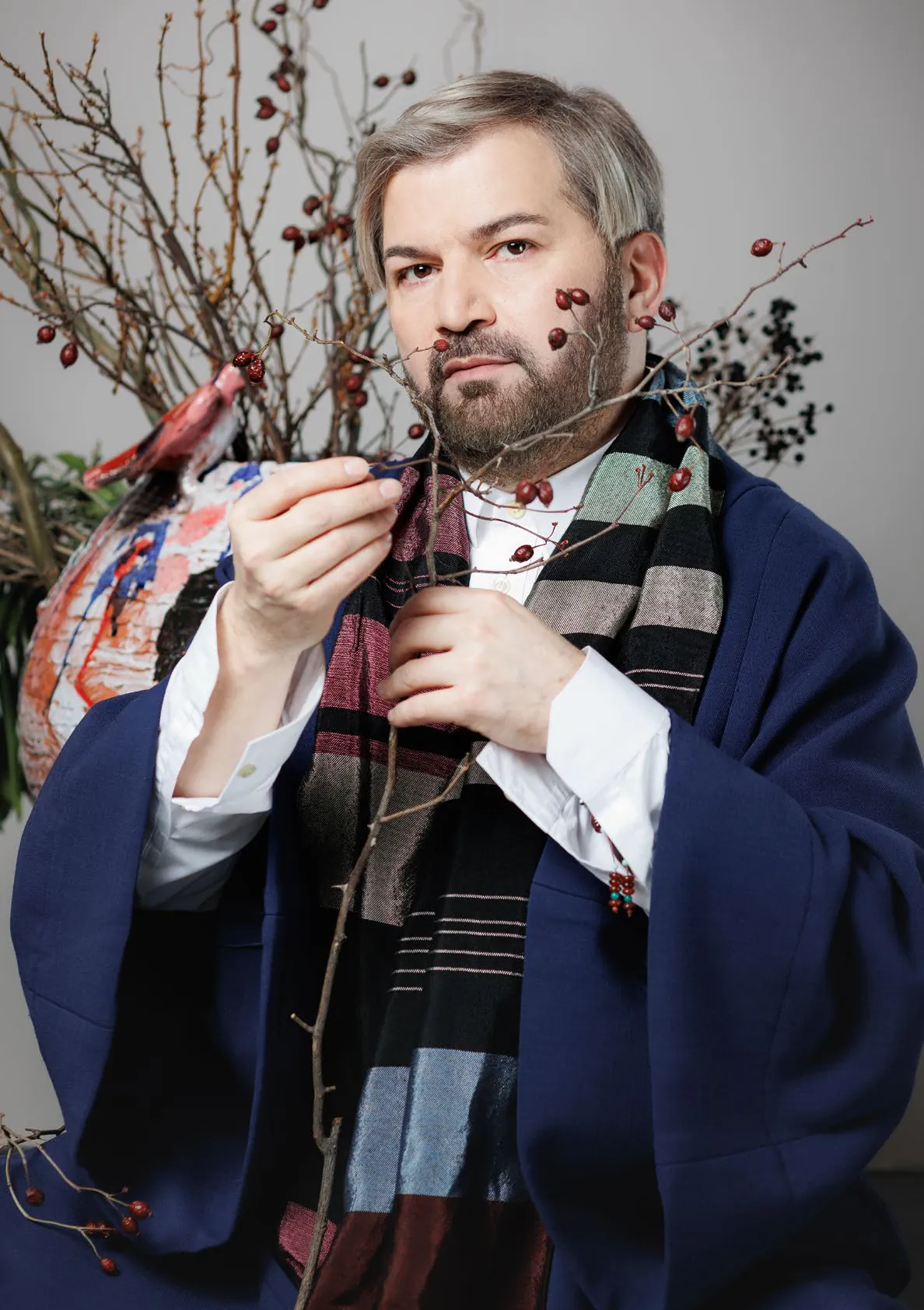
Paris, the global capital of haute couture, has long been home to Georgian designer Irakli Nassidzé and his distinctive creative signature. Born and raised in Tbilisi, art has been part of the designer’s life since childhood. His family, his surroundings, and especially his sister, the artist Nino, had a strong influence on his creative path.
In the 1990s, despite many challenges, he dared to move to Paris, a city that had always held a special, symbolic meaning for him. It was there that he met Yves Saint Laurent. One of the first important stages of his professional journey was his collaboration with Jean-Louis Scherrer and Christian Lacroix.
Today, his work brings together Georgian cultural roots and a modern international vision. For Nassidzé, fashion is no longer simply about form; it is history, emotion, and the expression of personal experience.
How did your journey into the world of fashion and art begin, and what role did childhood play in your creative work?
Everything begins with love, an unconditional, invisible force that protects you, embraces you, and quietly spreads its wings during childhood. It was this love that gave me strength, faith, and inner freedom. I dared to dream, and to make those dreams come true.
The history of my country, the voices of my ancestors, and my family roots formed within me a kind of code that still guides my creative instincts today. Yet even talent given by God gains real power only through hard work and perseverance.
Since childhood I felt an irresistible attraction to Paris a city that for me was never simply a place on a map, but rather a kind of mythological space where fashion transforms into art and beauty reaches its highest form.
The 1990s were difficult years, full of contradictions. But youth often reads reality differently: difficulties do not frighten you; they are simply part of the journey. With that strange mixture of lightness and stubborn determination, I followed my path.
One of the earliest inspirations along this path was my sister, Nino. Her world did not obey reality. It was surreal, filled with colors, shapes, and unexpected transformations. Entering her room felt like stepping into another dimension where time broke apart and objects gained new life. I touched her brushes, mixed paints, and disrupted her careful order, as if trying to find my own order within chaos.
Today Nino is an artist-designer, and our creative dialogue has continued for many years, like two parallel worlds that occasionally intersect.
And finally – my mother. Her beauty was never merely external. It was an inner light, a refined sense of aesthetics, harmony expressed through movement, and warmth combined with precision in words. From her I learned that true elegance lies not in form, but in essence.
She was and remains the primary source of inspiration, my invisible muse, and my angel.
I would also like to thank my parents. Without their unconditional love and care, Nino and I would never have been able to realize our dreams. Their support gave us the strength to follow our path and turn dreams into reality.
What was the main reason you chose France to develop your career?
As I mentioned earlier, Paris is the Mecca of fashion, a place where history, tradition, and avant-garde ideas intertwine, and where great names are not only created but also become timeless.
It is there that the culture of haute couture is born, like a living organism that flows like a river, constantly changing form but never losing its essence.
This continuous flow, this energy, and this unique philosophy of beauty determined my path and drew me to Paris, not simply as a geographical destination but as a spiritual and creative center.
In dialogue with this powerful tradition, it became especially important for me to find my own voice. Irakli Nassidzé’s artistic signature was formed within this dialogue - a synthesis of Eastern sensitivity and Western structure.
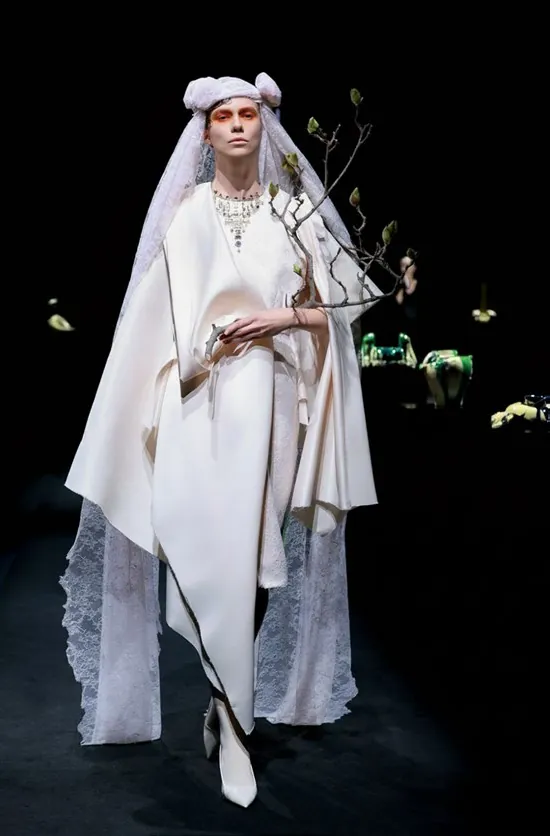
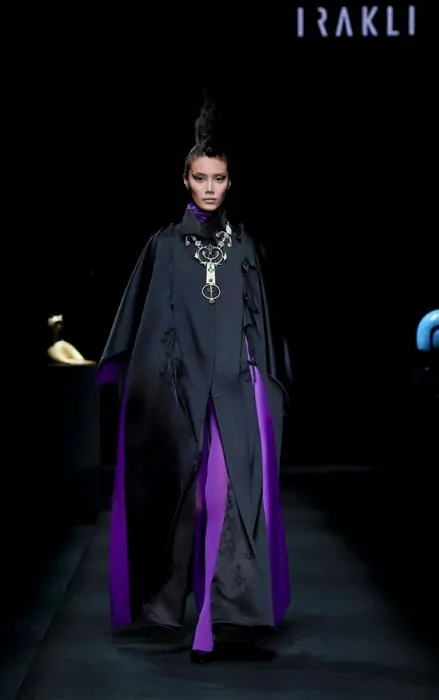
In my work, fashion goes beyond functionality and becomes an emotional narrative. Forms seem to live, fabrics breathe, and silhouettes do not dominate the body but exist in harmony with it.
My signature is an attempt to create beauty beyond time, where the memory of the past and the pulse of modernity meet.
That is why moving to Paris was not merely a decision. It was a step along the path of discovering identity and uniqueness.
Your embroidery has adorned such haute couture houses as Jean-Louis Scherrer, Christian Lacroix, Yves Saint
Laurent, Dior, Chanel, and François Lesage. What emoois Lesage. What emo-
tions do these moments carry for you, and how did they influence your later career?
I have always believed that discipline and determination create the space where opportunities naturally arise, where the process begins to follow its own logic.
One of the most important periods of my professional path was my collaboration with Jean-Louis Scherrer and Christian Lacroix, while meeting Yves Saint Laurent had a profound impact on me. I remember him entering the room unexpectedly. At that moment I was working with one of his colleagues, and we did not expect him to appear. It was not simply a meeting, it was a presence, an energy that changed the atmosphere of the entire room. His quiet entrance, a handshake, and a few words were enough to clarify my creative direction.
These people, those who shaped the history of fashion, became for me not only authorities but also living archives of experience, knowledge transmitted through emotion.
My work is built on this emotional archive: meetings, events, and subtle moments that may go unnoticed by others but can become powerful creative impulses for me.
This period was a synthesis of trust, responsibility, and freedom, the opportunity to work independently, with complete autonomy of vision, without externally imposed limitations.
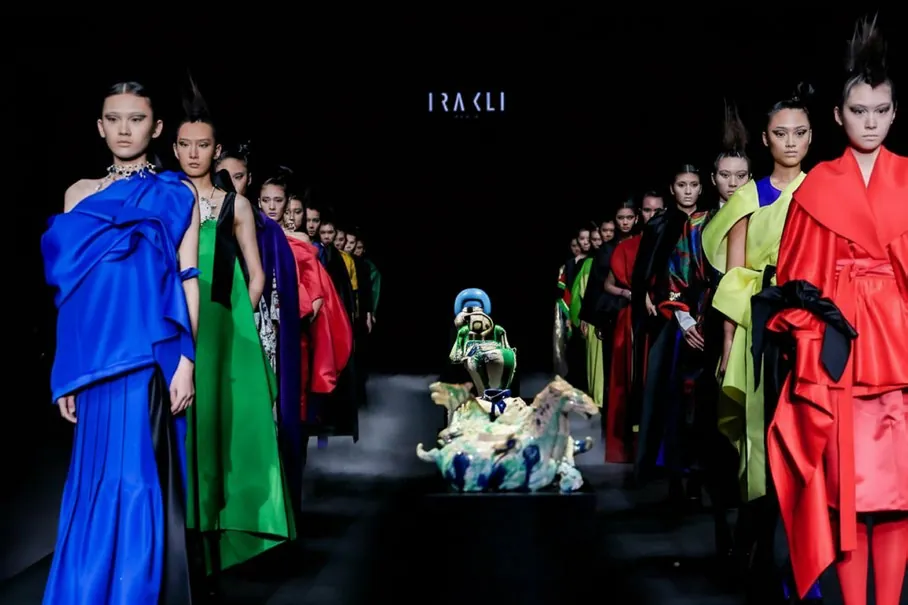
In 2002, my first show took place at Palais Galliera, which laid the foundation for the dynamic development of my career.
For many years I had the honor of being an invited member of the Chambre Syndicale de la Haute Couture, the institution that defines the standards of haute couture.
My recommender was François Lesage, founder of the historic Parisian embroidery house. His trust was a particularly meaningful professional recognition for me.
How would you describe your style?
My signature is the combination of contrasts. I create clothing and jewelry that are not merely visual objects. Each piece becomes a silent dialogue in which form, material, and artistic pattern merge into an architectural and contemporary narrative.
How important are details inspired by Georgian culture and traditions in your design?
Culture is a universal dimension of humanity. We live in a world where different perspectives, aesthetics, and individual expressions coexist and evolve simultaneously. Unfortunately, these values are sometimes lost.
Culture is not just knowledge or habit. It is a collection of experiences passed from generation to generation through traditions, stories, objects, and actions.
Human beings are not only unique, they are creators. Yet what we create largely depends on the environment in which we grow and the people who shape us.
My work is deeply infused with the Georgian spirit, yet it has never been monochromatic or literal. My style blends the essence of Georgian cultural heritage with other cul- tures, creating a dialogue between past and present. This dialogue gives my work its depth and charm.
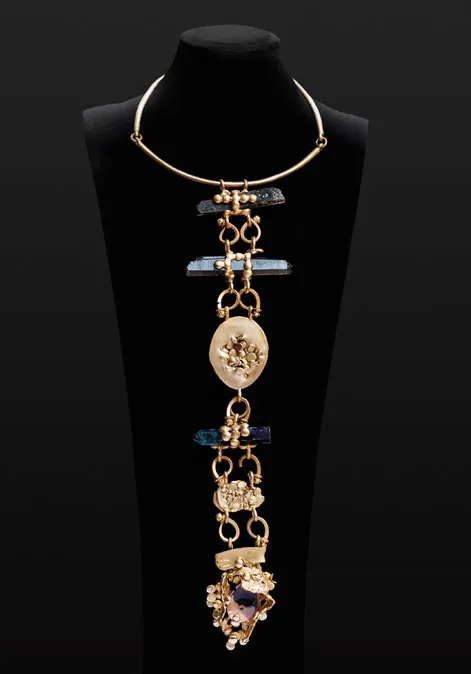
Archaeology, history, and examples of traditional Georgian goldsmithing are constant sources of inspiration for me.
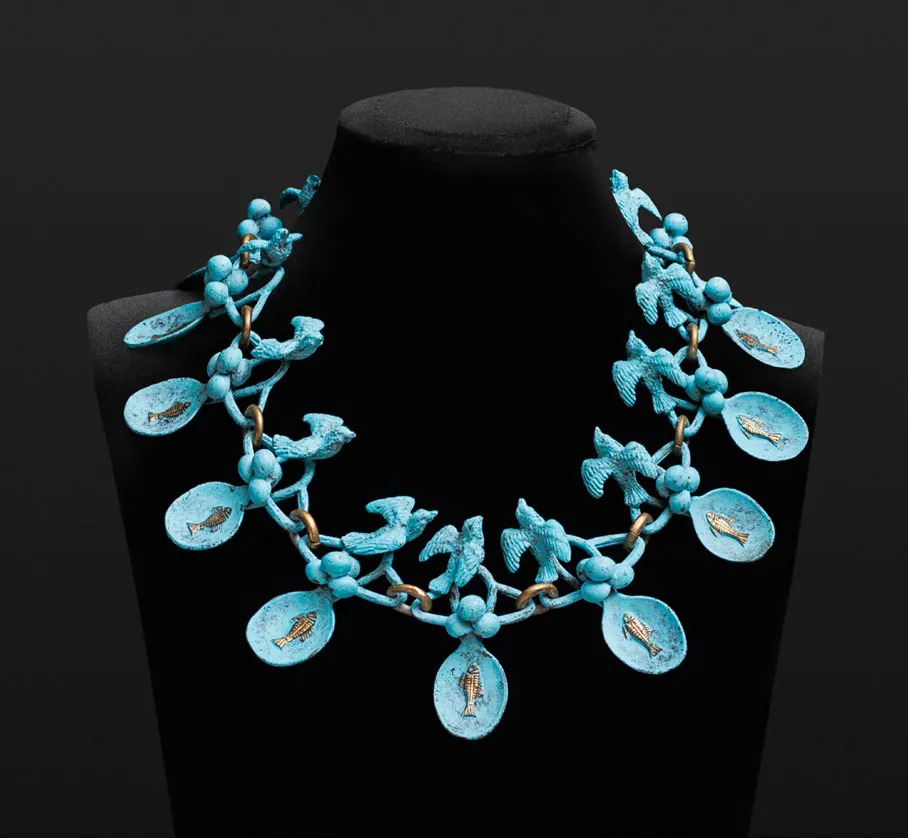
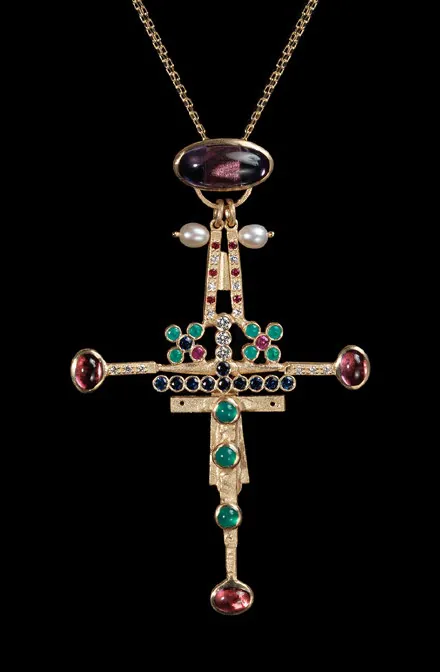
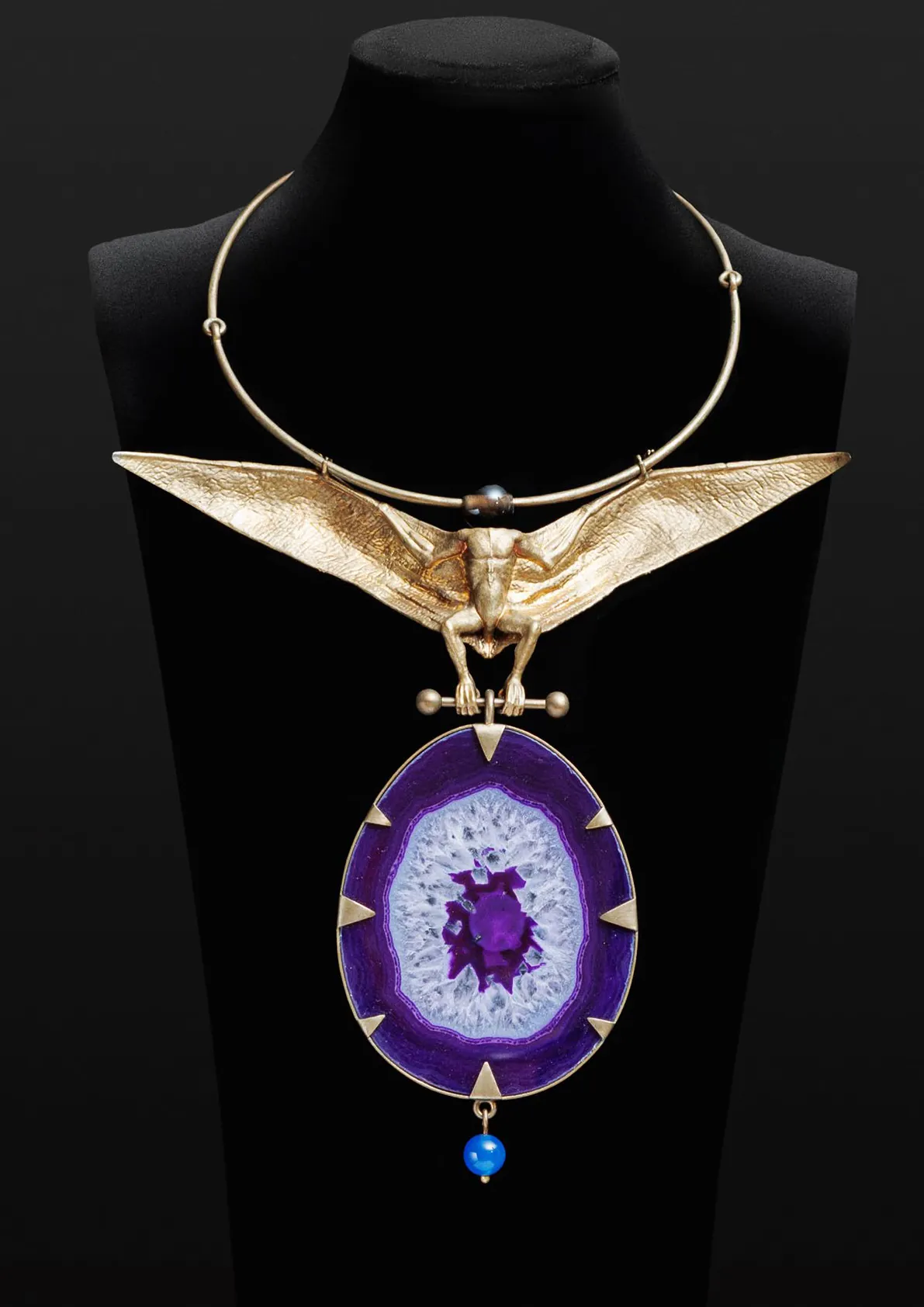
As Art Director of Zarapkhana, our jewelry collections often reflect the influence of ancient Georgian goldsmithing. Today we are creating a modern gold heritage that combines tradition with contemporary visual language. Each piece carries both ancient spirituality and modern expression.
I would also like to mention my first haute couture collection, presented in 2002 at Palais Galliera (Paris Fashion Museum). Georgian lullabies filled the entire hall. It was the moment when my cultural identity merged with the Parisian world of haute couture.
Your work extends beyond clothing - you paint and create jewelry. How do these forms of creativity connect?
You are absolutely right. My creativity is not limited to clothing design. It is not bound by clichés. Its essence is deeper and more multifaceted, rooted in spirituality rather than materiality.
That is why I call myself a creator rather than an artist-designer. The latter suggests a narrower specialization.
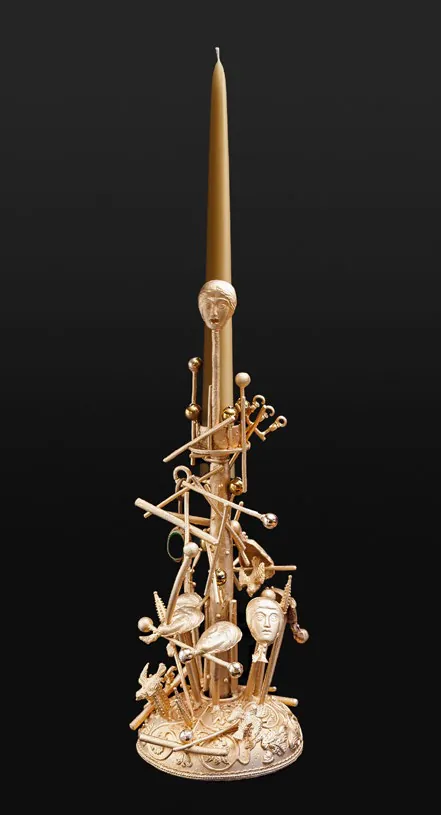
I create not only clothing but also jewelry, furniture, and ceramic pieces. I work with metal, painting, and graphics. Each work expresses my emotions, vision, and inner world. They are not merely objects, they are bridges between creativity and people.
How has your vision of fashion changed through exposure to different cultures?
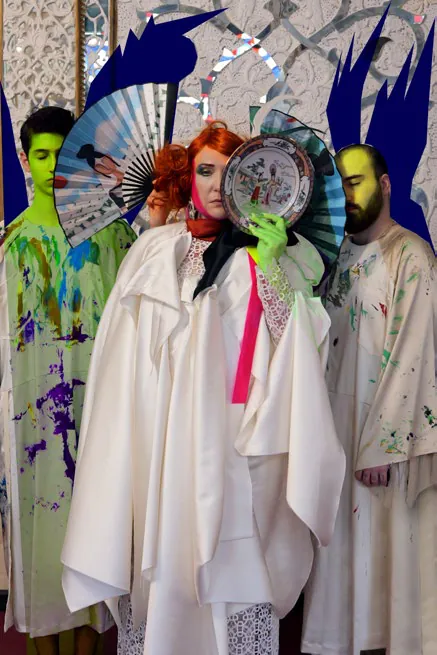
My views have not fundamentally changed, they have simply expanded and deepened. My European experience gradually merged with Asian influences, awakening in me a different rhythm, a different silence, and a new depth.
What are you currently working on?
My plans are diverse and ambitious, covering several areas of applied art: fashion, artistic objects made from various materials such as bronze, silver, gold, natural stones, and ceramics.
For several years I have also been deeply interested in photography.
In addition, I am actively working on interior design projects for hotels and private villas, where space becomes an environment that reflects a unique artistic vision.
For the past ten years, together with my wife Qiao Qi, I have been working internationally across Europe, Georgia, and Asia. Our work has attracted particular attention among collectors.
Our pieces have been presented in European galleries and international art fairs, confirming the relevance of our work in the global art scene.
On April 12 this year, my wife held a solo exhibition at the Contemporary Art Center “Anagi,” where several of our joint works were also presented.
In July, during Paris Haute Couture Week, I will present my collection “Mystical outlines” for the jewelry brand Zarapkhana at Palais Vivienne in Paris. Major clients and collectors from around the world will attend the event.
Future plans also include projects in Kazakhstan and China. In January 2027, I plan to participate in the BRAFA Art Fair in Brussels, one of the most prestigious international art fairs.
What advice would you give young Georgian designers who dream of entering the international fashion scene?
I would highlight only two pieces of advice.
First, preserve your individuality, the inner voice that distinguishes you from others.
Second, remain honest with your work, because it is through this honesty that true art is born. CANDELHOLDER IN BRONZE. UNIQUE PIECE FROM A PRIVATE COLLECTION