Sergo Kobuladze
Sergo Kobuladze’s name is associated with a unique harmony of light and color in Georgian art. His work forms a world shaped by classical monumentalism, refined lyricism, and a distinctive linear style, where reality and symbolism merge. Kobuladze’s art is a journey into the depths of Georgian culture, where tradition and modern vision come to life in remarkable unity.
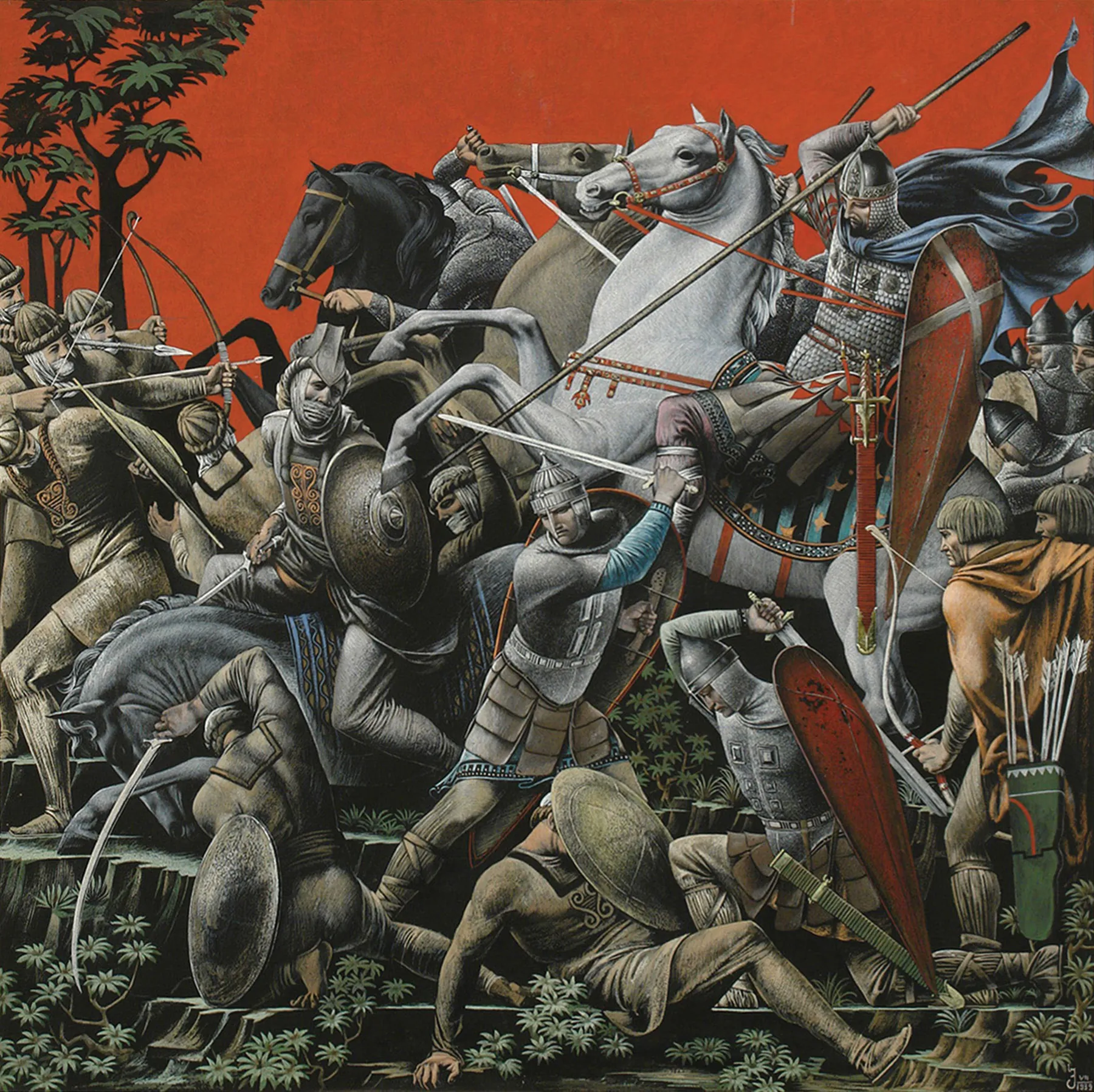
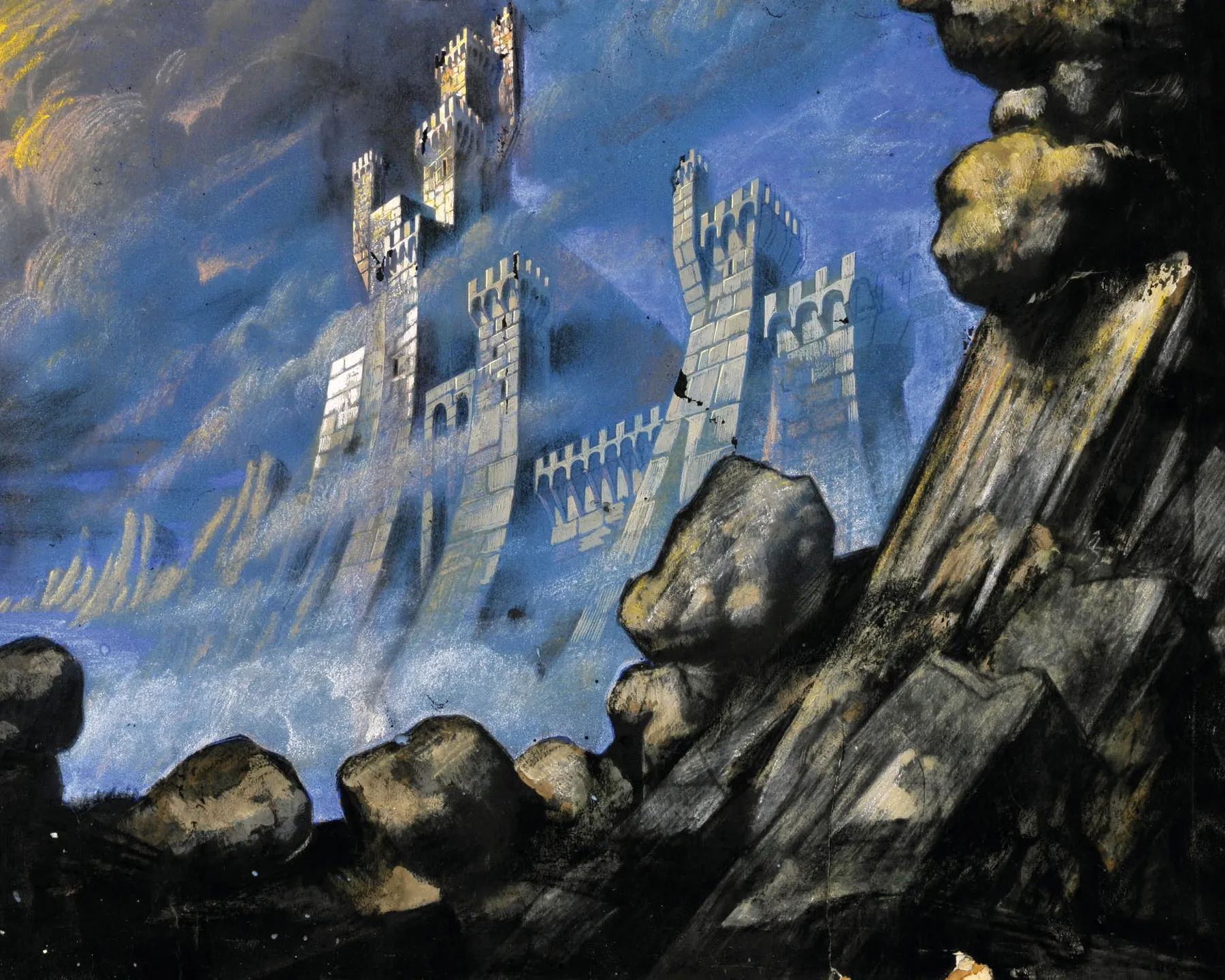
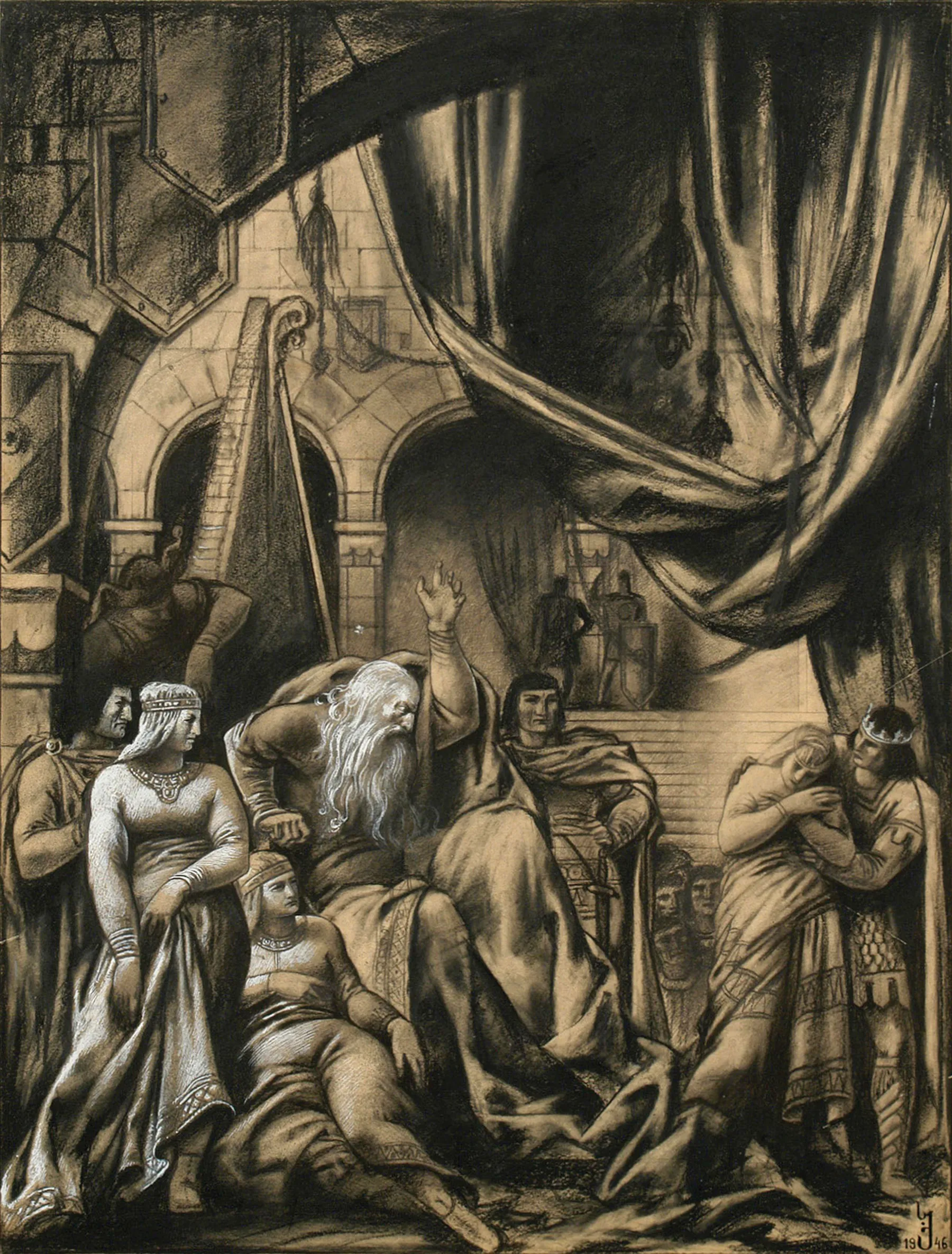
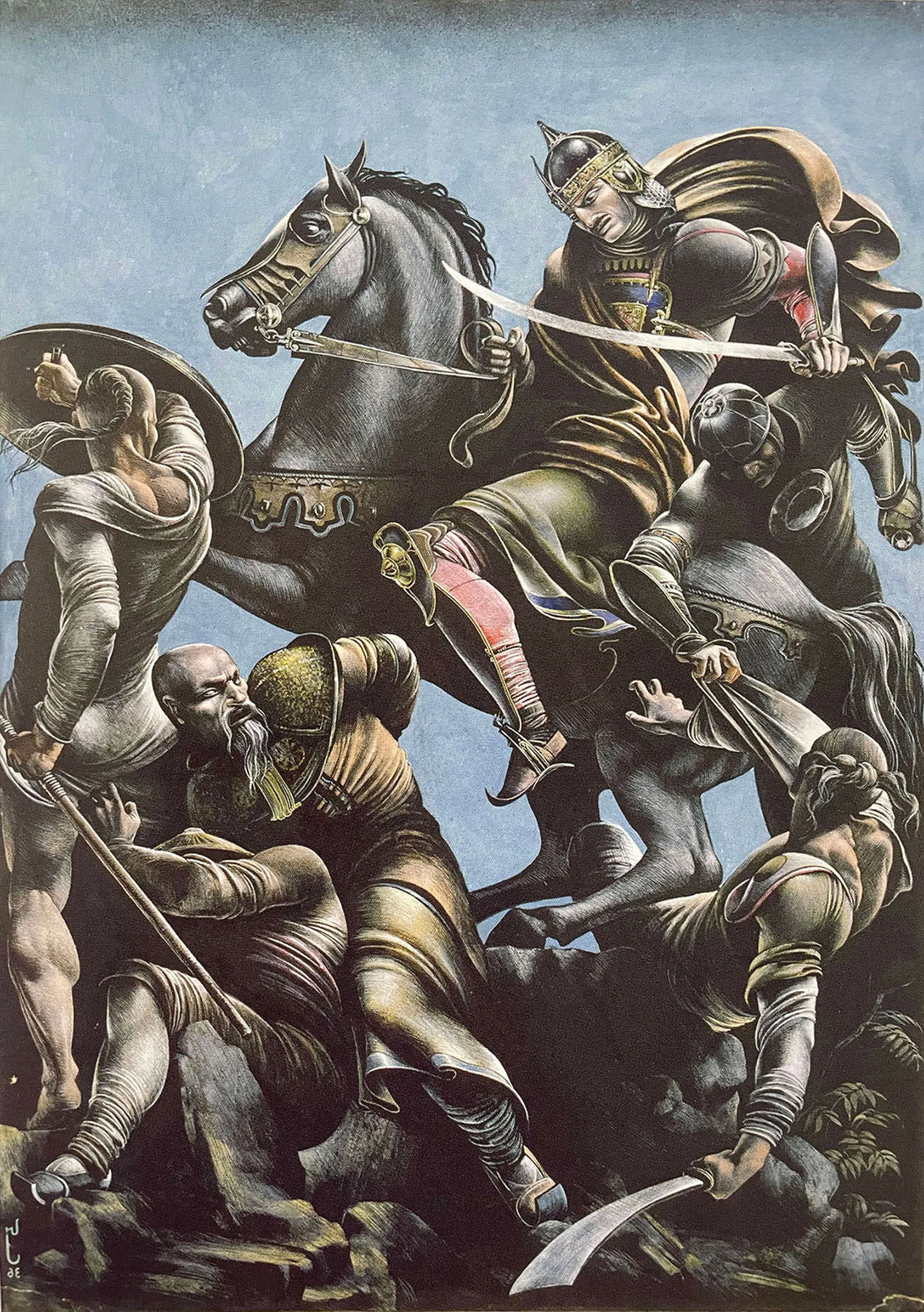
At the early stage of his creative career, the artist became fascinated by theatre design and book illustration, a passion inspired by a competition announced in 1934. The goal of the competition was to prepare an illustrated edition of Shota Rustaveli’s “The Knight in the Panther’s Skin” for the poem’s 750th anniversary, celebrated in 1937. It is noteworthy that Kobuladze’s illustrations for “The Knight in the Panther’s Skin” continue to hold significant historical value.
The creative vision and visual expression of Sergo Kobuladze, People’s Artist of Georgia, Corresponding Member of the USSR Academy of Arts, laureate of the Shota Rustaveli Prize, as well as a graphic artist, painter, and scenographer, transformed over time.
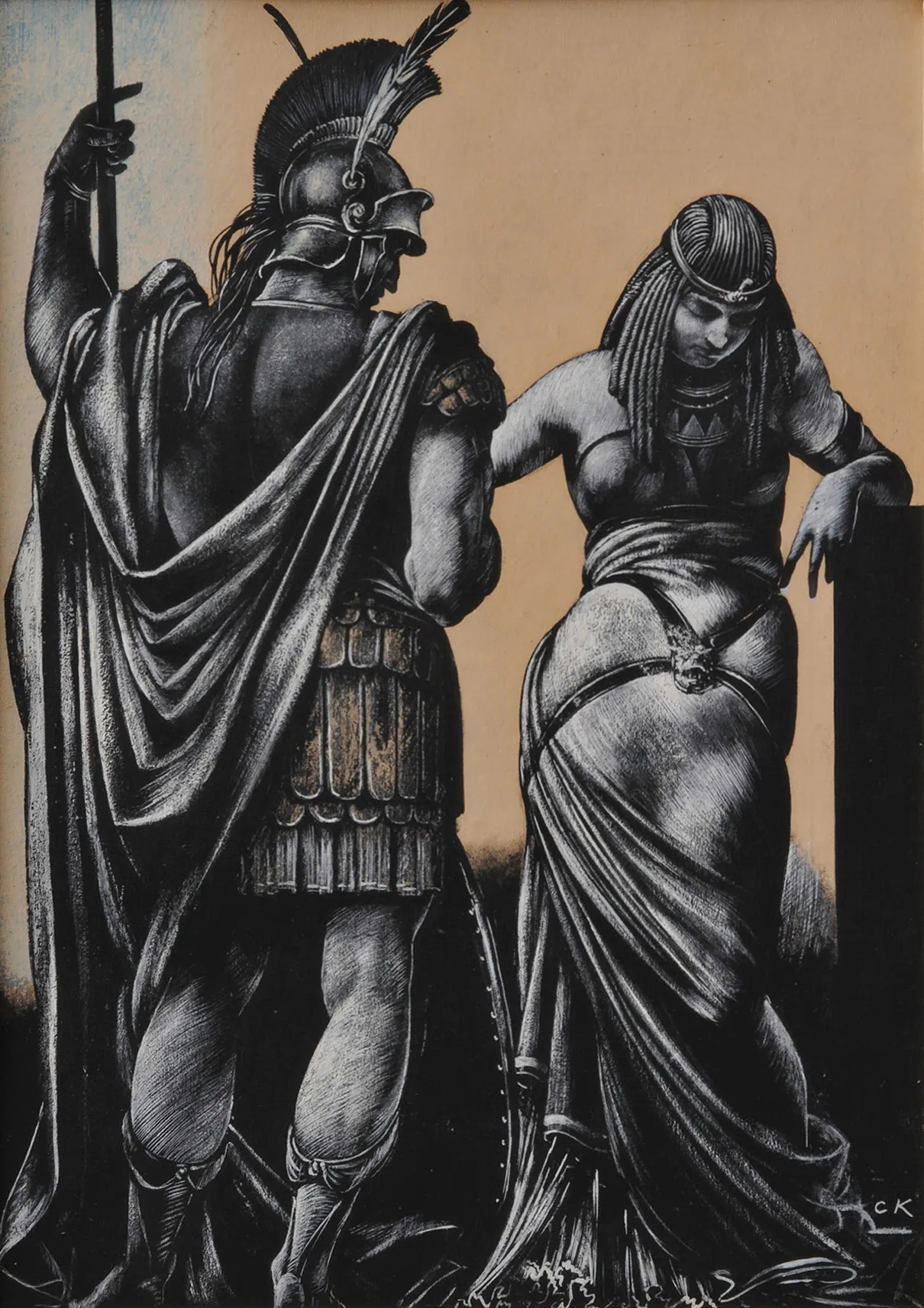
In the 1930s and 1940s, his illustrations were closely aligned with the classical nature of literary works. These drawings were examples of exceptional mastery. Dense, sculptural figures and monumental compositions were defining features of his art during this period.
Works created in the 1950s became more intimate and
closely aligned with the content of the books he illustrated. His sketches began to reflect traces of life and emotion, making them more vivid and tangible for the reader. This transformation reveals much about Kobuladze’s artistic personality: to him, a book was a living organism, one he continuously reinterpreted at each stage of his career. His constant creative exploration expanded both his technique and professional mastery.
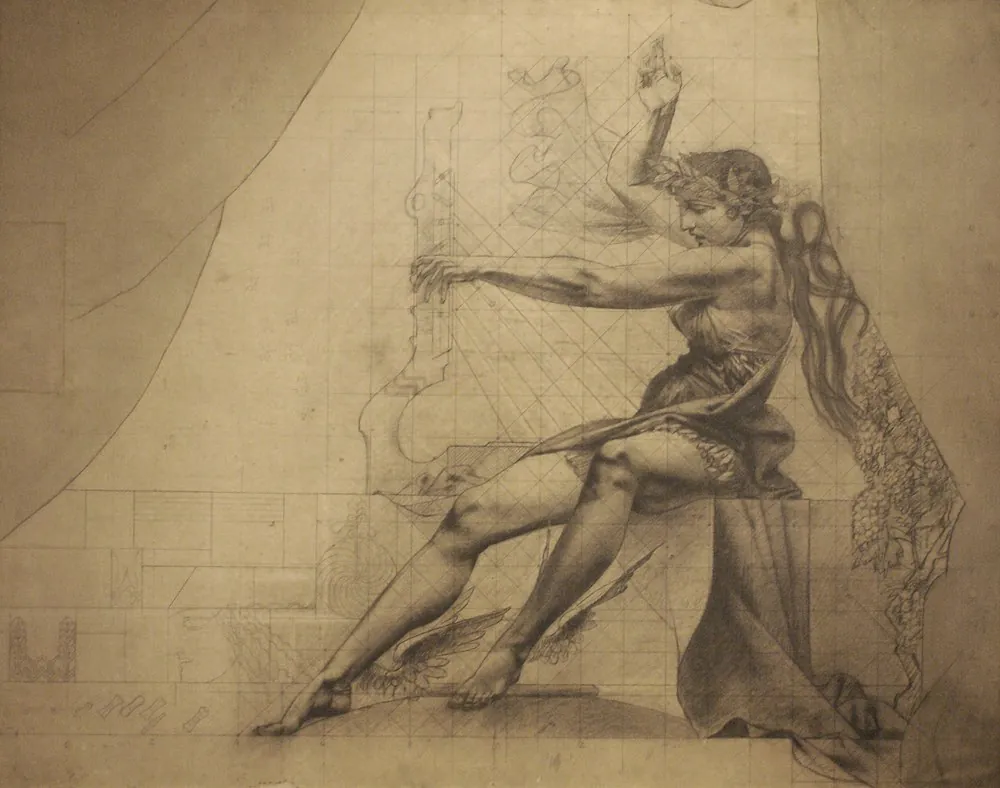
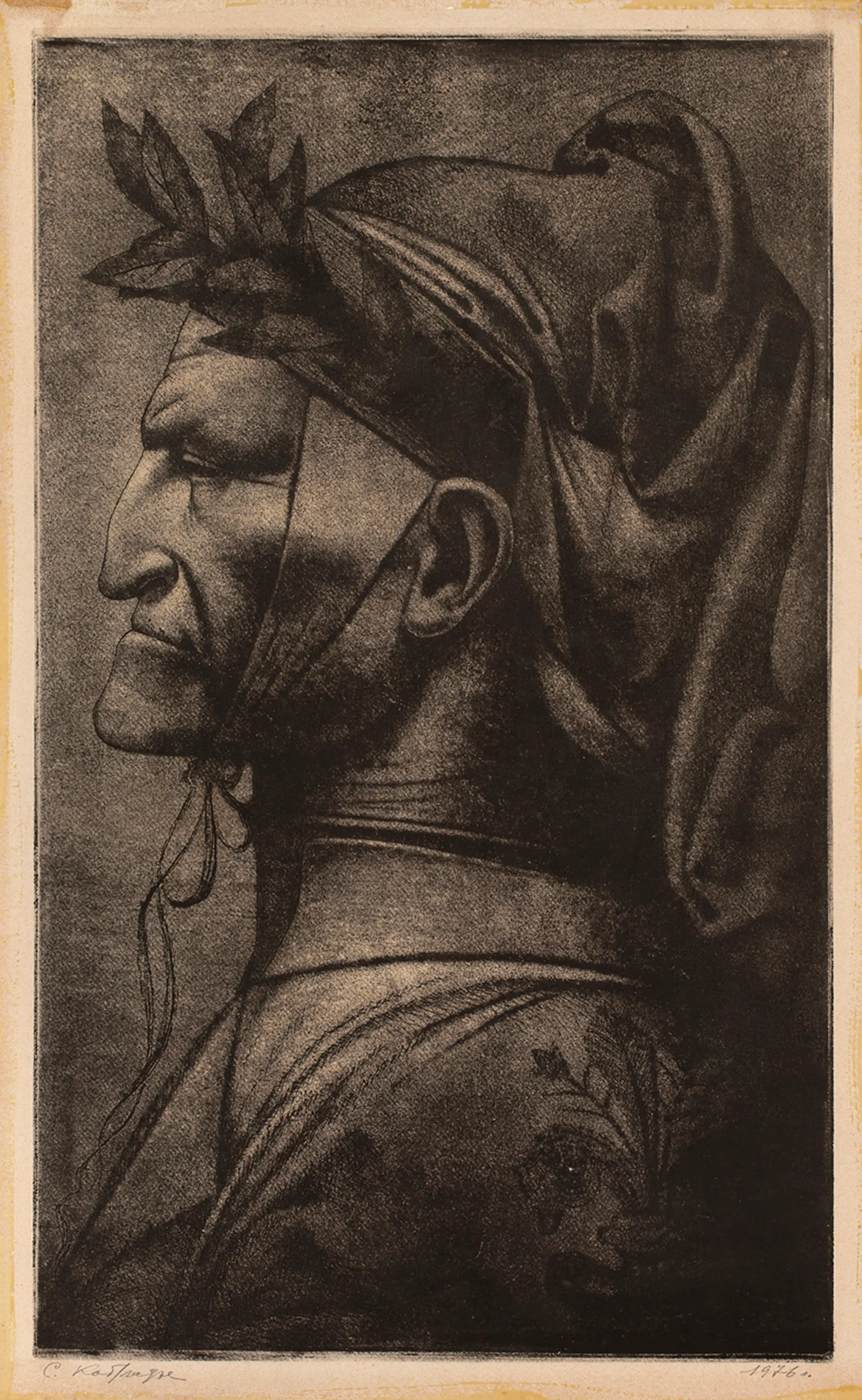
Sergo Kobuladze also actively worked in the fields of graphic art and painting. His portraits, landscapes, and still lifes are distinguished by the unmistakable signature of a true classic. He is also known for the iconic stage curtain created for the Tbilisi Opera and Ballet Theatre between 1958 and 1961. The artist spent a total of four years working on it: three years developing the sketch and eleven months completing the curtain itself.
One of Kobuladze’s interests was the art of the Italian Renaissance. In the final years of his life, he wrote a theoretical work on the “Golden Ratio,” compiling the results of years of his research. Particularly noteworthy are the photographs he captured in Italy during the 1950s.
His photographs of Italian cities taken in 1956, seen through the eyes of an artist, are preserved in the archive of the George Chubinashvili National Research Centre. To mark the 115th anniversary of his birth, the centre held the exhibition “Italy 1956: Photographer Sergo Kobuladze,” allowing visitors to view Italian cities and experience the moments and stories he captured through his lens.
Time passes, yet images remain. Today, Sergo Kobuladze’s work reminds us that color and line, beyond their technical function, can become ambassadors of thought and emotion. The artistic legacy he left behind stands as an independent narrative that speaks softly and is reborn with every new viewer who encounters it.