Sophia Cherkezishvili “They Say Life is a Fairy Tale”
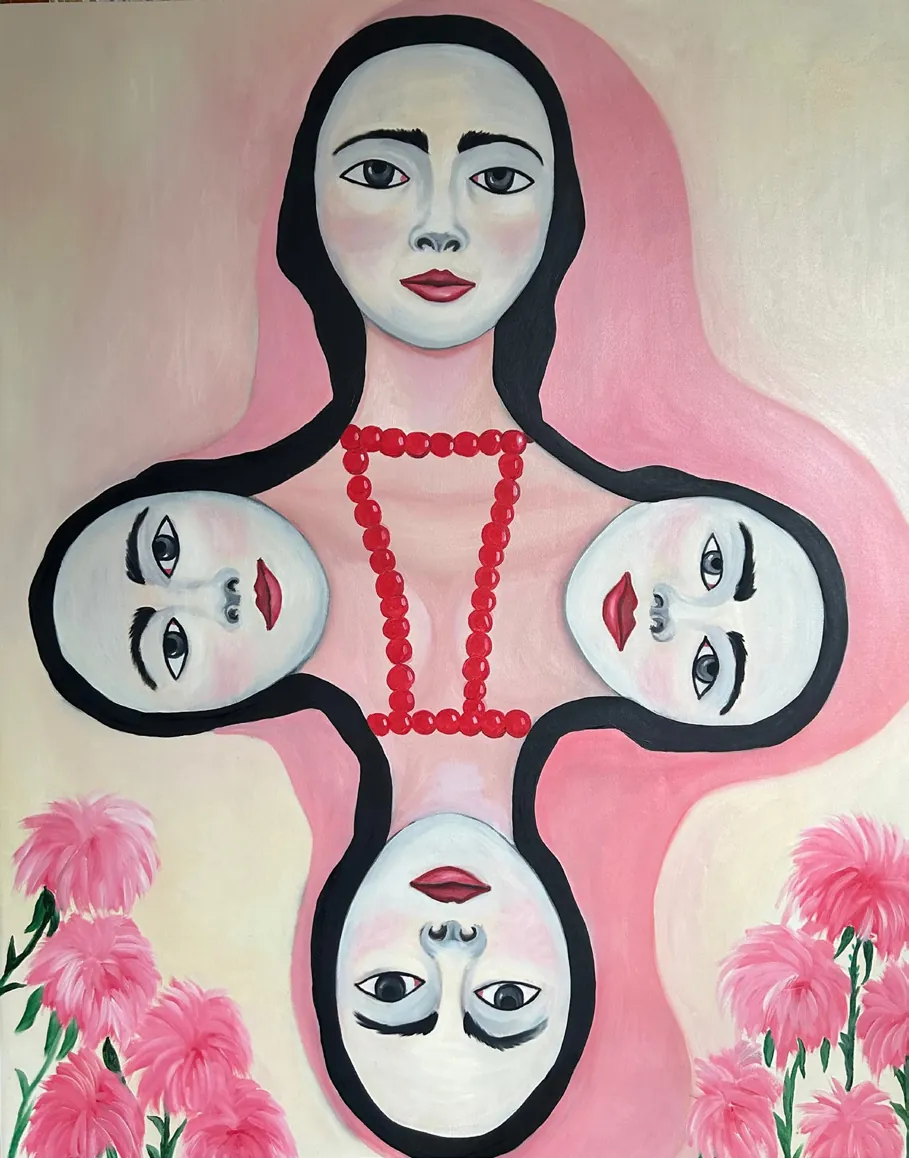
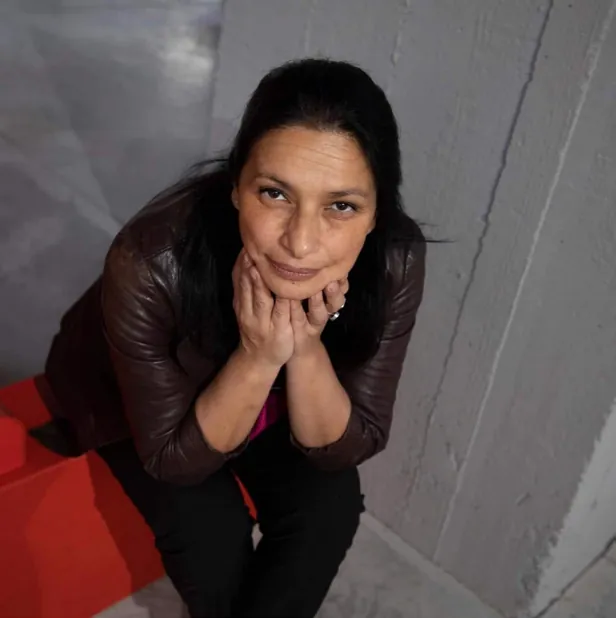
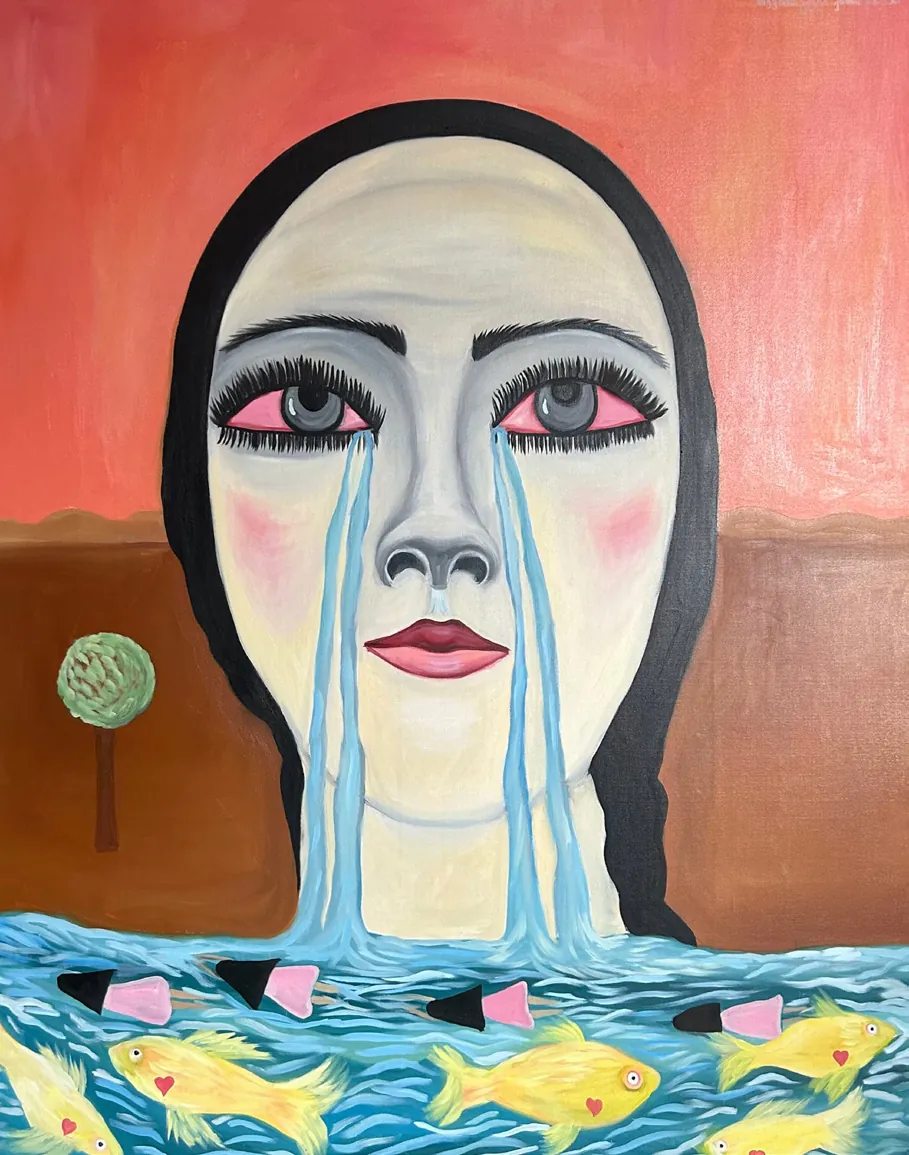
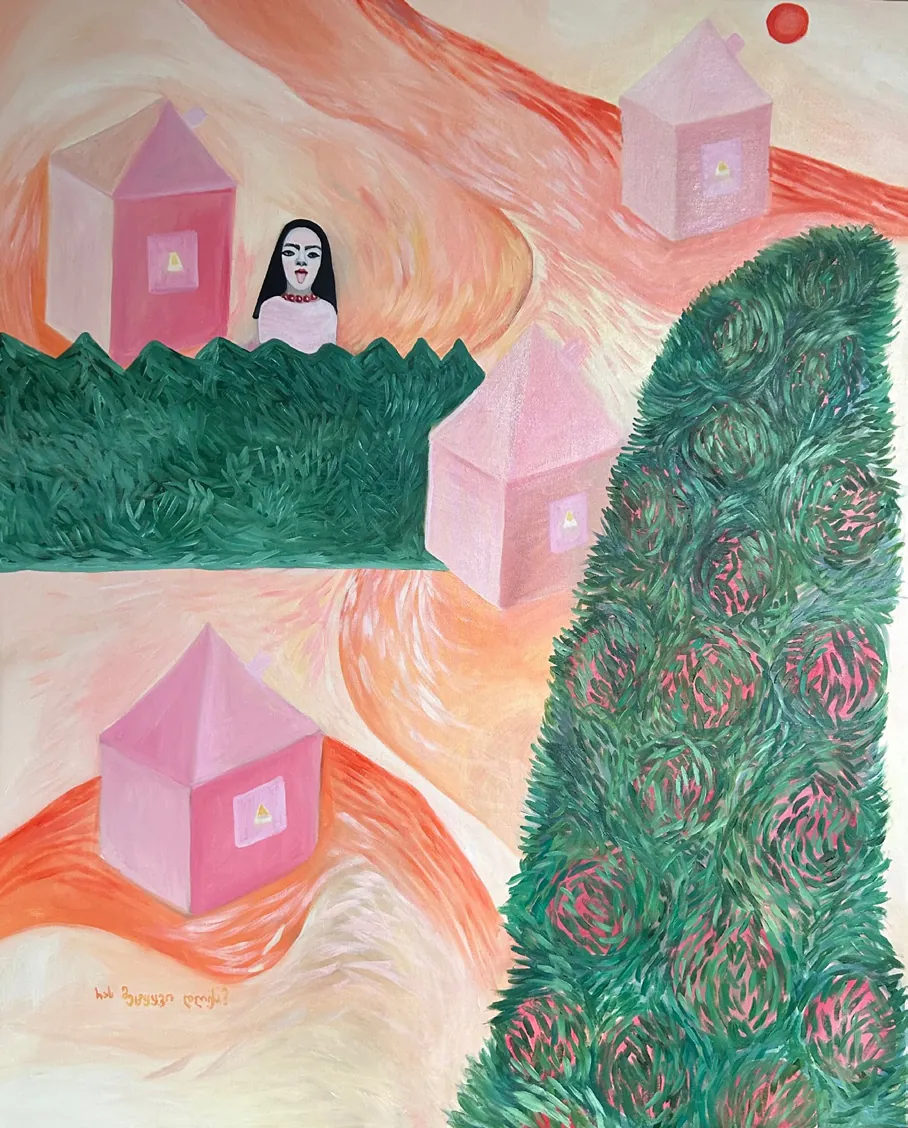
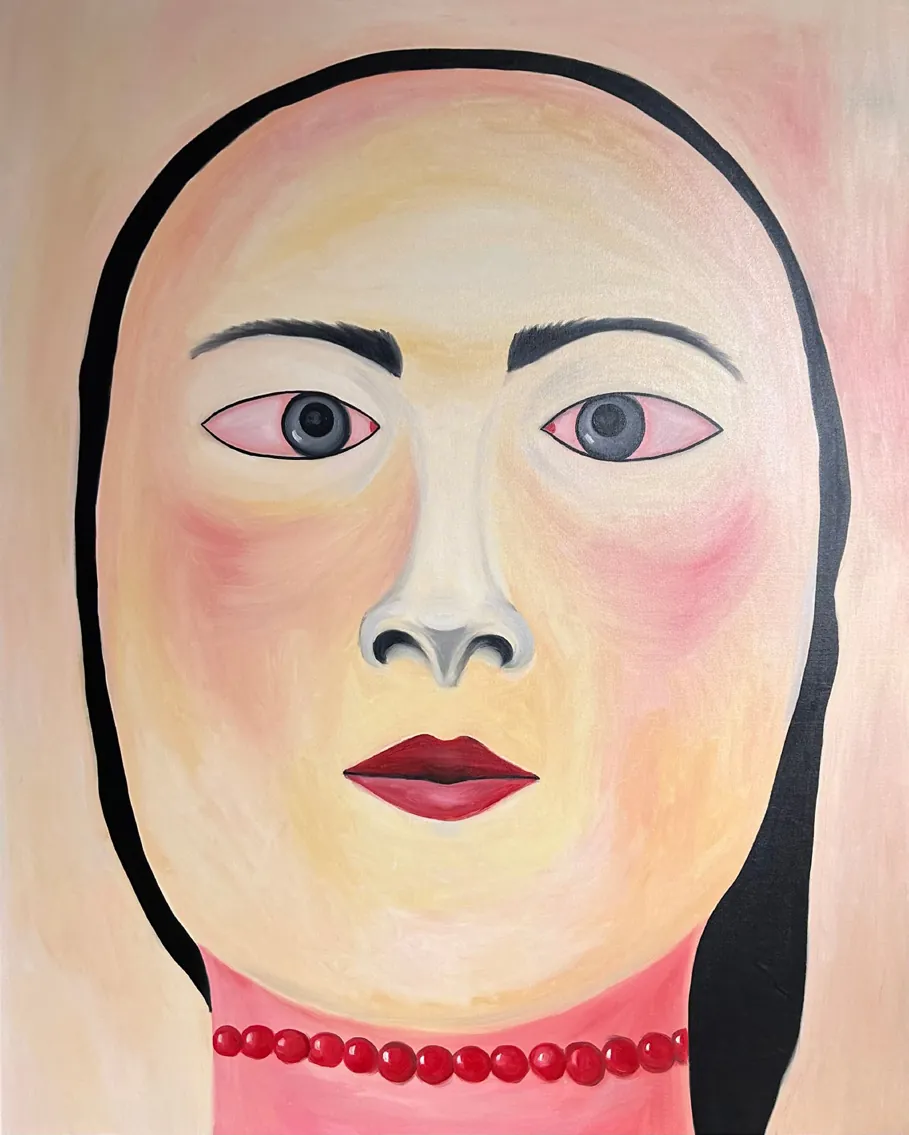
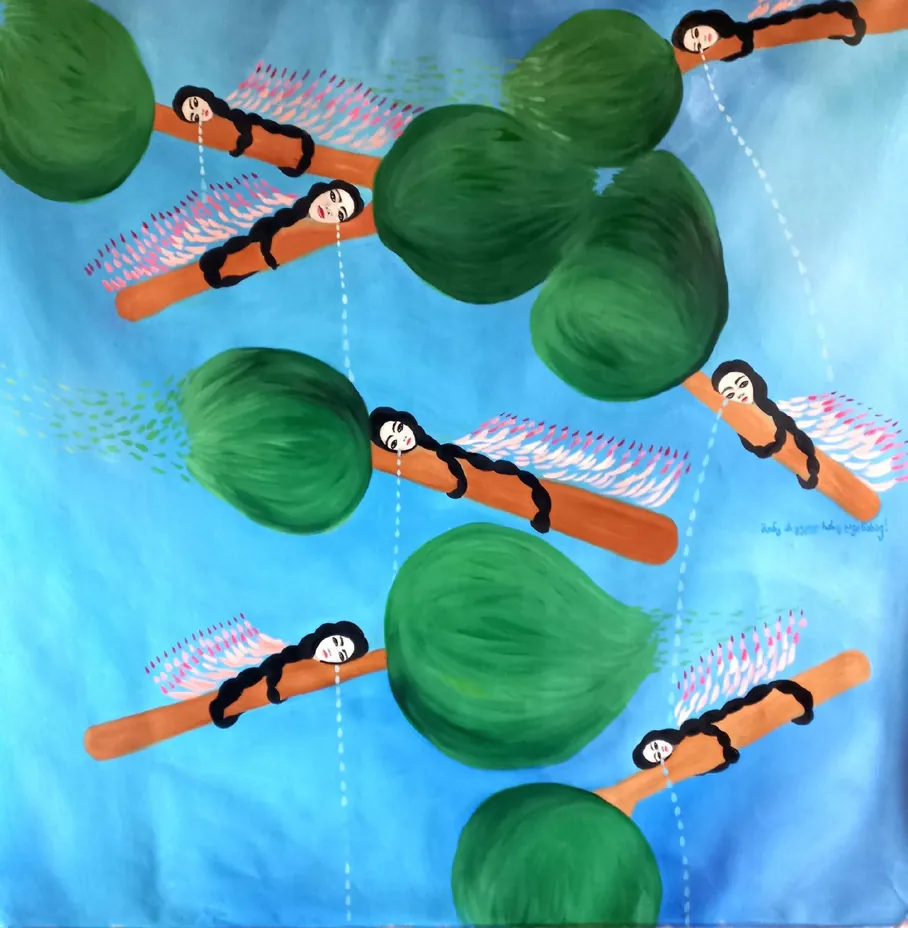
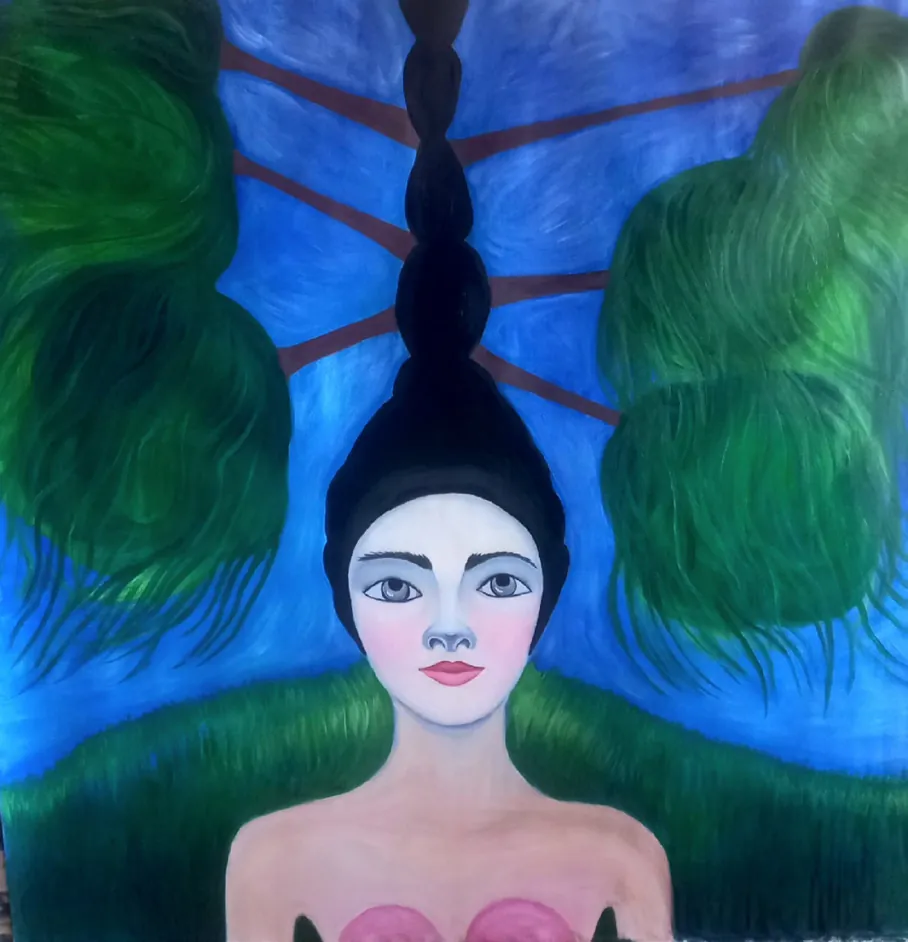
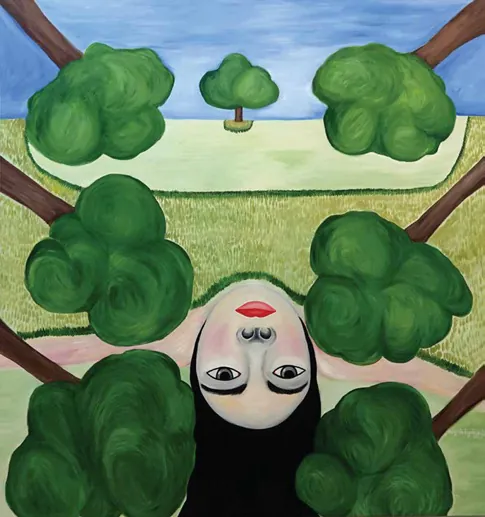
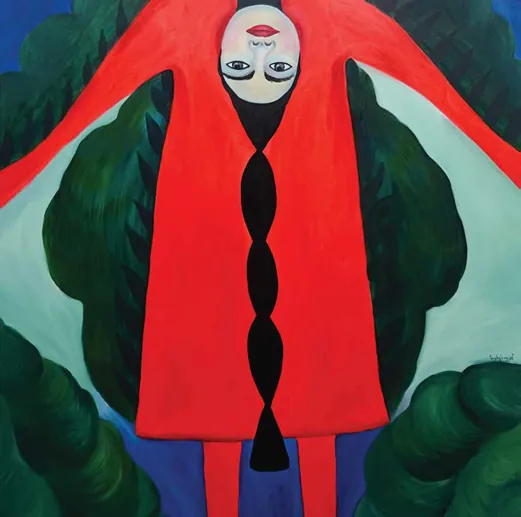
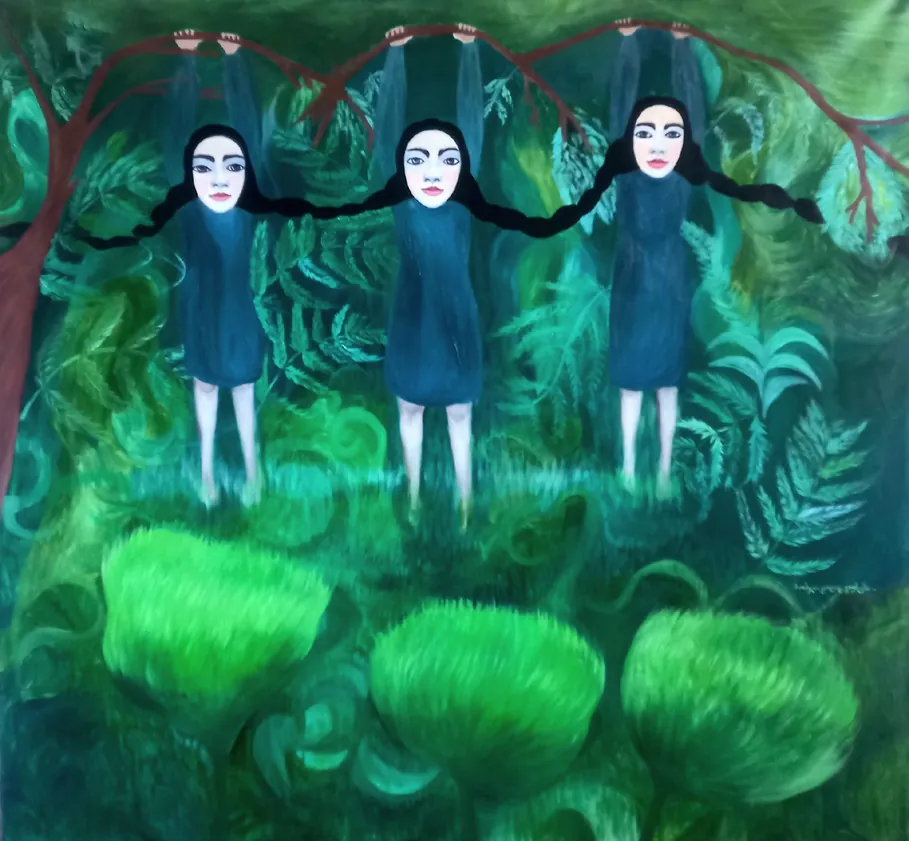
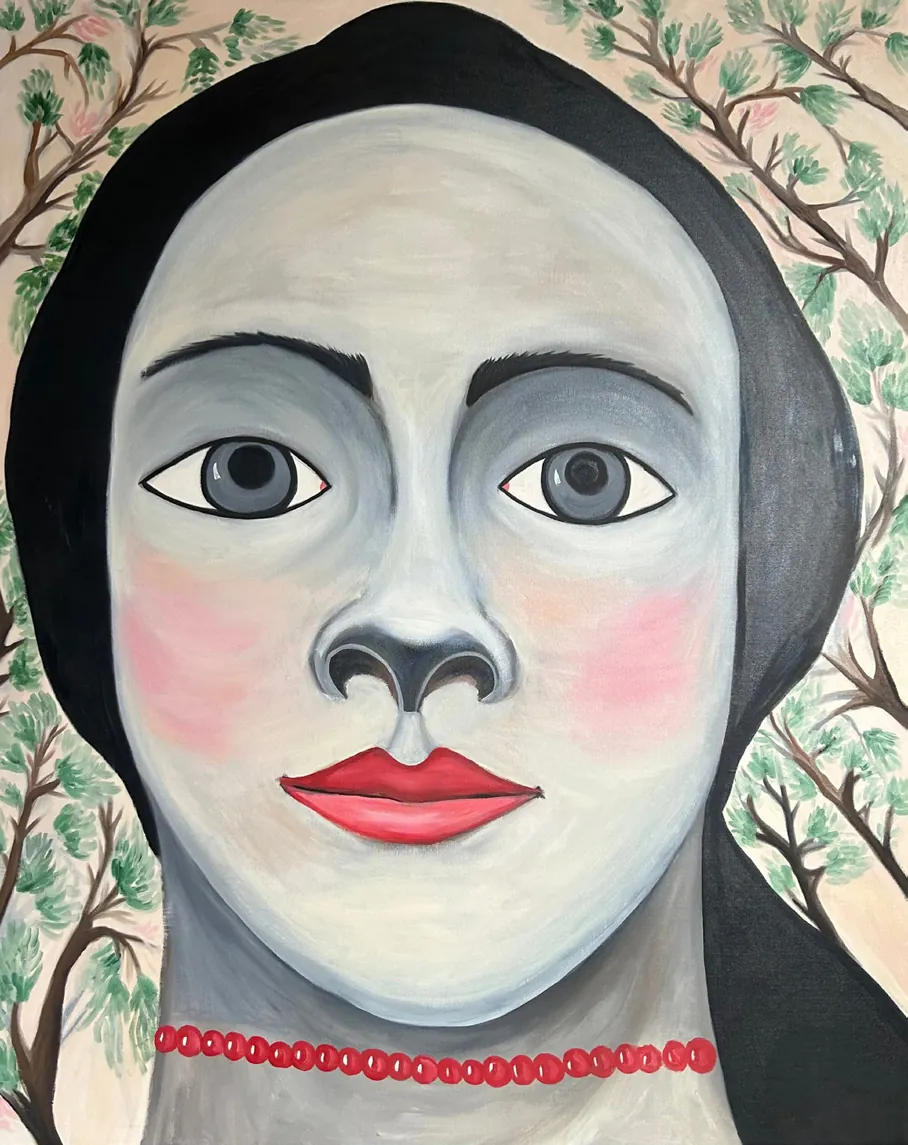
Sophia Cherkezishvili is a distinguished Georgian artist whose works uniquely combine classical and experimental elements. Her work is characterized by aspects of surrealism, symbolism, and figurative art, resulting in images with strong visual depth. The artist shares her aesthetic forms and vision with the viewer through the artistic illustration of imagined alter egos and female figures. Her work is a blend of global cultural experiences, pop art, Western poster art of the 1960s - 1970s, and Georgian monumental painting. The artworks are distinguished by bold, local colors and minimalist yet sophisticated lines and shapes. It is worth noting her use of eye contact, which reflects a range of emotions and creates a unique connection with the viewer.
Tell us about the persona Sophia Cherkezishvili and your encounter with art.
Art and the depth of this field have attracted me since childhood. That is why I made a professional choice in this direction. In 1990, I graduated from the Tbilisi Iakob Nikoladze Art School, then entered the Tbilisi State Academy of Arts, majoring in painting, and in 1994, I went to study at the Gerrit Rietveld Academie in Amsterdam. Studying abroad and the time I spent there helped me discover painting, find myself through it, and understand what I wanted to express through my creativity.
How did your professional path develop?
I returned from Amsterdam in 1998 and became actively involved in both creative and teaching activities. From 1999 to 2006, I taught at the Iakob Nikoladze Art School, and from 2010 to 2018, at the Faculty of Fine Arts of the Tbilisi State Academy of Arts. Since 2006, I have been a professor of audiovisual and media arts at GIPA.
On the path of my professional journey, my paintings and their content change and develop with me. This process occurs naturally. I bring to life the themes, unspoken emotions, thoughts, and feelings that particularly resonate with me in the form of drawings and notes.
Women’s faces dominate in your paintings. Can you share the reason for this?
All of this happened naturally. The stories I paint mainly revolve around a single character: a woman. One story never ends with a single painting; it is always accompanied by a series of paintings, the main theme remaining the same, though expressed differently. The natural process, after a certain number of paintings, fulfills the main statement itself. Why a woman? I do not have a single, specific answer to this question. I think that a woman is the central figure not only of my work, but also of the entire world. A woman’s feelings, emotions, states of love, fear, passion, loss of identity, self-determination, emotional struggles, and compassion are particularly deep. Often, all of this remains unspoken. Through my work, I try to reach the voices and emotions of many unspoken women.
Tell us about your latest exhibition – “And Then She Said Maybe”
Every exhibition is a story for me, perhaps even an endless one. However, at that moment, it revolves around a single, specific story. This banal phrase, “And Then She Said Maybe,” is something everyone has experienced in their lives. We never truly know what someone has said in different situations, nor do we have knowledge of their final words. My exhibition also addressed this very topic. I connected all of this to life because a person never knows what will happen next, which is a miracle in itself.
The exhibition was held at the National Gallery of Georgia and was dedicated to trees that I know will fly, bridges and labyrinths that I know I will build, fairy tales that I know I will believe in, and bells that I will probably hear. Twenty-eight paintings were created on this theme, accompanied by a description. The text is an integral part of my composition. It helps convey my story to the viewer and intensifies the emotional impact. At the end of the exhibition, I also created an installation called “Trees Know How to Support,” where visitors could walk through a forest. The trees presented in the installation told imaginary stories with their geometric, triangular shapes and pronounced faces. At first glance, the faces were different, though each carried its own inner depths and emotional charge. I believe the installation gave the exhibition a mystical and magical atmosphere. Its structure and composition, based on geometric simplicity and the sharpness of forms, had a strong visual impact. The symmetry of the figures and their arrangement in space created a labyrinth-like effect. A misty forest full of emotions, where each tree was a reflection of human feelings and thoughts. Through this installation, I wanted viewers to sense the relationship between art, the world, and their influence on the individual.
Tell us about the exhibition you held in Budapest
In 2024, an exhibition was held in Budapest featuring Georgian women artists from different eras. It was a great honor for me to exhibit my paintings alongside artists such as Elene Akhvlediani, Esma Oniani, Tamar Abakelia, and others. I presented a series of portraits at the exhibition.
What gives you energy in the process of working?
My main source of energy is desire. The creative process is like a theater for me, where I am simultaneously the director, screenwriter, and actor.
Could you tell us about your work as an educator?
I have been teaching for 25 years. I enjoy working with young people and guiding them on their path toward pro- fessional discovery, self-confidence, and the realization of their abilities. I always tell my students that desire is the greatest talent. There are no frameworks or limitations, it is essential to express themselves in the way they feel.
What inspires you?
Visiting museums, exhibitions, understanding what I see, and the energy this process gives me.
An artist who has had a great influence on you
The surrealist artist Rene Magritte.
The feedback from a viewer that you remember the most...
I remember a woman who, after viewing the exhibition, came up to me and said: “What I am looking at here now,
I have experienced, lived through, and endured myself.” For me as an artist, this was a particularly meaningful response, because I felt I had succeeded in bringing my story deeply into the human heart.
What are you planning?
I want to never stop creating, always have something to say, and always feel the desire to share my stories.