Tbilisi’s Special Entrance Halls
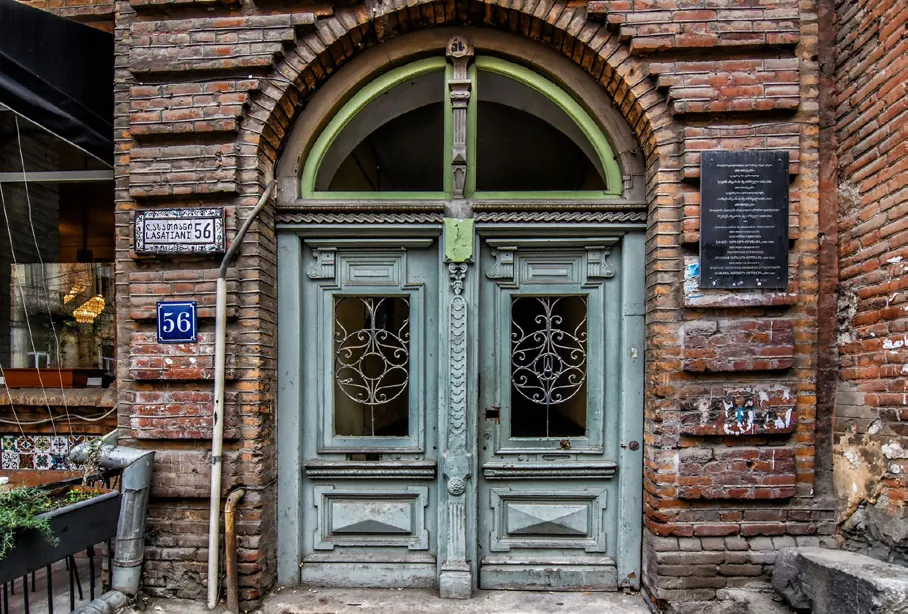
If you walk through the streets of Old Tbilisi, you’ll find yourself immersed in the history of the nineteenth and twentieth centuries. As you stroll through these streets, it feels as though the buildings themselves are speaking, while the street names remind you that prominent figures once lived here and contributed to Georgian culture. To get even closer to this era, we recommend visiting the entrance halls of old buildings.
Entrance halls first appeared in Tbilisi in the second half of the nineteenth century, gradually replacing balcony entrances. This trend was particularly prevalent among the social strata that embraced European culture and were inspired by Western ideals. Additionally, these entrance halls, often painted and carved by artists, served as a reflection of the social status of the residents.
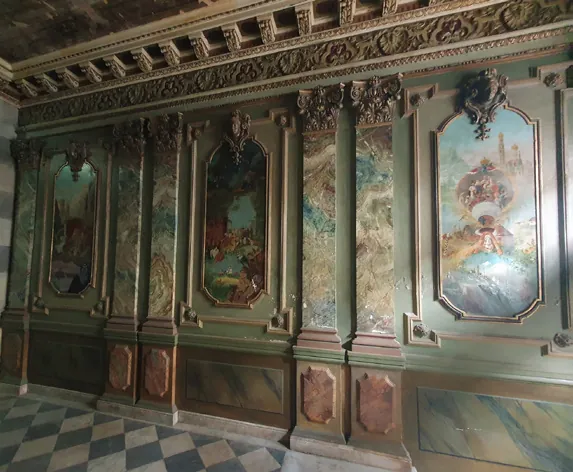
One of these entrance halls is located at 18 G. Tabidze Street. Its history dates back to the early twentieth century when it was home to the Seylanov brothers, famous Armenian merchants involved in the tobacco industry. Their names were well known throughout the city — not only as successful businessmen but also as generous philanthropists. Today, this entrance hall is an important part of Tbilisi’s historical heritage and one of its most significant cultural landmarks. The interior leaves a lasting impression: the brothers collaborated with Italian artist Benno Tellingater to create this exquisite space. The continents depicted on the walls have a particularly striking effect on visitors. The entrance hall features decorative ornaments that beautifully combine elements of classicist and baroque styles. 18 G. Tabidze Street is truly one of the most valuable landmarks, embodying Tbilisi’s rich cultural and historical legacy.
Benedict (Beno) Tellingater also painted the entrance hall of the house at 93 David Agmashenebeli Avenue. Built in 1904, the building belonged to Abazov, a merchant of the First Guild of Tbilisi. Tellingater collaborated with De Marzo on the entrance hall’s design. The hall features six paintings depicting different continents—Asia, Africa, Australia, America, and Europe—each portraying the daily lives of people from those regions. In addition to the wall paintings, the ceiling is also adorned with artwork, featuring angels surrounded by roses and daisies.
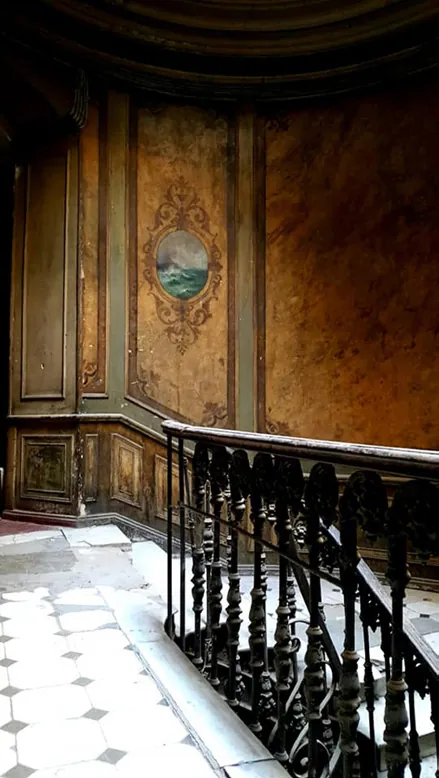
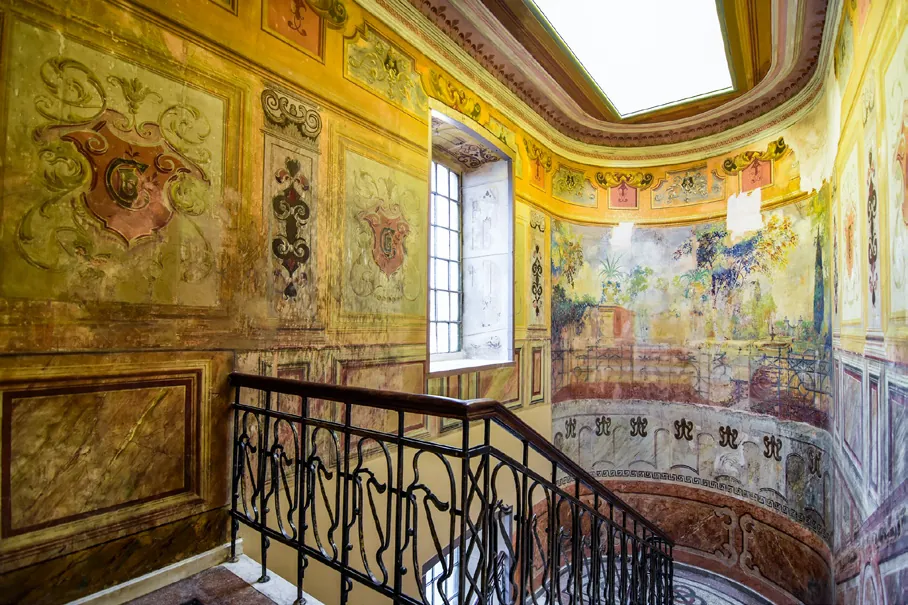
While walking through Old Tbilisi, you will undoubtedly come across 58 Asatiani Street, home to one of the most distinctive and characteristic examples of Tbilisi’s historic entrance halls. Its unique artistic style and intricate decorations make it particularly noteworthy. The paintings were originally done with natural pigments, although in some areas, oil paints were also used. The entrance hall has largely preserved its original appearance, and its architecture reflects the aesthetics of the nineteenth century. However, the walls have suffered significant damage, and some figurative compositions have been partially painted over. Additionally, signs of urban decay—deteriorated electrical wiring, cracked walls, and other structural damage—are evident. Despite these issues, stepping inside transports you back to nineteenth-century Tbilisi, a time when European cultural influences were becoming increasingly prominent in the city.
While walking through Old Tbilisi, you will undoubtedly come across 58 Asatiani Street. Here, you can see one of the most distinctive and typical examples of Tbilisi entrances, characterized by a unique style and artistic works. The paintings were done with natural paints, although in some places, you can also find oil paintings. The entrance has preserved its original appearance well, and its architecture reflects the aesthetics of the nineteenth century. However, the walls are significantly damaged, and the figurative compositions have been partially painted over. In addition, the deteriorated electrical wiring, cracked walls, and other urban markings are visible. Despite these issues, when you enter the entrance hall, you can still clearly sense the atmosphere of Tbilisi from that period, a time when the city was increasingly influenced by European culture.
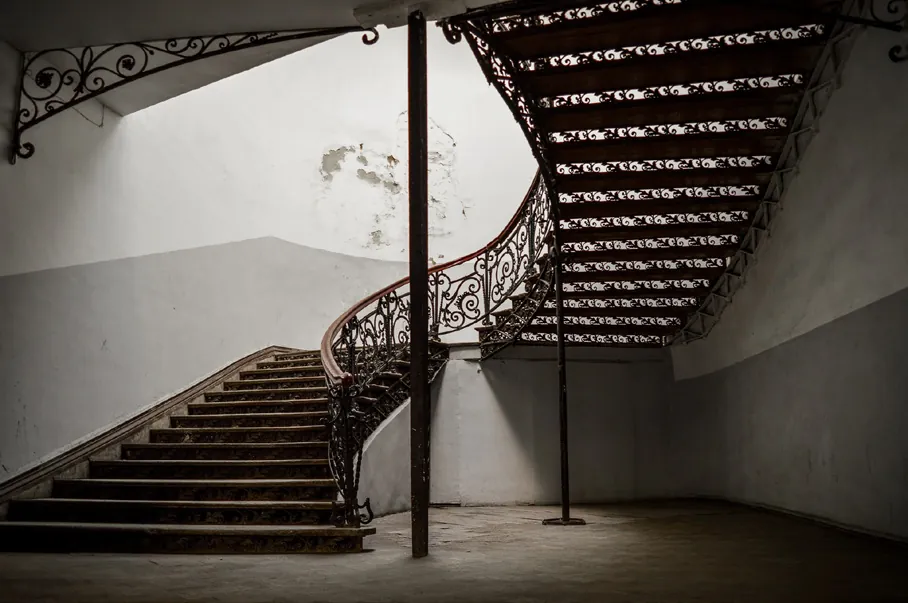
Another important cultural heritage site can be found at 9 Kikodze Street, distinguished by its beautifully crafted internal staircase and painted ceiling. Similar staircases were popular in nineteenth-century French houses, but their adaptation into Georgian architecture occurred only in the twentieth century. Unfortunately, the building suffered significant damage during the Soviet era, particularly to its wall paintings, which were almost entirely destroyed. However, the intricately carved ornaments on the ceiling have survived, though they remain in poor condition and require restoration. The entrance door of the building is also a striking feature, showcasing the aesthetic and architectural styles of the nineteenth century.