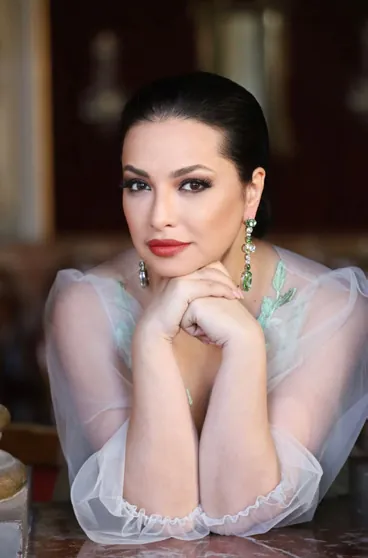
Nino Surguladze
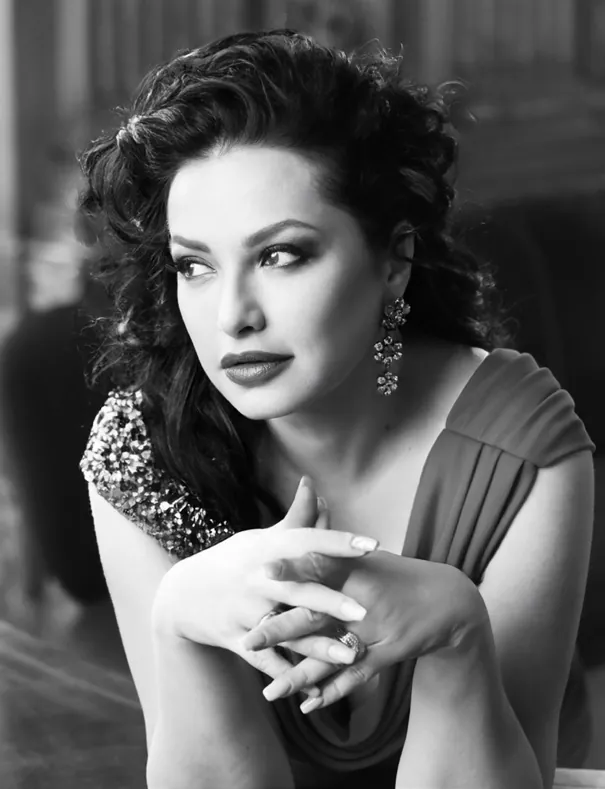
At the age of three, she received her first applause from family members for performing a solo act at home. As the years passed, the applause of relatives was replaced by the applause of strangers. Today, her name resonates on world opera stages.
The mezzo-soprano graduated from the Tbilisi State Conservatory. She then became a laureate of the Francisco Viñas International Vocal Competition in Barcelona, winning three special prizes, one of which was a two-year course at the Academy of Skills at La Scala. This competition became a pivotal moment in Surguladze’s career. At the academy, she worked with legendary teachers such as Leyla Gencer and Luciana Serra.
Since childhood, she has acted in various films, including the Italian television movie Rigoletto a Mantova and the Georgian films Metichara, Simple Solitaire, and Waltz on Pechora. More recently, she appeared in the Netflix series The Alienist, in the final episode of the first season.
It should also be noted that Nino Surguladze is the founder of the ‘Natvris Khe’ charity fund, which celebrated its 10th anniversary this year. Over the past decade, the fund has helped 1,000 families and 200 seriously ill children.
Nino Surguladze shares some fascinating insights about her life with the readers of Georgian Airways magazine:
– Art is a living, constantly evolving organism. Think back to the moment when you realized you wanted to make music your career.
– Music has always been a part of my life. As a child, you don’t really analyze or decide that it could be your future profession, but you feel that it’s your true calling because it brings you happiness. At first, there was cinema and, at the same time, variety shows. Then I met Professor Guliko Kariauli, who inspired my love for vocal art. The turning point came when I won one of the biggest international vocal competitions in Barcelona in the late 1990s, which solidified my deep passion for this genre. To this day, I serve this profession with great love and joy, and it continues to bring me happiness.”
– What important episodes in your career stand out to you?
– There have been many significant moments. One example is the GB Oscars for Excellence in Opera and Ballet competition, one of the most prestigious platforms for opera singers. It should be noted that if it weren’t for the competition in Barcelona, I wouldn’t have ended up at La Scala, where I participated in 150 performances over the years. It was there that I had the opportunity to work with some of the greatest directors and conductors, who played a significant role in my professional growth. I also met my future manager at La Scala, with whom I performed on numerous opera stages around the world, and we continue to work together to this day.
– What is your favorite role?
– Every role is very dear to me. I dedicate a lot of time to each one. I begin by working on the role alone, focusing on the text, music, and drama, and then continue the process with the conductor and director. My childhood background, always connected to the stage, has also helped me tremendously. I played lead roles in musicals at the art school, and we also staged plays at the Marjanishvili Theater. We took the musicals abroad, including to America. All of this experience matters, but opera is a more complex art form. It requires not only dramatic skills but also vocal mastery, which takes years to perfect.
Many iconic operas have been created, but some stand out as hits, such as Aida, Carmen, Romeo and Juliet, among others. I am particularly drawn to rich, characterful roles—fascinating figures with profound personalities and unique destinies. Strong women who go through their personal drama in front of the audience have always captivated me. Of course, one of them is Carmen, as well as Amneris. I’ve been in this field for nearly 25 years, and my repertoire has expanded significantly over time. Some performers stick to one specific repertoire, whether it’s Mozart, Verdi, or Wagner, while others perform a few roles repeatedly throughout their careers. In my case, it started with Mozart and expanded to include Verdi, Bellini, and even the Czech repertoire. My next goal is Wagner. I believe each singer’s development is unique. Some may start with Wagner, but it’s rare to return to bel canto afterward.
– Do you remember the best professional advice you’ve ever received?
– I’ve been lucky to have excellent mentors. Maestro Riccardo Muti, who played a key role in my artistic development, often said that great singers start with Mozart and gradually expand their repertoire. This creates a strong foundation that serves them well throughout their careers. I’ve always kept this advice in mind—knowing how to make the right choices based on your abilities and when to say no is crucial. Young singers sometimes rush into decisions that can shorten their creative paths. The key is to focus on quality, not quantity. If you can