Sulfur Baths
The Capital’s Signature Landmark
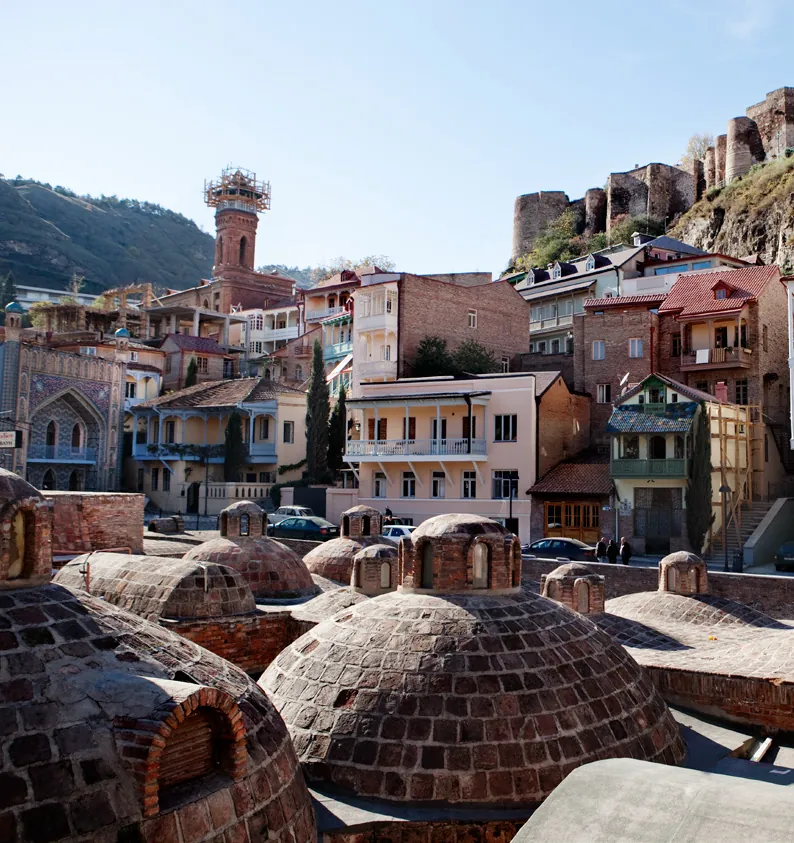
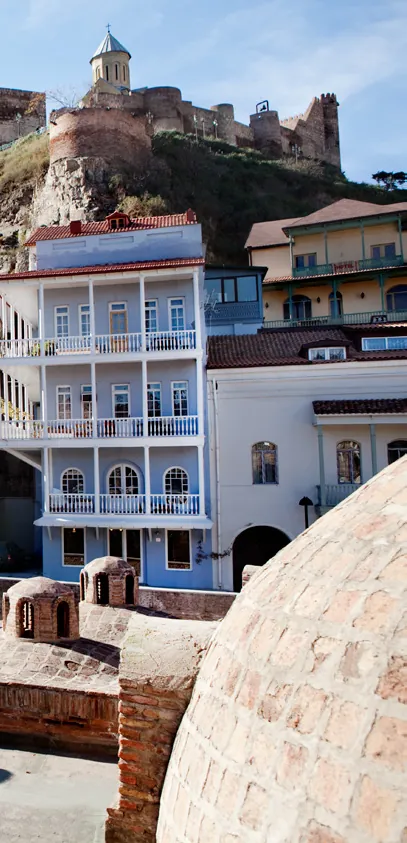
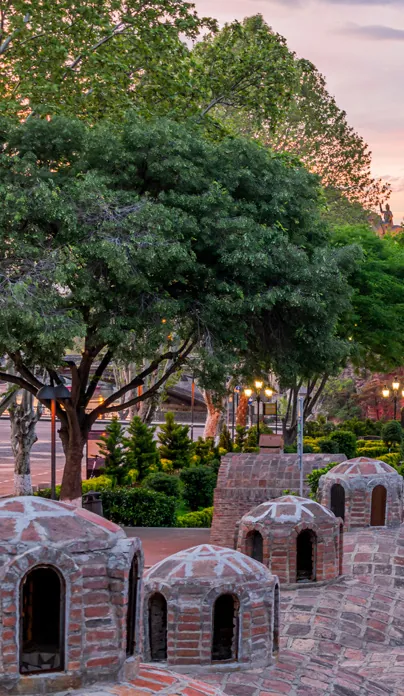
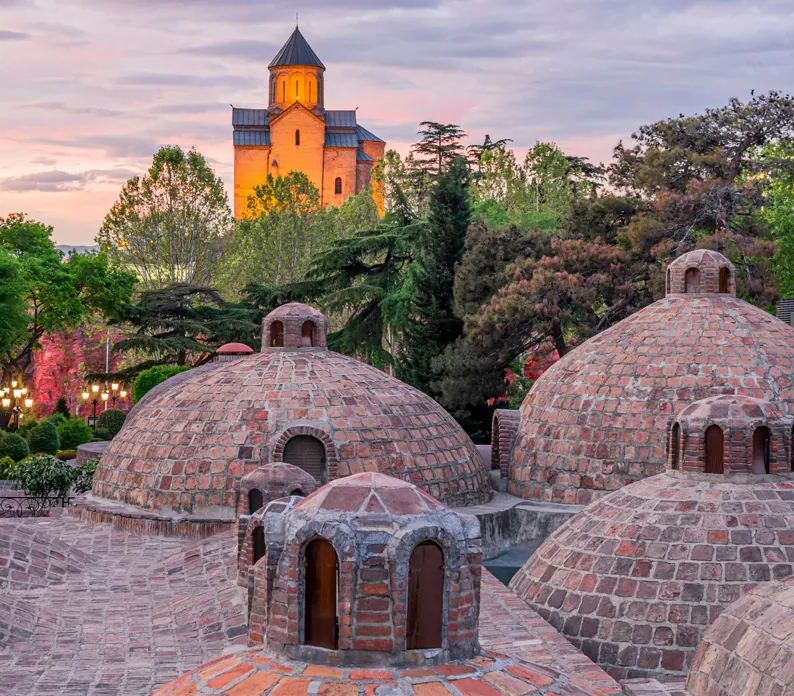
Sulfur baths are the main attraction of Tbilisi, marking the beginning of the city’s history. According to historical sources, the first residential center in Tbilisi emerged around these hot sulfur springs.
Legend attributes the discovery of Tbilisi’s hot springs in the 5th century to King Vakhtang Gorgasali of Kartli, who built the city around them. By tradition, there were 65 mineral water baths in Tbilisi in the 13th century. The sulfur baths of Tbilisi, with their “boiled without fire” water, are mentioned by many famous travelers, including the 10th-century Arab geographer Ibn Hawqal and the 13th-14th-century Venetian traveler Marco Polo.
The baths played a significant role in Tbilisi’s life, serving not only hygienic purposes but also as important centers for socialization and communication. People swam, rested, and even held parties there. It is said that in ancient times, future mothers-in-law would evaluate the beauty of potential brides in the baths. Women traditionally visited the baths on Tuesdays, which led to one bath near Sioni Cathedral being named “Tuesday.”
It is noteworthy that the old Tbilisi baths were referred to by the names of their owners. Among them was a bath named after King Erekle II. The last large-scale reconstruction of the Bath of King Erekle II began in 2020 and was completed three years later. During the reconstruction, changes from all historical periods were considered, with a focus on preserving the bath’s authenticity.
Today, the Erekle Bath is well-equipped and functions as one of Tbilisi’s most famous and impressive “Colorful Bath” (Chreli Abano). The “Colorful Bath,” also known as the Orbeliani Bath, was remodeled in the Eastern style in the second half of the 19th century and earned its name due to its ornamental facade decorated with mosaic tiles of various colors. The color scheme is dominated by different shades of blue, combined with a pinkish pastel tone. Yellow, green, and white colors are also used.
The rest of the bath’s facade is completely plain. The interior is also typical of an oriental bath. Today, many tourists gather at this site, and photos taken in front of the “Colorful Bath” create an impressive background. Most of the baths that have survived to this day were created in the 17th and 18th centuries under the influence of Iranian architecture. The baths were located in the oldest part of Tbilisi – historical Seidabadi. This part of Seidabadi was called “Abanotubani” due to the abundance of baths.
In the 1860s, sulfur water attracted the attention of many scientists, and the first chemical analysis was conducted in 1880. Sulfur baths, in addition to providing relaxation and entertainment, have many healing properties. They offer excellent protection against viruses, as the hot steam helps to open pores and wash away pathogens. The high temperature increases blood circulation, which promotes healing. Additionally, wet steam is an effective inhaler for the bronchial tubes and lungs.
For those who want to fully experience the old Tbilisi environment, taking a hot water bath in Abanotubani is highly recommended.