MOMA Tbilisi
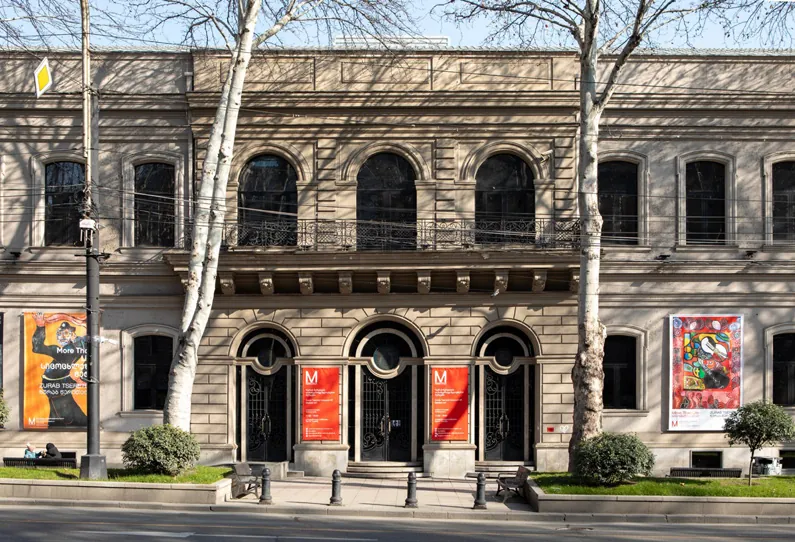
The Museum of Modern Art, “MOMA,” is located at 27 Shota Rustaveli Avenue in the city of Tbilisi. This historical building offers visitors the opportunity to enjoy captivating spectacles and learn more about art and history.
Named after the renowned artist, sculptor, and architect Zurab Tsereteli, whose works are showcased worldwide, the Museum of Modern Art features a collection of his masterpieces. Notable among these is the “Tear Drop Memorial,” also known as “To the Struggle Against World Terrorism,” situated in Bayonne, New Jersey, opposite the Statue of Liberty on the banks of the Hudson River. This monument, weighing approximately 175 tons, was erected to honor the victims of the September 11 attacks, adding to its significance and magnitude as a powerful symbol.
Tsereteli’s artistic contributions extend to Tbilisi, where several prominent works grace the cityscape. These include the St. Nino monument at the city’s entrance, the St. George statue in Freedom Square, and the monument of Georgian Chronicle near the Tbilisi Sea, all of which significantly enrich the city’s artistic landscape.
The Museum of Modern Art in Tbilisi serves as a unique space for visitors to admire not only Tsereteli’s works but also those of other artists. Showcasing a diverse range of modern art, the museum invites exploration and interaction with various artistic perspectives under one roof. Replicas of Tsereteli’s renowned artworks, including the legendary “Apple” piece, alongside compositions such as “Argonauts” and “My Favorite Artists,” are prominently featured. Additionally, the museum regularly hosts engaging and international projects that evoke new emotions with each visit, enhancing the visitor’s experience.
Situated in a historic 19th-century building originally used as an elementary military school and later repurposed as a cadet corps, the Museum of Modern Art boasts a fascinating historical aspect.
Following its disuse, the building underwent restoration and reconstruction in 2005 under Zurab Tsereteli’s leadership, transforming it into the vibrant cultural space it is today. The creative concept aimed to blend history and modernity while preserving the building’s original design, incorporating innovative architectural and engineering techniques. This approach, common in European countries, bridges the gap between tradition and contemporary times, establishing the museum as a symbol of connection and continuity.