Georgian Cuisine
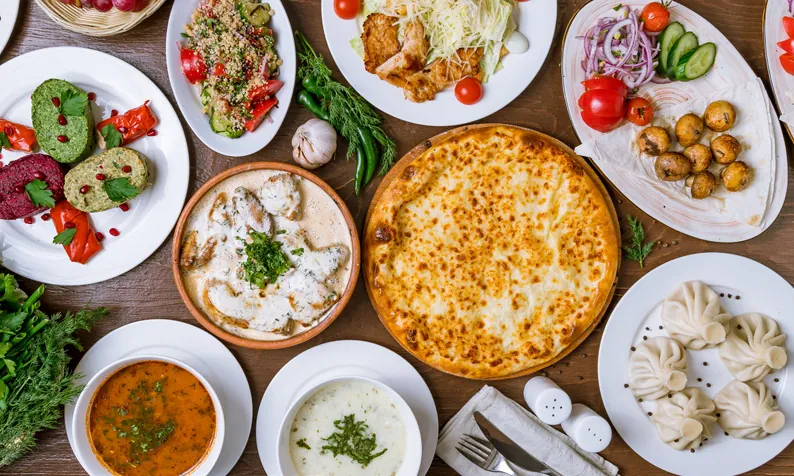
Georgia is often referred to as a gastronomic paradise. This title is not only attributed to its delicious and nutritious cuisine but also to the country’s diverse array of dishes.
Georgia, known as the homeland of wine, naturally pays special attention to what accompanies it. Similarly, Georgian bread cultures are highly esteemed. The territory of Georgia is recognized as a completely independent genetic center for grain crops.
Georgian cuisine does not boast one standout dish; its gastronomy mirrors the diversity of Georgia itself. In the west, one may encounter Imeretian khachapuri, Adjarian khachapuri, and Megrelian khachapuri. Hot Ghomi with Sulguni Cheese from Samegrelo, along with Gebzhalia and Kharcho, are also popular offerings. Shkmeruli, known for its chicken in Garlic water as well as beans and ham in Racha, is another delicacy to savor.
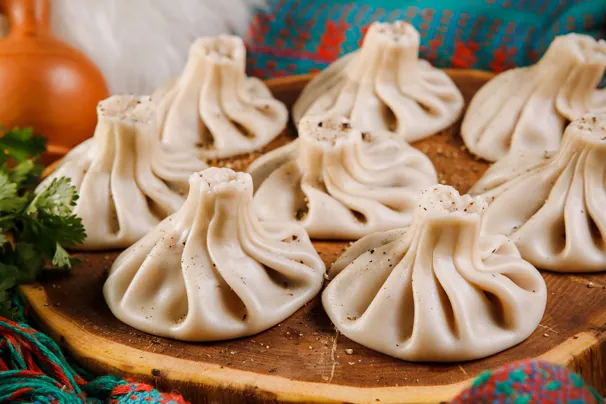
The pinnacle of Georgian cuisine lies in dishes like Chakapuli, Chanakhi, and spicy delicacies that reflect the country’s biodiversity, climate, and character. However, the culinary landscape changes drastically in the mountainous regions of Eastern Georgia, where places like Pshavi, Tusheti, and Khevsureti offer unique products such as sheep’s cheese, Dambalkhacho, and the iconic khinkali. It’s from these regions that the tradition of brewing beer originates. Meanwhile, in Svaneti, you’ll be delighted with kubdari.
In Eastern Georgia, one can find a blend of relatively new, modernized dishes alongside ancient culinary delights. Varieties of barbecue, Chakhrakuli, and Buglama are among the contemporary offerings, while traditional dishes like eggplant with walnuts, Pkhaleuli, and others continue to be enjoyed. Meskhuri cuisine, on the other hand, is renowned for its popular dishes such as Tatarberaki and Kada.
The primary characteristic of Georgian cuisine lies in its original ingredients, frequently coupled with traditional preparation methods, and notably, the use of spices. In this regard, West Georgia stands out with its unparalleled variety of spices. These range from the use of oil in East Georgia to vinegar in West Georgia, complemented by a plethora of exotic spices and concluding with the inclusion of walnuts. Georgians have mastered the art of blending these ingredients to create the distinctiveness of Georgian cuisine, earning them a special place in the culinary world.
In spring, when gardens, forests, and fields are covered with greenery, field herbs emerge in the kitchens—nettle, dandelion, kejera, wild garlic, and Ekala.
Summer brings exceptionally delicious vegetables and fruits. Fresh eggplant with walnuts is a staple beauty on the Georgian table and is prepared throughout the year. As summer draws to a close, you won’t find a family that hasn’t started preparing sauces for the winter—tkemali, adjika, and tomato sauce. During this time, spices emit a special aroma: Ombalo, Fennel, Basil, Tarragon, and the main flavor of Georgian