Underground Tbilisi
Tbilisi is a centuries-old city whose history includes many overlapping cultural and historical layers. As the city developed, its appearance changed, its population grew, and new neighborhoods were built. Yet many of Old Tbilisi’s secrets remain hidden beneath the ground. That is why, when exploring the city’s history, it is worth looking not only at what we can see above ground, but also at the Tbilisi that lies beneath it.
When we think of underground Tbilisi, tunnels and underground passages often come to mind. At different times in the city’s history, underground structures were built for different purposes. Some were used for defense, while others were part of the city’s underground infrastructure. Water and water supply were particularly important. Tbilisi’s location and its water resources played a major role in the city’s historical development. There were springs, wells, and different water supply systems throughout the city. The discovery of old water systems shows how Tbilisi’s residents worked to provide the city with water for drinking and everyday use.
Another important part of underground Tbilisi is its archaeological layers. Beneath the modern city lie remains from different periods of its history.
The underground and partly underground spaces of Old Tbilisi’s baths are particularly interesting. The history of Tbilisi is closely connected with its natural sulfur springs. Underground pipes and channels carried the natural sulfur water to the baths.
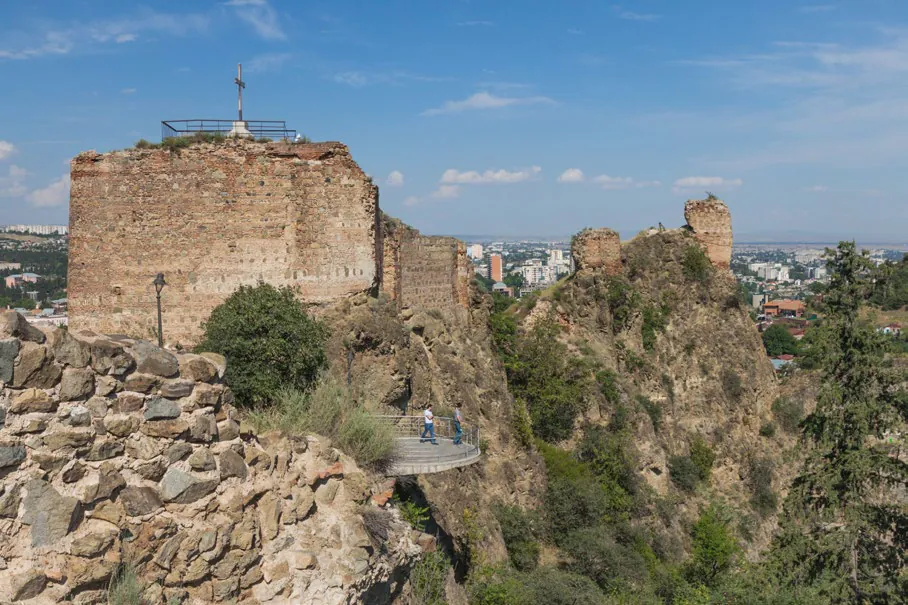
A tunnel leading from Narikala Fortress toward the Mtkvari River was used to bring water from the river. Another tunnel connected the fortress in the direction of Tsavkisistskali. These tunnels were intended to provide the defenders of the fortress with water during a siege.
The Sololaki Tunnel, cut through the Sololaki Ridge, connects Tbilisi’s historic center with the Botanical Garden. Built more than a century ago, it once served as a pedestrian passage. The tunnel was closed to the public in 2009.
There are more than 400 underground tunnels in the capital, designed for emergencies. Some connect strategic sites with major streets. Some have been abandoned, while others have been adapted for different purposes. One of the largest is the Rustaveli Tunnel, which is 1,300 meters long. It was built for strategic purposes.
But underground Tbilisi is not only about tunnels. Old wine cellars and vaulted basements also form an important part of the city beneath the streets. Some old buildings had interconnected cellars and storage spaces. The same underground space could serve different purposes at different times. In peaceful periods, wine was stored there, while in times of danger, these spaces could be used as shelters or places of temporary protection.
The underground structures of Old Tbilisi are a hidden but important part of the city’s history. Tbilisi’s past is preserved not only in its streets and buildings, but also beneath the ground.