The Melik-azaryants House
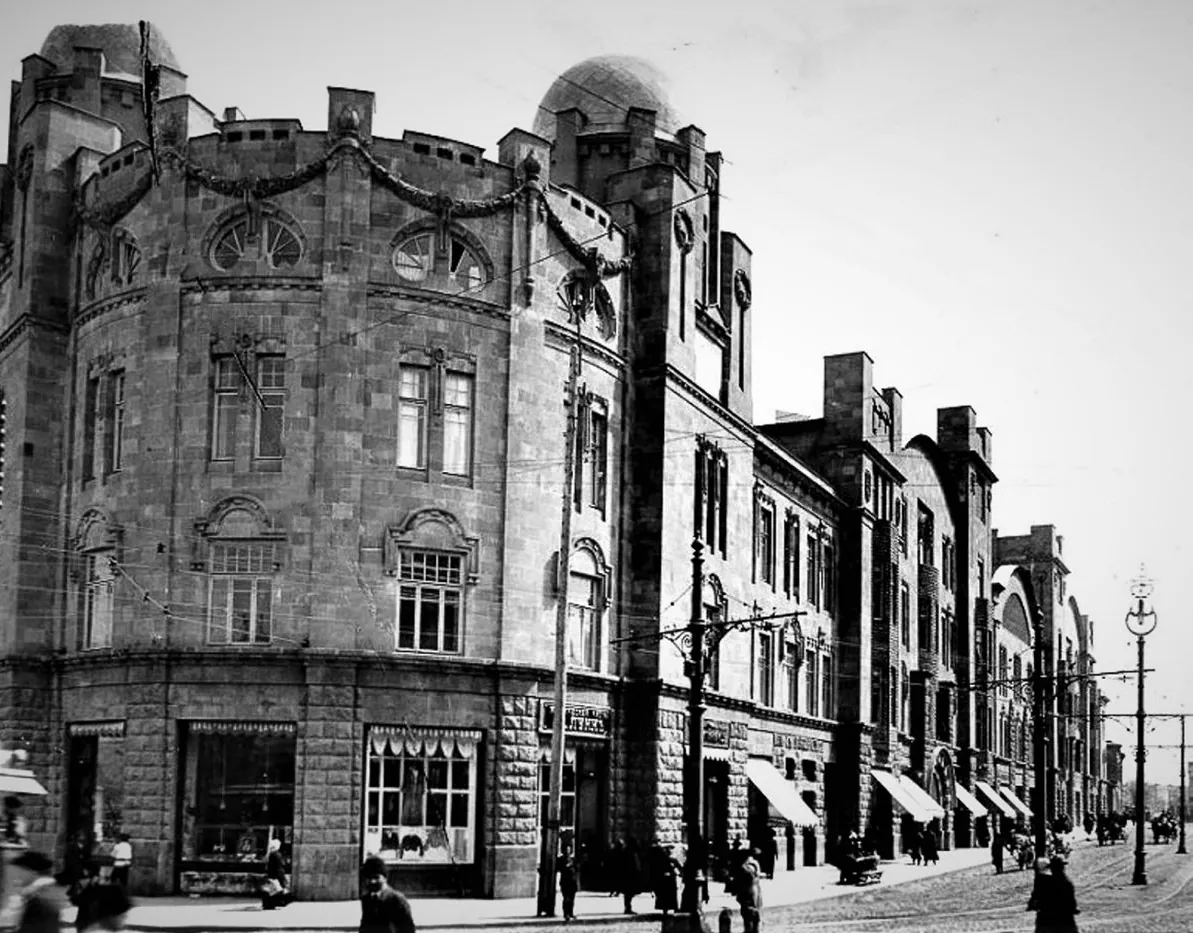
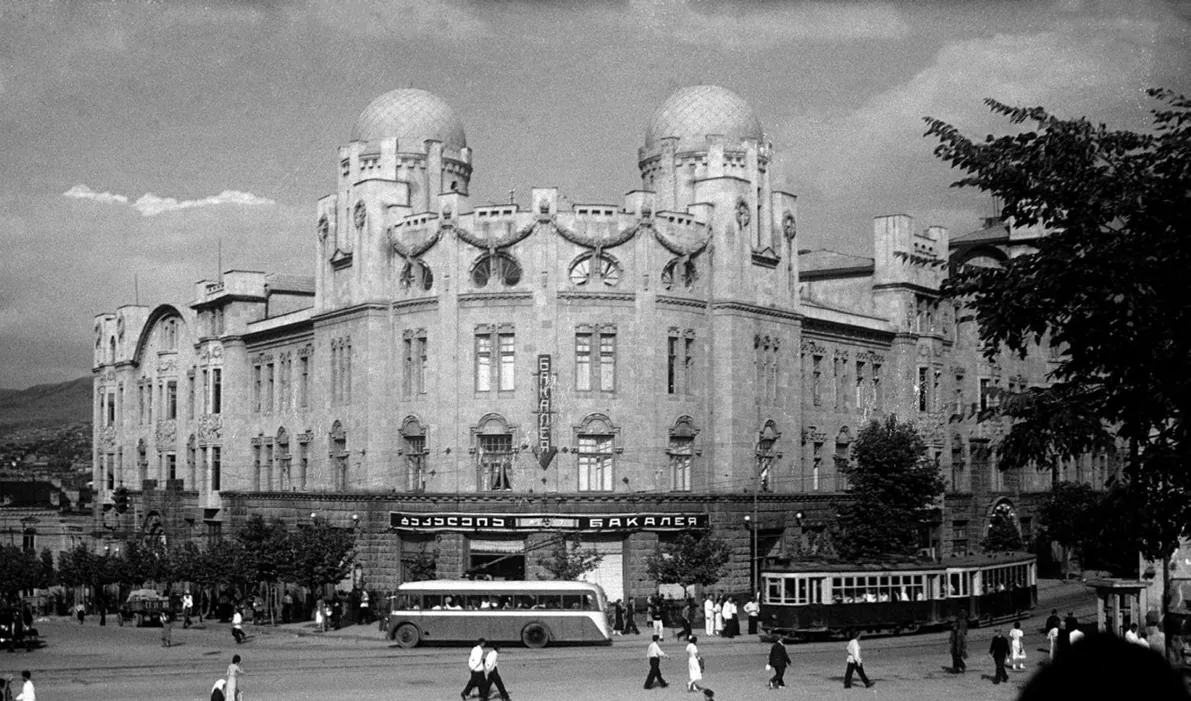
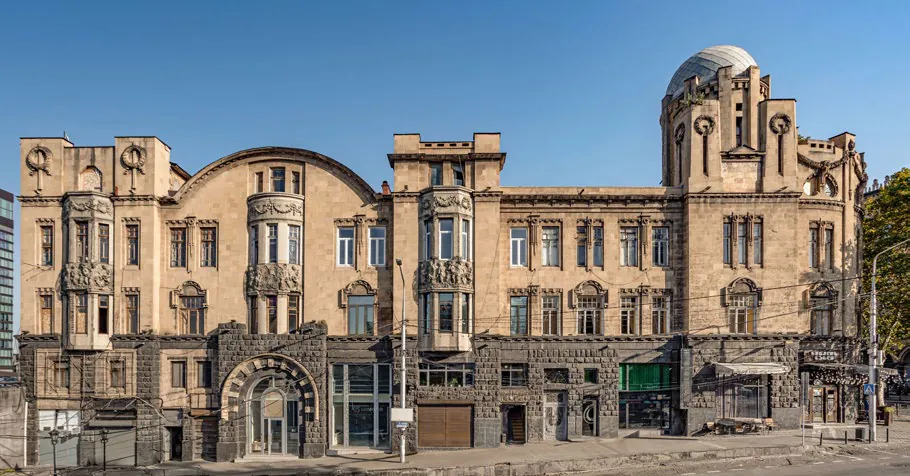
Some buildings become such an integral part of a city over time that it is difficult to imagine it without them. The Melik-Azaryants House on Rustaveli Avenue is one of them. With its distinctive silhouette, towers, arched windows, and intricate stonework, it is among Tbilisi’s most recognizable buildings. More than an architectural landmark on the city’s main avenue, it has become part of Tbilisi’s identity. Behind its remarkable facade lies a history every bit as fascinating as the architecture itself.
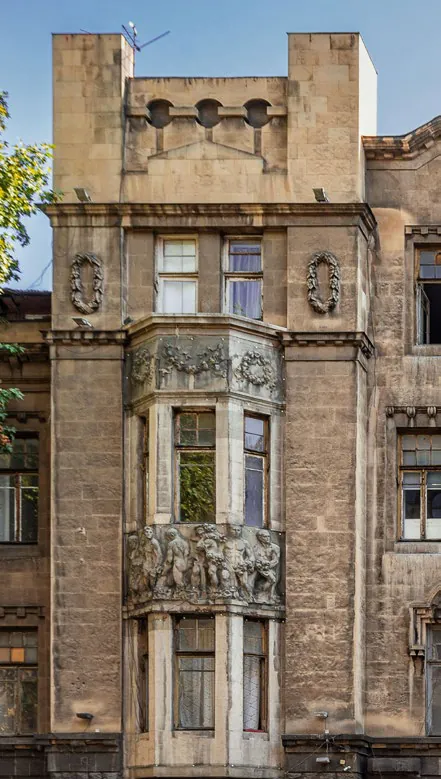
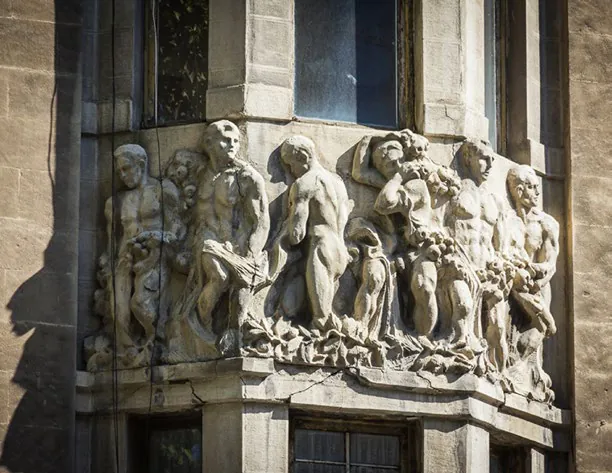
In the early 20th century, Tbilisi was changing rapidly. The city was expanding, with new apartment buildings, shops, theaters, and public spaces appearing across the capital. It was during this period that entrepreneur and philanthropist Alexander Melik-Azaryants decided to develop a large, multifunctional residential complex. The project was entrusted to Nikolai Andreyevich Obolonsky, a St. Petersburg-based architect of Polish de- scent. Czech sculptor A. Novak also contributed to the design of the facade. Construction began in 1912 and was completed in 1915, in just three years. The chosen site presented considerable challenges. It contained a ravine, groundwater, and unstable soil. According to some sources, the land had previously been used as a garbage dump and military barracks. Architects and builders therefore had to overcome not only aesthetic challenges but also serious engineering difficulties. The building required deep foundations, and lead was incorporated into its structure to protect it from groundwater. Specially fired, durable bricks were also used in its construction. Modern restoration materials also highlight the building’s reinforced concrete structure.
The complex was far more extensive than a typical residential building. It housed apartments, shops, various commercial spaces, a movie theater, a photography studio, an art gallery, and even a kindergarten in its courtyard. It also had its own electricity, water supply, and heating systems, an ambitious undertaking for Tbilisi in the early 20th century. One of the building’s most intriguing features is its facade. Near the top are unusually shaped window openings that resemble large drops or tears.
One of the best-known stories surrounding the Melik-Azaryants House is connected to these openings. According to the story, the stone ‘tears,’ together with the garlands and wreaths decorating the facade, symbolized Alexander Melik-Azaryants’ grief over the death of his daughter, Taguhi, who died in 1904 at the age of 22. Some historical publications directly associate changes to the facade with her memory. However, this remains one of the legends surrounding the mysterious building. There is insufficient documentary evidence to establish that the window openings were deliberately designed to resemble tears.
The facade also features other decorative symbols that invite different interpretations.
Another well-known legend concerns gold. According to the story, when the foundations were being laid, Melik-Azaryants’ wealthy friends threw money and jewelry into the excavation, supposedly for good luck and in the hope that the building would bring prosperity. Some versions of the legend even mention gold coins, jewelry, and gold watches. It is a captivating story, but there is no documentary evidence that gold was actually placed in the foundations. It therefore remains an urban legend. And yet, perhaps it is precisely these stories that make the Melik-Azaryants House so fascinating. The building brings together the genuine engineering achievements of the early 20th century, elaborate architecture, family tragedy, and stories passed down through generations of Tbilisi residents. Even today, the underground spaces beneath the building continue to attract attention during restoration and construction work. An extensive network of cellars and underground rooms was connected to the building’s complex structure and utility infrastructure. In 2026, work carried out on Rustaveli Avenue brought this lesser-known side of the building back into the spotlight, reminding the city just how extraordinary the vision of its creators had been.
The Melik-Azaryants House can be appreciated on several levels: as an outstanding example of Tbilisi Art Nouveau, as an impressive testament to the engineering capabilities of its time, and, above all, as a unique chapter in the city’s history, where documented facts and urban legends continue to coexist. From the stone “tears” on its facade to the stories of gold supposedly hidden beneath its foundations, the building holds layers of history, mystery, and imagination.
For Tbilisi, the Melik-Azaryants House is more than an architectural treasure. It is part of the city’s collective memory, with many secrets still waiting to be uncovered.