Built by Hand: Eva Codina on Casa Di Langa
THE GENERAL MANAGER OF PIEDMONT’S CASA DI LANGA ON A DECADE AT A SMALL COUNTRYSIDE RELAIS, BUILDING A FIVE-STAR ESTATE FROM AN ABANDONED CONSTRUCTION SITE, AND WHAT MAKES THIS CORNER OF THE ALTA LANGA DIFFERENT FROM ANYWHERE ELSE IN THE WORLD.
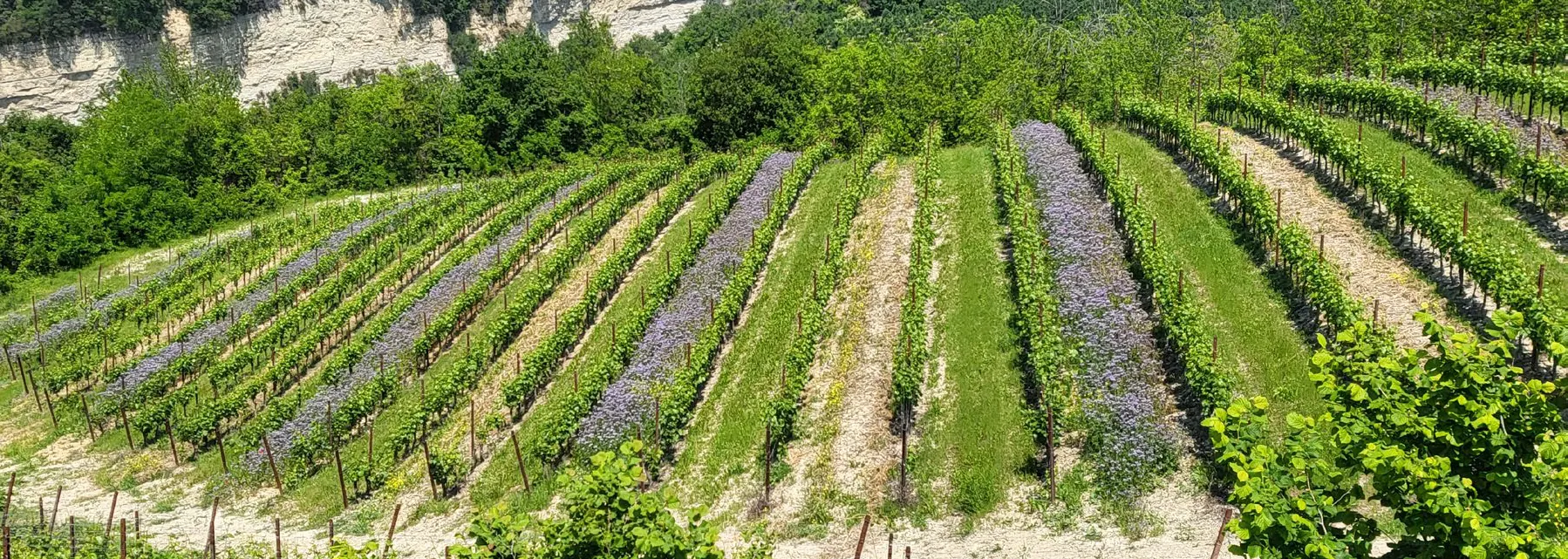
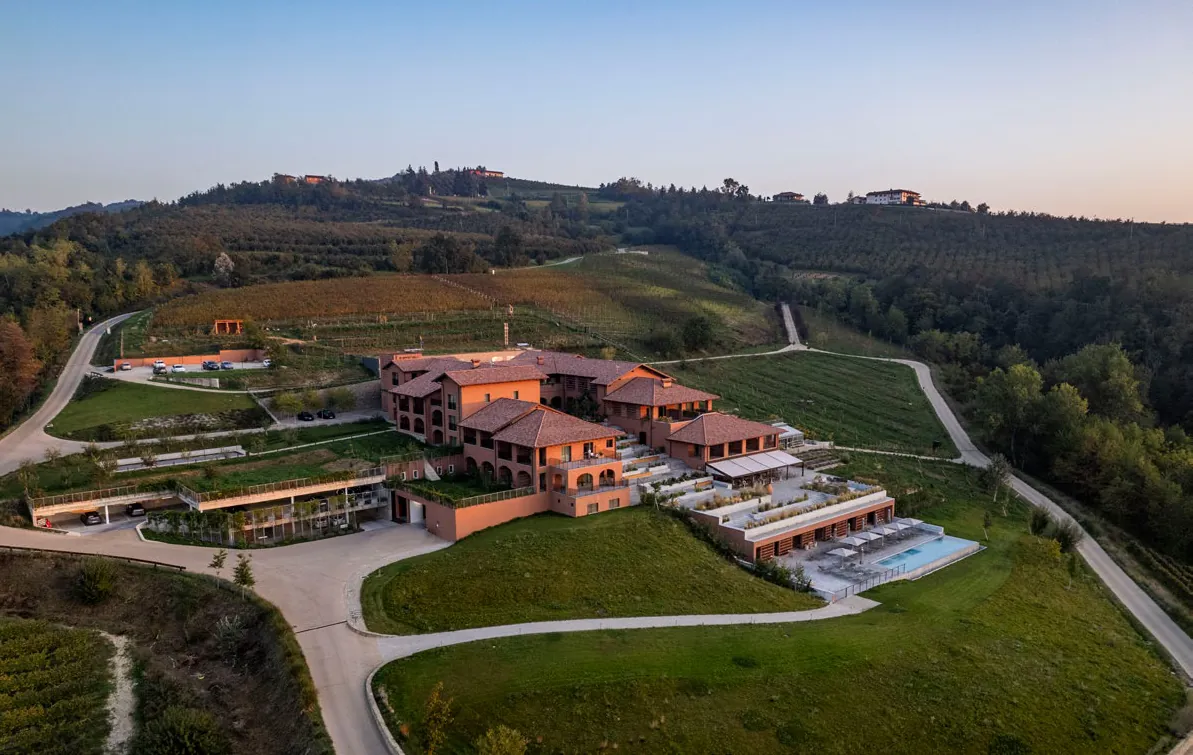
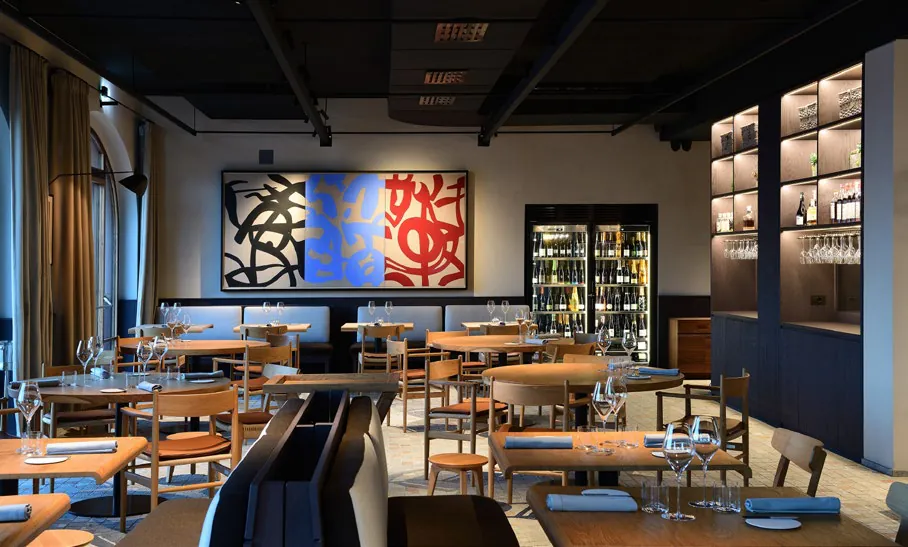
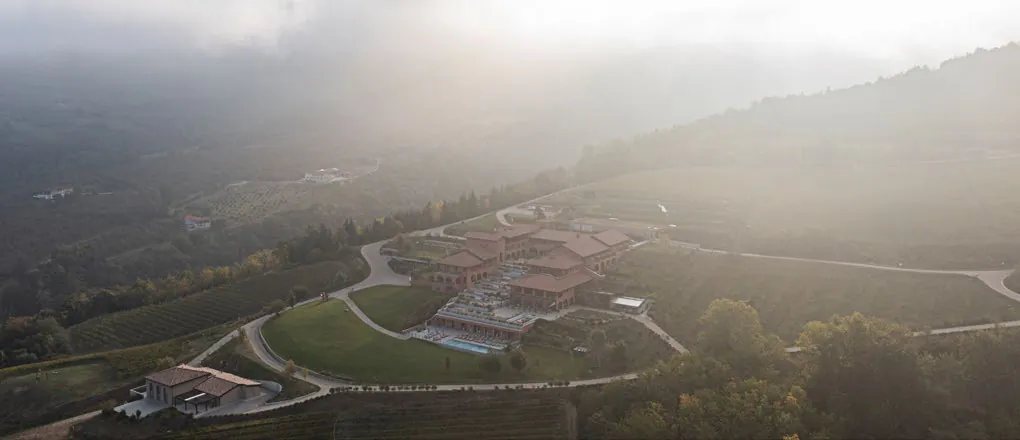
Casa di Langa sits on 100 acres of vineyards, hazelnut groves, and forest in the Alta Langa, the higher, quieter reach of Piedmont’s Langhe hills. The land waited nearly a decade as an unfinished construction site before Kyle J. Krause, who already owned two wineries nearby, bought it and completed it as a five-star sustainable retreat. Today the estate grows its own Alta Langa Pinot Noir and Chardonnay, tended by sister winery Enrico Serafino, keeps close ties to fellow sister winery Vietti, and serves a menu built largely from its own gardens at Faula Ristorante, now entering a new chapter under Executive Chef Francesco Clerico. A growing collection of contemporary art, indoors and out, runs through the property as its own quiet thread.
At the center of it all is General Manager Eva Codina, who spent more than a decade running the nearby Relais Villa d’Amelia before taking on the far larger task of building Casa di Langa from the ground up. Ahead of this year’s white truffle season, we asked her about that path, the philosophy behind the estate, and what, beyond the truffles and the wine, actually sets this place apart.
EVA, IN HER OWN WORDS
Before Casa di Langa, you spent over a decade at Relais Villa d’Amelia in nearby Benevello, with earlier experience including a stint in New York with Dolce Hotels & Resorts, before building Casa di Langa from the ground up starting in 2018. What did those years running an intimate countryside relais teach you that shaped how you built Casa di Langa, and what makes this estate different from anywhere else you’ve worked?
Working for over a decade at Villa d’Amelia marked the beginning of my experience in independent hotels, as before that I worked for different hotel chains. The change was important, mainly because of the destination, which was new for me, with its limited size and a strong local culture. The immersion in this new territory was gradual, as was its opening to incoming tourism. Working daily with the different actors in this growth allowed me to learn all the dynamics and variables that helped this destination bloom into what it is now, known worldwide for its excellent wines, white truffles, and stunning panoramas protected by UNESCO. This experience allowed me to further develop my leadership and my personal style of service and hospitality, always adhering to the international standards of the Hotellerie and creating that unique sense of place for our guests. On the other hand, we didn’t have a lot of staff, so I worked directly with the different teams taking care of operational aspects of a hotel, from sales, fine dining, and administration to maintenance, gardening, and housekeeping.
That experience was a fundamental asset for my next move: to dream, build, open, and manage Casa di Langa. This estate had a history before we opened it. It was an abandoned construction site that was supposed to be a hotel many years ago, but the owners abandoned it during construction. A decade later, our president and founder, Kyle J. Krause, bought it to complete and transform it into a five-star sustainable boutique hotel. Sustainability was a new concept back in 2017, and being pioneers in this aspect, especially here in Italy, makes us different from any other hotel. All the operations and experiences that we offer to our guests have been created based on this vision, being coherent with our values and purpose. By doing so, we have also recovered the forests on the property, bringing them back to life by creating natural corridors to create autochthonous biodiversity; the land has been constantly fed with organic techniques and permaculture and now produces amazing fruits and vegetables that we use in our operations.
Casa di Langa is a hidden gem and an off-the-beatenpath destination. Its services and decor are based on sustainable elegance, attention to detail, and care for our guests, our people, and the local community.
THE ESTATE & ITS STORY
Casa di Langa sits amid 100 acres of vineyards and forests in the Alta Langa. What drew you and the property to this particular corner of Piedmont, and how does the landscape shape the guest experience today?
This property had been abandoned for over a decade until our company bought it. Our president and founder had bought two wineries in the area in previous years, he also had a home nearby, and so he was aware of this extensive land and building that had been for sale for many years. He was also concerned about the fact that if nobody bought and finished it, it would have sat here for more years to come, ruining the panorama. So he decided to buy it to complete it and bring it back to life, offering a beautiful asset and a place for the local community to enjoy while starting a new business vertical.
From my side, I was already here, living and working here, so when I received the phone call to start the selection process for the GM position to run Casa di Langa, it was natural for me to move forward, as I already knew the territory, the local traditions, the community, and the variables that influence the hospitality business in this area. I felt confident I could make it. And I did it.
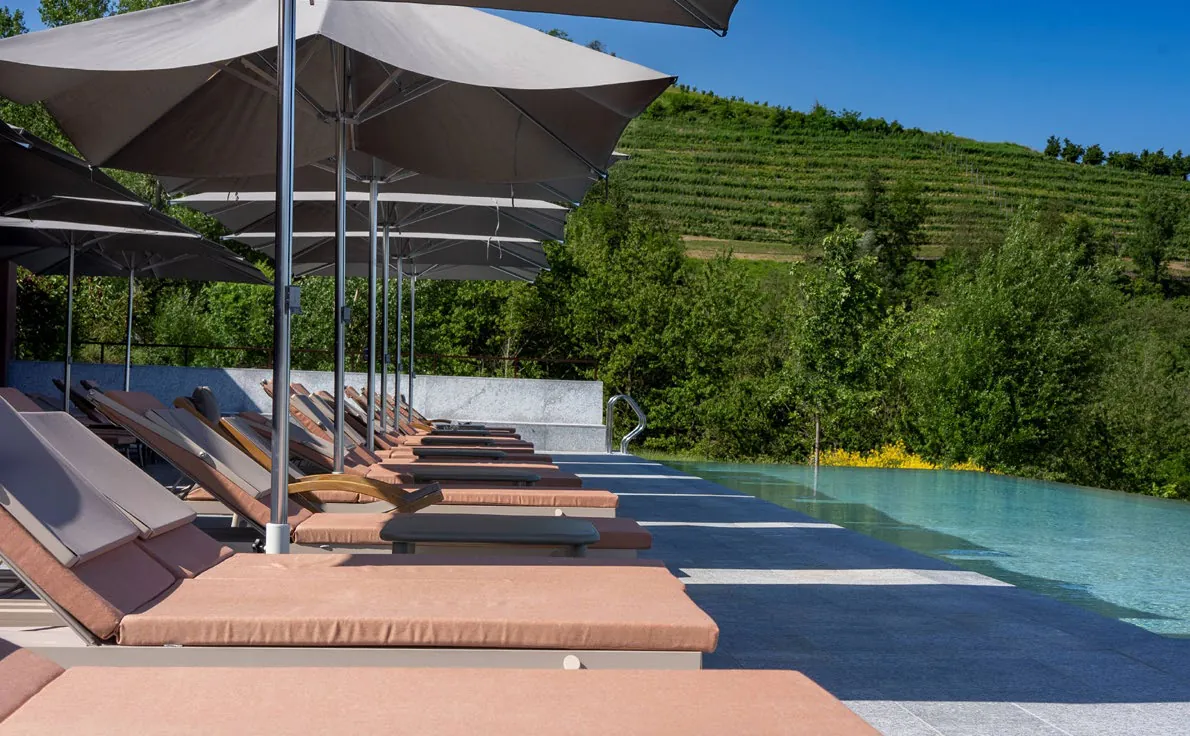
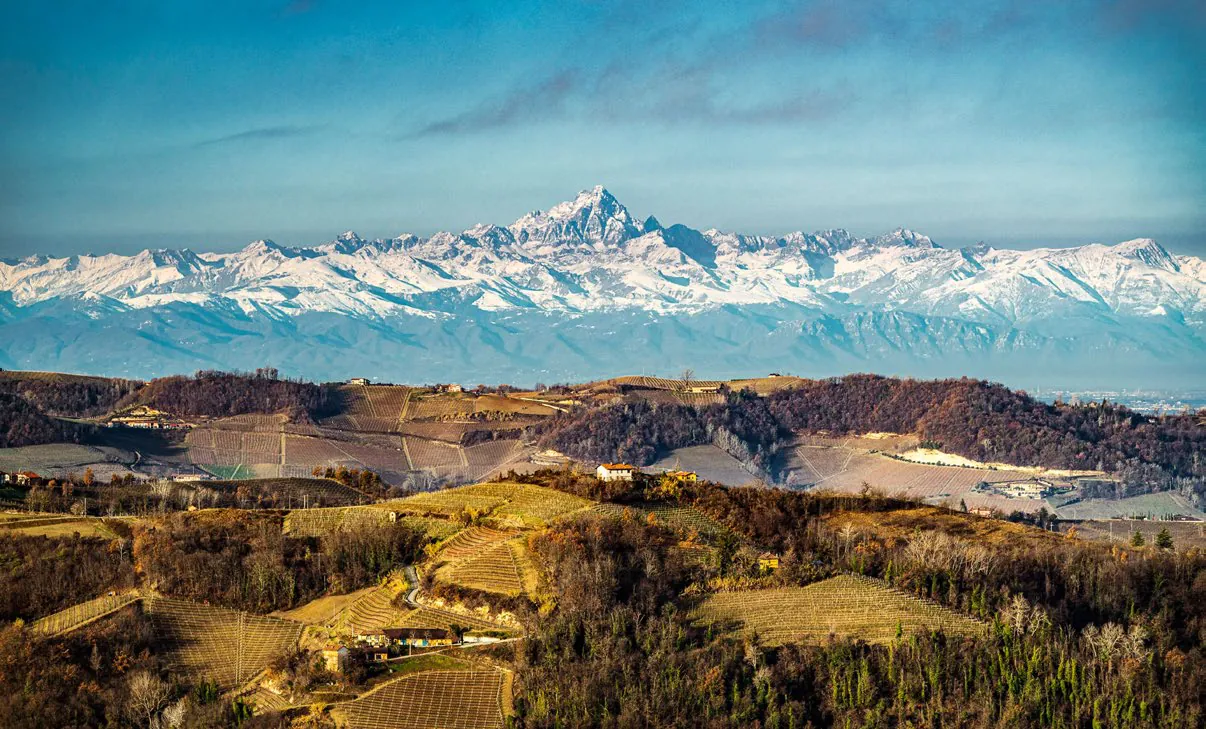
As far as the landscape shaping the guest experience goes, this is what really influences the overall success of Casa di Langa. The property is distributed on different floors and levels, connected by stairs and a couple of elevators. This design, adapted from the previous unfinished property layout, follows the natural shape of the hill and invites guests to immediately slow down. The property is located in the Alta Langa, and compared to other villages in the area, our landscape is very rich from a natural point of view, as it includes vineyards, hazelnut trees, forests, agriculture, castles, and the magnificent Alps. We’ve developed the guest experiences based on local food and wine traditions, while also incorporating our own land through on-property truffle hunting, garden tours with the gardener, and forest trekking.
Beyond truffles and wine, what would you say most distinguishes Casa di Langa from other luxury properties in the Langhe for a traveler choosing where to stay?
As a brand, we have a strong set of values that we implement in all we do; the most important is a sincere care for inclusion. It is reflected in our operations, the service we deliver, and the human care we have for our guests, colleagues, and the local community. We also continue developing experiences and selecting partners and providers that are authentic to the territory and the local community for guests to experience on property.
On the other hand, we are the only property in the area that is a proud member of Preferred Hotels & Resorts under the LVX Collection. We are included in many exclusive travel programs such as Virtuoso, Curated by Internova, Fine Hotels + Resorts from American Express, amongst others. These partnerships guarantee the required standards and the high level of service that our guests are looking for.
CULINARY HERITAGE & WINE CULTURE
With Executive Chef Francesco Clerico’s new chapter at Faula Ristorante, and the region marking 40 years of the Slow Food movement, how is Casa di Langa’s culinary philosophy evolving to protect regional biodiversity?
The culinary philosophy of Casa di Langa is represented
in our Faula Ristorante and in all its operations. We are a sustainable property, and this has been the guiding principle for developing the entire concept from the very beginning. The vegetables, herbs, flowers, and fruit we grow in our vegetable garden are used to create the dishes we serve in our restaurant. We also use this produce to prepare the staff canteen meals.
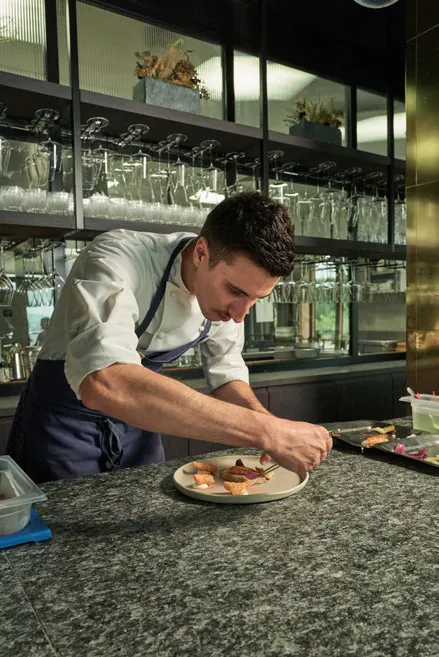
At Faula Ristorante, in some dishes, vegetables represent the main ingredient, in some others, they accompany the main dish, and sometimes they’re presented as a creative option that you’d never have imagined before. Our kitchen team, led by Francesco Clerico, is passionate about food and circular cuisine, reducing waste to zero. From breakfast to lunch, aperitivo, dinner, and welcome amenities, the team has created a wonderful gourmet story that represents their background while connecting to Casa di Langa’s values.
What is not grown in our vegetable garden comes from local farmers. Fish comes from Liguria. We serve local smoked Piedmontese trout for breakfast instead of salmon that comes from who knows where. We only serve fruit and vegetables that are true to the season and the destination, we don’t have avocado toast. Sometimes these choices are not understood, but we need to be coherent with who we are, so we’re happy to educate our guests. We also produce our own compost. All the vegetable and fruit waste is brought to the property composter, which is then used to feed the soil of our vegetable garden and the orchard.
We respect the Slow Food movement and support its prerogatives as much as we can. Our team has also received appropriate training from them at the Universita del Gusto regarding the circular economy, and we apply it formally in our daily operations.
Truffle season transforms Piedmont every autumn. How does Casa di Langa immerse guests in that world, from your dedicated Truffle Concierge to the estate’s hunting and dining experiences?
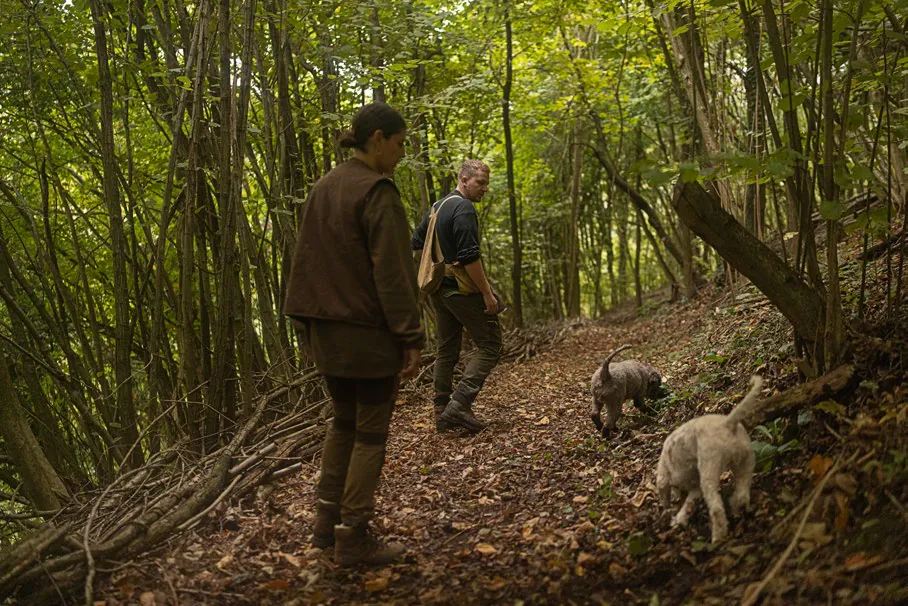
The white truffle season lasts from the beginning of October until the end of January. Throughout the entire year, we instead have different qualities and varieties of the black truffle. At Casa di Langa, we’re very conscious of the uniqueness of this precious gift that the land has to offer in our territory, and we share all our knowledge about it with our guests through different activities. We feature truffle hunting with local trifulao and their dogs in our forests throughout the year, except during May and September when the activity is forbidden to allow the forest to regenerate. The trifulao we work with speak fluent English, and so they’re able to share all their knowledge with our guests during the experience, such as how they train their dogs, the different types of truffles, the different seasonality and qualities, and how the weather influences the produce every year. It’s an educational activity on the property that is a lot of fun as well.
Our Faula Ristorante menu during the autumn season features dishes that best represent the territory. Some are traditional, some are creative, some can be paired with the precious truffle, and some cannot. But all the dishes from this season can be paired with the most excellent wines from this territory, which are a heritage of different generations. And we do encourage our guests to follow our sommelier’s recommendations, which will meet and even exceed their expectations related to wine, tradition, and sense of place.
Casa di Langa grows its own Alta Langa Pinot Noir and Chardonnay across its estate vineyards, alongside close ties to sister wineries Enrico Serafino and Vietti. How does the hotel bring guests into Piedmontese wine culture, from your own harvest to those cellar treasures?
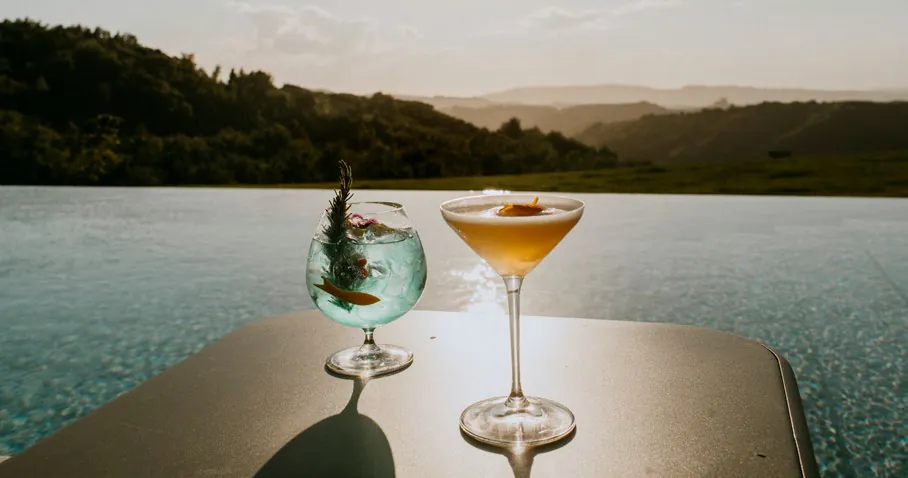
We feature 11 hectares of working vineyards on the property producing Pinot Noir and Chardonnay. Our sister company, Enrico Serafino, which is very famous for the Alta Langa sparkling wine and was among the pioneers of this wine production many years ago, takes care of our vineyards throughout the year, feeding the land, trimming, and harvesting. Using the produce of Casa di Langa, they create the Oudeiss Alta Langa, a wine we are delighted to offer our guests, typically as a pre-dinner aperitif that embodies our concept of farm-to-table. Other than that, we love to share the ancient traditions rooted in our community with our guests. In fact, we feature several wine tasting experiences coordinated and handled directly by our sommelier, which we strongly recommend to our guests, especially if it’s their first time visiting the territory. It gives them an overall understanding before they visit different local wineries for tastings. We’ve also arranged high-end wine-tasting experiences for connoisseurs, featuring the best the territory has to offer.
There’s another moment where our guests can enjoy and learn about the wine production and history during a meal at Faula Ristorante, paired with excellent wines recommended by our sommelier.
This territory is all about food, wine, truffles, and nature.
On a related note for our readers, Georgia’s winemaking tradition, built around ancient qvevri clay vessels, is often cited as the oldest continuous wine culture in the world. Is that a tradition you or your sommelier team have encountered, and does its focus on raw, natural heritage resonate with Casa di Langa’s own approach to wine?
Well, not really. In our territory, there are a few wine producers that use clay vessels to age wine. It is not a local tradition, but they obtain great wines. Casa di Langa’s approach to wine is rooted in highlighting the region’s finest offerings. Whether from a big-name producer or a small winery, what matters is the quality of the wine. Of course, our wine list has a very long selection of Barolo and Barbaresco wines, as we’re located in this beautiful territory, but we also feature other autochthonous wines such as Timorasso, Barbera, Freisa, Moscato, and Alta Langa, for example. We feature about 1,000 labels on our wine list, including a wonderful selection of Italian and French wines.
ART & CULTURE
The new Artist Experience with AVP Art Advisory, beginning with Angiola Gatti’s residency, ties the hotel into Alba’s designation as Italian Capital of Contemporary
PHOTO CREDIT: © ALEXANDER ZOLTAI
Art for 2027. What inspired you to build a structured artist-in-residence program alongside your culinary offerings?
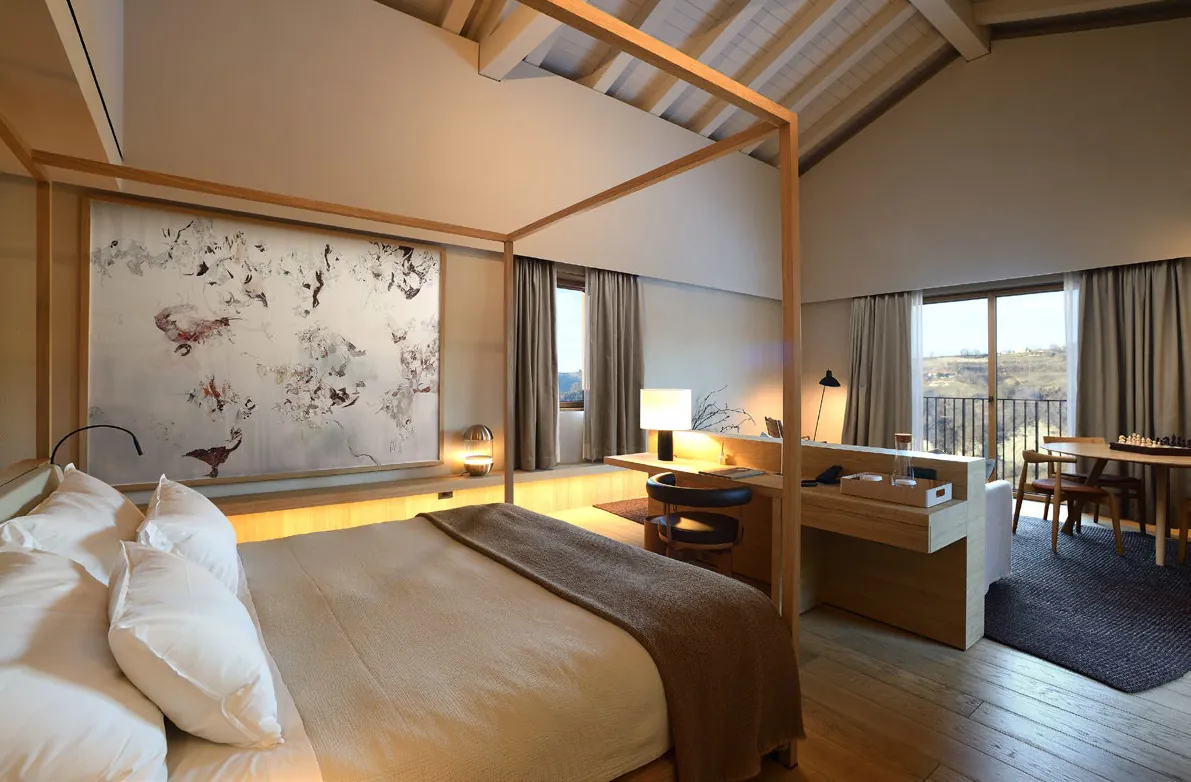
Casa di Langa features a wonderful collection of contemporary art, both indoors and outdoors. The Art Collection is a central part of our guest experience, offering a lens on fine art away from the crowds of traditional institutions. It was designed as a tribute to the rich cultural heritage of the region, meant to appeal equally to seasoned art collectors, design enthusiasts and travelers. The collection highlights dozens of original works by prominent Italian, American, and international contemporary masters, featuring vibrant, abstract, and geometric pieces alongside seven outdoor sculptures. Our guests are encouraged to experience the art as an intimate feature of their stay, engaging with original paintings and sculptures that energize their surroundings and spark conversation. Contemporary art is a passion of our owner and founder, Kyle J. Krause, and he always wanted to share the beauty of art with our guests, not as a museum, but as a part of their experience while in Casa di Langa.
We had many ideas over the years on how to share this with our guests, developing an experience that would both respect the collection and show our genuine passion for art. But as for the most precious things, we needed to wait until the right moment and partner arrived. We were accompanied by Alexandra Van Peeborg, AVP Art Advisory, throughout the process, and we successfully hosted the first artist’s residency with Angiola Gatti. She could not have recommended a better artist to start this new experience for Casa di Langa.
In 2027, Alba will be the Italian Capital of Contemporary Art, and Casa di Langa, together with the two sister wineries, Vietti and Enrico Serafino, will each host an art piece on the premises throughout the year as a part of the “Vigne ad Arte” program. We’re very excited about this opportunity, especially for the territory, which will formally open to a new segment of travelers who are art lovers. It will bring international recognition and visibility to what the region has been doing for years: collecting art and supporting local artists.
Gatti’s residency asks her to translate the Langhe’s landscape into an original artwork. How do you see art
PHOTO CREDIT: © ALEXANDER ZOLTAI
and place working together at the hotel, and might future residencies invite artists from beyond Italy?
Casa di Langa cannot exist without the beauty of the art collection it hosts. The pieces we feature are so unique and well-chosen that they truly represent the concept of sustainable elegance that defines us. The sculptures located on the grounds connect deeply with the landscape, nature, and the colors of the resort, while indoors we feature stunning pieces that have found their natural locations in Faula Ristorante, the LeLose spa, the lobby, and the guest rooms. We love to share this beauty with our guests and make it part of their experience.
Supported by AVP Art Advisory, we are planning to host two residencies in 2027. The artists have not been defined yet, we are working on the shortlist, but they will most probably be Italian or Italian citizens.
PHILOSOPHY & PERSONAL PERSPECTIVE
As a proud member of Beyond Green, sustainability runs through everything from your organic gardens to the architecture. What does that “innate sustainability” look like day-to-day, operationally?
We were born sustainable as a business and concept, so all our operations and ideas are based on, connected to, or respectful of the requirements of our certifications. For us, sustainability is not only taking care of the planet, but also of the people, whether they are our staff, our guests, or the local community.
PHOTO CREDIT: © ALEXANDER ZOLTAI
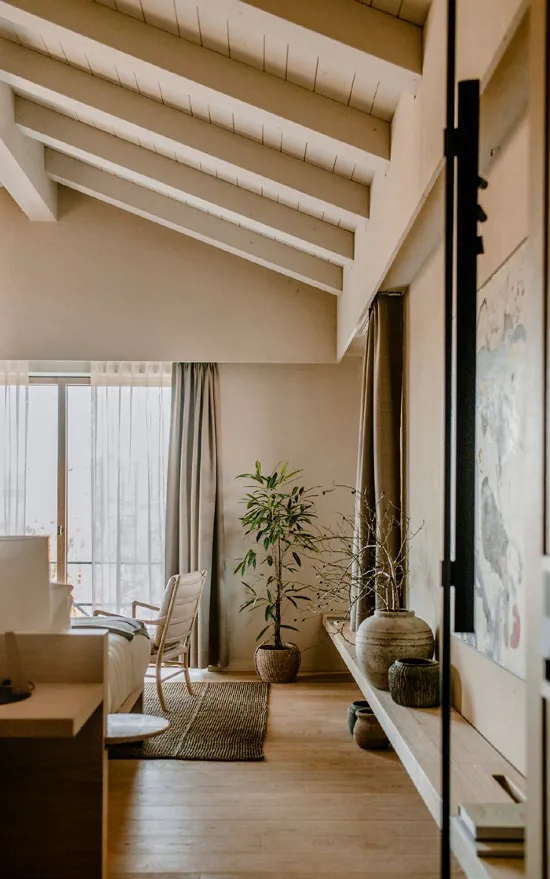
Operationally speaking, this requires a lot of work. Starting with architecture and decor, using natural materials requires a lot of maintenance and care, demanding time and investment to ensure the building and services are always perfect for our guests. Our cleaning products are ecological, so while they aren’t aggressive toward nature and don’t ruin the materials, they do come at a higher cost. Our mattresses are handmade by a local producer using organic materials, which means they need constant care from our team to guarantee the same level of comfort for our guests. These are just a few examples of our daily operations.
Our organic gardens took a long time to bloom. When we bought the property, it had been abandoned for over a decade, not only the construction site, but also the grounds and the forest. Bringing the surrounding nature back to life was an immense task, especially because we did everything by hand. We fed the soil organically, developed techniques to reduce water consumption, planted young trees to ensure they would grow strong using little water, and chose plants that would help other plants grow while feeding the soil and retaining humidity. It takes time and strategy, and of course, even more time when you do things the right way.
Our guests enjoy these views, the architectural details, the decor, the natural materials, the room features, the experiences we’ve designed, and the menu concept in our restaurant. They feel that authentic sense of place, where everything has meaning, is interconnected, and truly represents Casa di Langa. Overall, all these efforts yield a positive outcome for both our brand and the guest experience, and that is worth everything.
Finally, a question we ask everyone we feature: what is your own favorite place in the world to travel to, and what makes it so special to you?
I don’t have a favorite place in the world, well, excluding Spain, since I’m Spanish and passionate about my country 360 degrees, but I’d choose anywhere where I would receive genuine, sincere service from happy staff. To me, this is hospitality, and it’s what helps create memories out of those experiences.