Vera Pagava
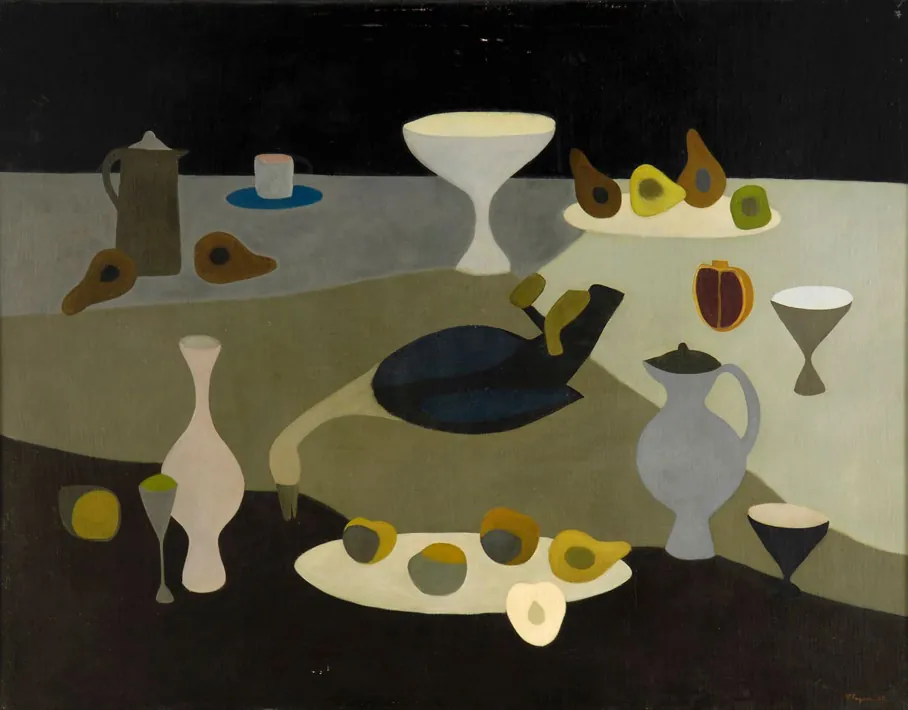
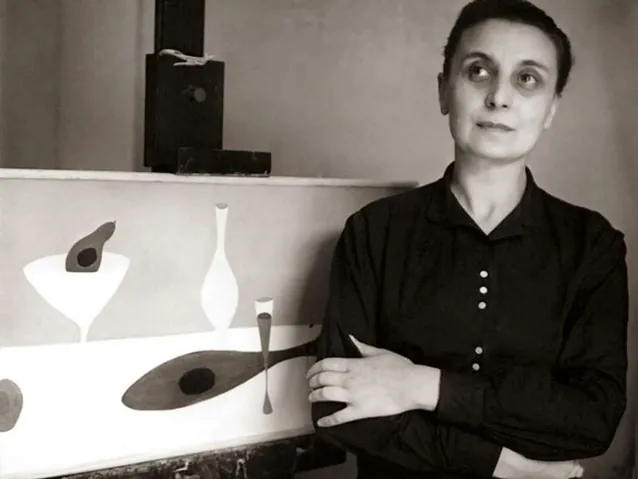
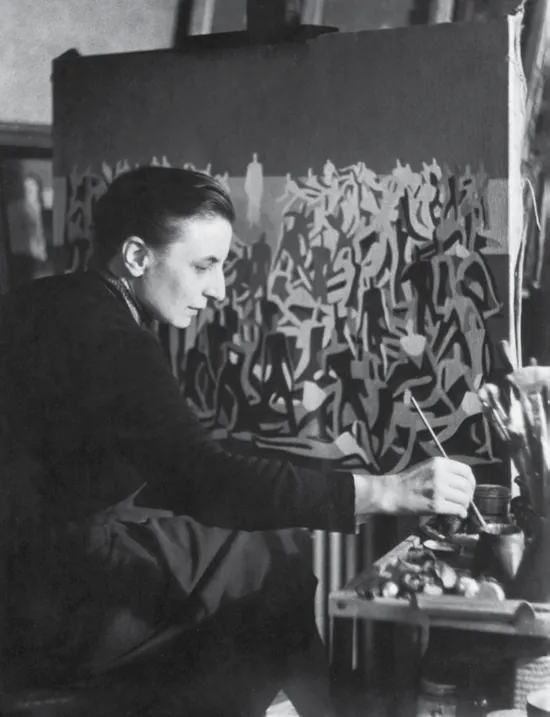
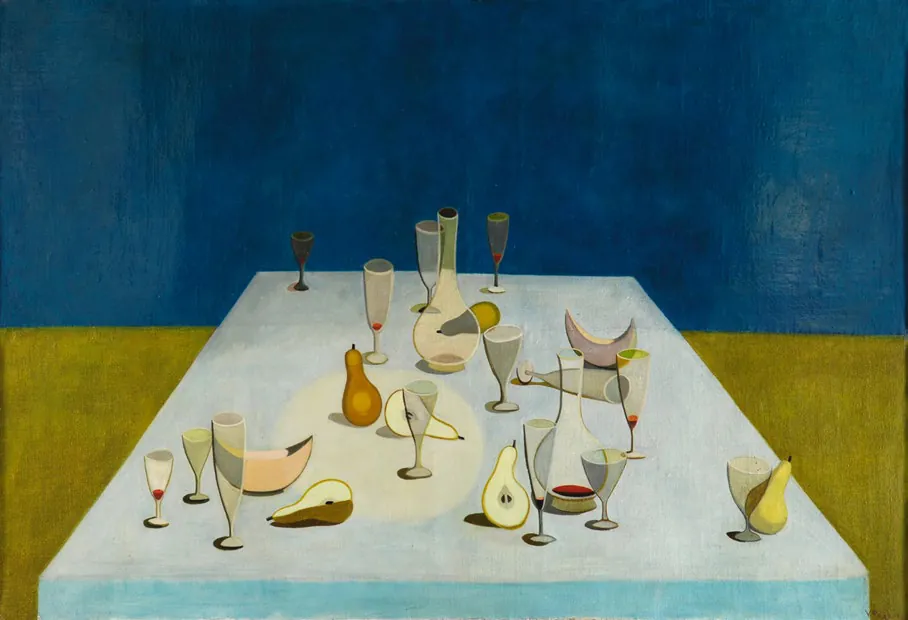
Vera Pagava was a Georgian artist who worked in France and is regarded as one of the most significant representatives of 20th-century European art.
Vera was born in Tbilisi in 1907. Her mother, Alexandra Nineishvili, was an educator and served as the director of the First Gymnasium. Her father, Yuri Pagava, was a lawyer. Between 1920 and 1921, he was stationed in Iran on diplomatic service. After returning to Georgia in 1922, he traveled to Germany with his family to seek medical treatment. Although their departure was intended to be temporary, circumstances prevented the family from returning to their homeland. In 1923, they moved to France and settled in Montrouge, a suburb of Paris.
Vera studied at the School of Decorative Arts, where she was taught by the renowned painter and sculptor Andre Lhote. From 1934 to 1939, she continued her studies at the Academie Ranson under Roger Bissiere. During this period, she became closely associated with the Academie Ranson circle and later joined the artists’ group “Temoignage” in Lyon.
Vera Pagava was introduced to the French public in 1944 by gallerist Jeanne Bucher. Impressed by her work, Bucher played a significant role in promoting and popularizing Pagava’s artistic talent. She exhibited Vera’s paintings alongside those of Dora Maar, Picasso’s close friend and muse, in order to attract a wider audience and introduce visitors to her work. Vera held solo exhibitions in 1947, 1951, 1954, and 1960.
The financial crisis of the 1930s also had a considerable impact on the Pagava family. In addition to painting, Vera engaged in various professions throughout her life. During the 1930s, she worked in textile design and knitting. In 1940, she trained as a nurse and cared for wounded patients. From the 1970s onward, she was able to support herself primarily through the sale of her artwork.
Alongside her painting practice, Pagava also worked in monumental and decorative art. Drawing on her knowledge of fresco techniques, she created decorative panels for kindergartens on the Menilmontant and Ave Maria streets in Paris, designed stained-glass windows for Saint-Joseph Church in Dijon, and illustrated poetry collections by Saint Teresa of Avila, Pierre Lecuire, and Mila Gagarin.
In 1958, Vera Pagava received a special gold medal from Pope John XXIII for her fresco-panel “Ascension”, executed on wood. The work, originally commissioned for an international exhibition, is currently housed in the Darial Gallery.
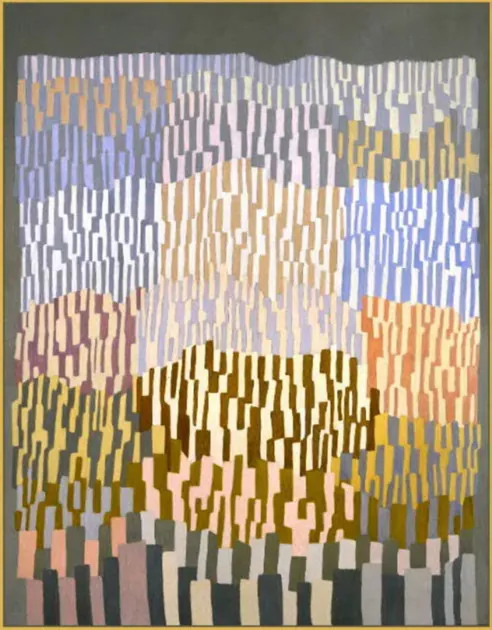
In the early 1960s, Pagava increasingly turned toward abstractionism, a style through which she found a new dimension of artistic freedom and expression. Her watercolor works from this period were presented at the French National Pavilion of the Venice Biennale in 1966.
In 1972, at the initiative of Tamar Tarasashvili-Tali, a Georgian emigrant living in France, an exhibition of Vera Pagava’s works was opened in Paris under the symbolic name “Darial”, reflecting the Georgian roots of the gallery’s founder. The gallery operated until 1996, and Vera Pagava remained its leading artist.
In 2012, a major retrospective of the artist’s work was organized at the Dimitri Shevardnadze National Gallery on the initiative of the AC/VP (Association culturelle Vera Pagava). Later, on September 23, another largescale exhibition, “Silent Cities”, opened at TBC Concept Space in collaboration with the Vera Pagava Cultural Association. The exhibition featured paintings and watercolors created between the 1950s and the 1980s, through which the artist explored the architecture and atmosphere of silent cities. A sense of stillness and contemplation is one of the defining characteristics of Pagava’s work. In addition to pieces from the AC/VP collection, the exhibition also included works from the public and private collections.
Today, most of Vera Pagava’s paintings are held in private collections in Germany and Switzerland. Fifteen of her works are housed in the French city of Dijon, while others are part of the collection of the Museum of Grenoble. Before her death, the artist donated a number of works to the Darial Art Gallery, which is now owned by the Vera Pagava Association.
The Association later donated three of the abstractionist’s works to the Georgian National Museum: “Unknown” (1967), “Little Georgia” (1979), and three graphic sketches in a single frame – “The Book of Wine”, “Pasargad”, and “Metaphysical Poems” (1977–1979).
Vera Pagava passed away in 1988. She is remembered as an artist who successfully connected Georgian cultural roots with European artistic traditions and left a significant mark on 20th-century art.