The Qvevri as a Vessel
If Georgian wine is part of the country’s soul, then the qvevri is its heart. For thousands of years, Georgians have made wine in qvevris, which has made them an inseparable part of the nation’s culture, traditions, and way of life.
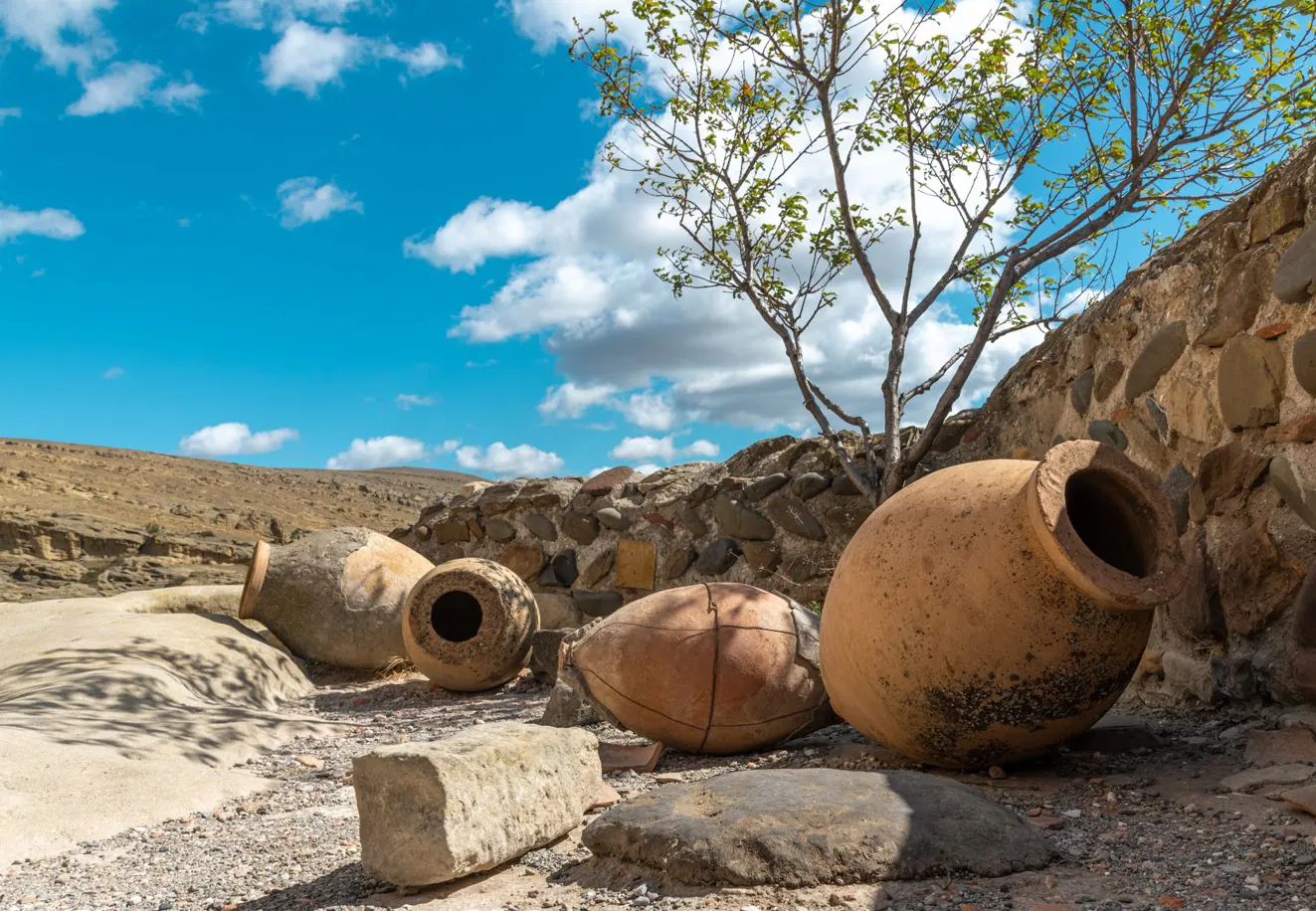
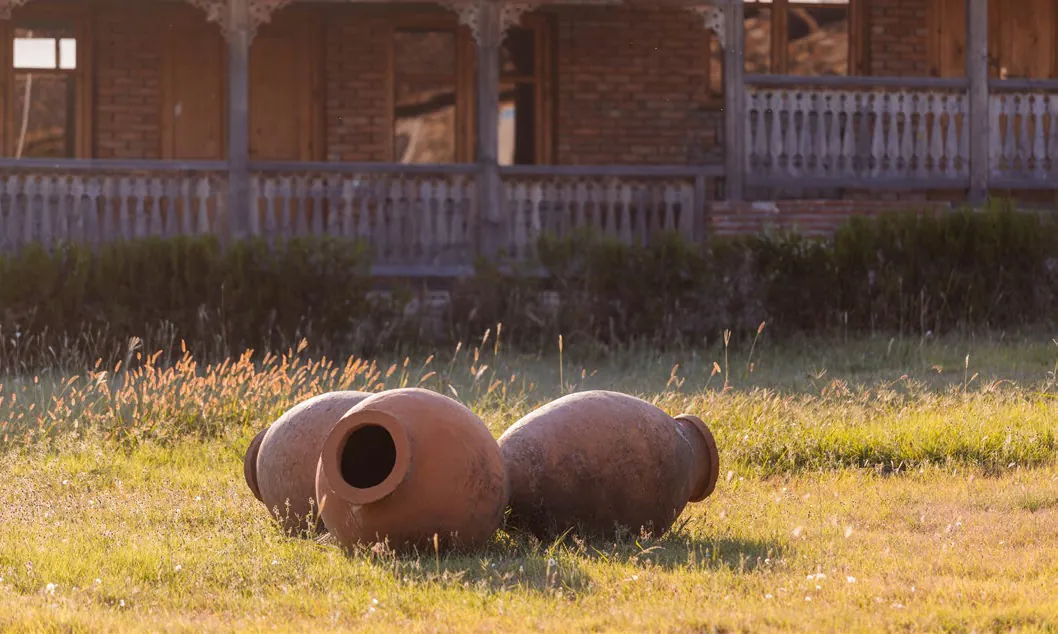
A qvevri is a large clay vessel buried underground and used for fermenting, aging, and storing wine. This ancient, unique method creates ideal natural conditions for winemaking. The surrounding earth maintains a remarkably stable temperature throughout the year, allowing the wine to ferment and mature naturally while developing its distinctive character.
The qvevri is far more than a technological invention. It has become a symbol of Georgian identity, family, craftsmanship, and hospitality. For centuries, almost every household had its own wine cellar (marani) with one or more qvevris. The art of making qvevris was traditionally passed down from father to son and from master to apprentice. Every qvevri was handmade, and creating a single vessel could take several months.
The cultural significance of the qvevri was internationally recognized in 2013, when UNESCO inscribed the Ancient Georgian Traditional Qvevri Wine-Making Method on the Representative List of the Intangible Cultural Heritage of Humanity. The recognition celebrates not only the unique winemaking technique but also the centuries of knowledge, craftsmanship, and tradition preserved by the Georgian people.
Today, qvevri wines are admired around the world for their distinctive aromas, natural structure, and authenticity. Although modern winemaking technologies continue to develop, many Georgian wineries remain faithful to the methods of their ancestors, producing wine in qvevris just as generations before them did.
The qvevri is an integral part of Georgian identity. It reminds us that a nation’s greatest treasures are not only its material heritage, but also the traditions, knowledge, and values preserved across generations. When a Georgian winemaker opens a qvevri, they are not simply offering wine – they are sharing thousands of years of history.
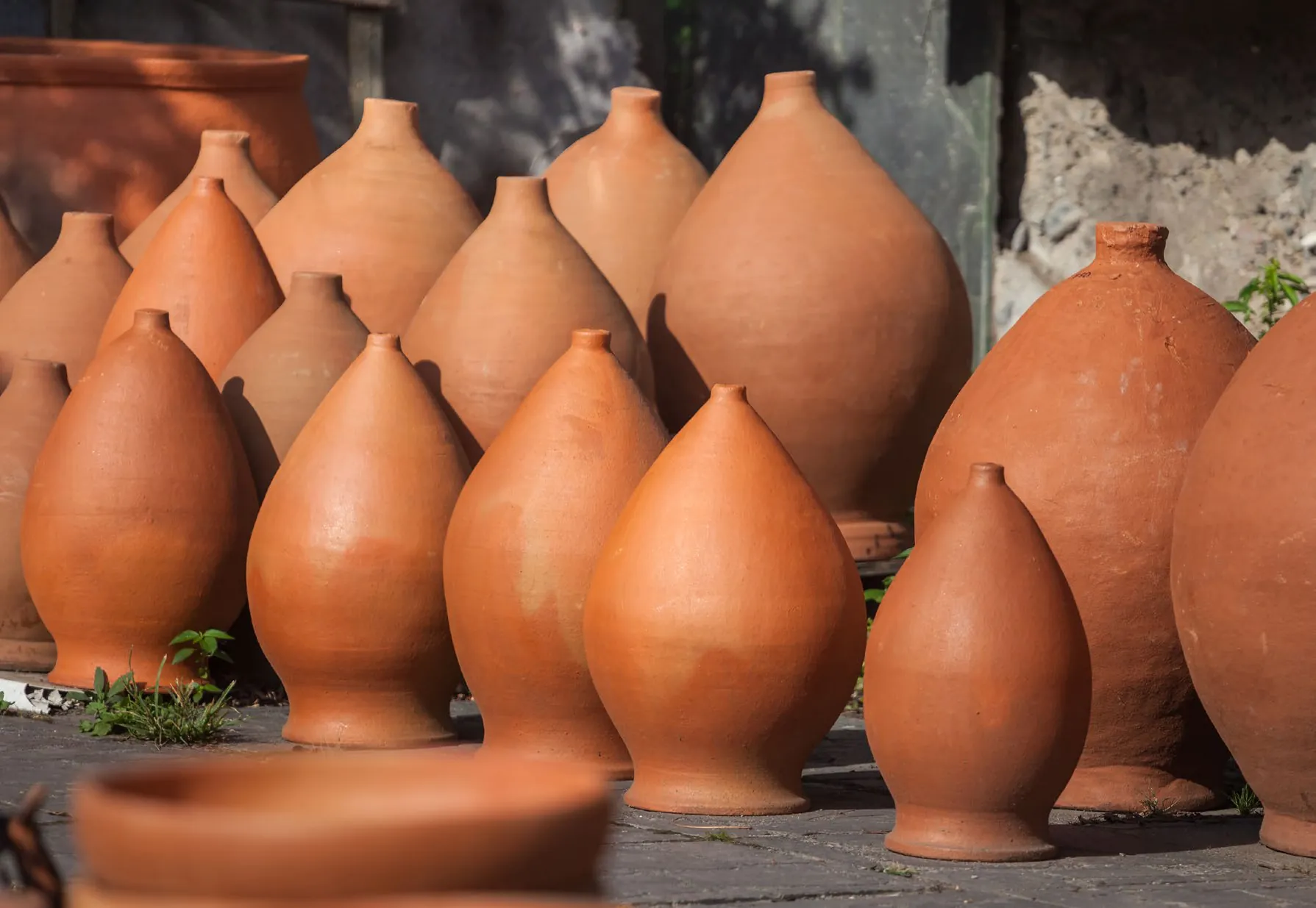
Creating a qvevri is much more than a craft; it is an art that demands exceptional skill, patience, and experience. For centuries, the knowledge of qvevri making has been carefully preserved by master craftsmen and passed from one generation to the next.
The process begins with selecting high-quality clay possessing the right natural properties. The vessel is then built slowly, layer by layer, entirely by hand. Even the smallest imperfection can affect the final result. Crafting a large qvevri often takes several months, while the firing process requires even greater skill and expertise.
Today, only a limited number of master craftsmen continue this centuries-old tradition in Georgia. Their work is invaluable, as they preserve the ancient knowledge that has sustained Georgian winemaking for thousands of years.
When visitors step into a traditional wine cellar and see a qvevri, they often perceive only a large clay vessel. In reality, they are looking at a handcrafted work of art into which the master has poured years of experience, patience, and dedication.
Once completed, the qvevri is fired in a special kiln, a process that gives it remarkable strength and durability. The finest qvevris can serve families for well over a century.
Many foreign visitors are fascinated by the fact that qvevris are buried underground. This is not merely a tra- dition. The earth acts as a natural thermostat, maintaining a relatively stable temperature throughout the year. These conditions create the ideal environment for wine to ferment and mature naturally.
In old Georgia, the wine cellar was considered one of the most respected places in the home. It stored the fruits of the family’s labor, welcomed guests, and hosted important celebrations. The qvevri itself symbolized the prosperity and well-being of the household.
The qvevri frequently appears in Georgian folk tales, songs, and poetry. Vines and wine are as deeply rooted in Georgian life as family and homeland. For this reason, the qvevri is far more than a piece of winemaking equipment - it is part of Georgia’s national culture.
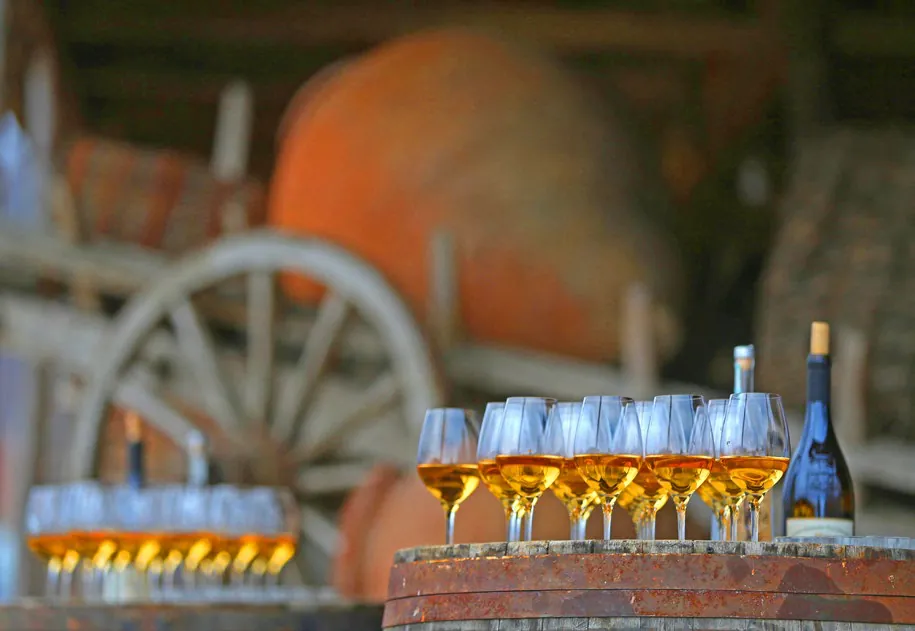
In the qvevri, wine ferments and ages together with the grape skins, seeds, and often the stems, giving it its distinctive aromas, structure, and color. The famous amber wines produced using this ancient method are now served in some of the world’s finest restaurants and wine bars.
Despite rapid technological progress, the qvevri has never lost its relevance. On the contrary, growing international interest in natural and traditional wines has led to a renewed appreciation of this ancient method. Today, Georgian qvevris are used not only throughout Georgia but also by winemakers across Europe, North America, Asia, and beyond.
For many travelers, the qvevri is one of their very first encounters with Georgia. Displayed at airports, museums, wine festivals, and cultural exhibitions, it has become one of the country’s most recognizable symbols, representing Georgia as the ancient cradle of wine.
If the marani is a temple of Georgian winemaking, then the qvevri is its sacred heart. Although it may appear to be a simple clay vessel, many winemakers and researchers describe it as a “living organism” because of the remarkable natural processes that take place within it.
The true wonder of the qvevri lies in the fact that it is completely buried underground. Why? Because the earth itself is nature’s perfect thermostat. Beneath the ground, at a stable temperature, grape juice begins to ferment naturally, without chemical intervention or artificial additives. Thanks to the qvevri’s egg-shaped form, the liquid circulates continuously, allowing the wine to clarify naturally as sediment settles at the bottom, leaving only crystal-clear amber or deep ruby nectar above.
The qvevri buried beneath the earth symbolizes the relationship between Georgians and nature - a tradition of returning the gift of the land to the soil, only to receive it again a few months later as an extraordinary wine.
The next time you raise a glass of amber wine while traveling in Georgia, remember that you are tasting more than a beverage. You are tasting thousands of years of history, patiently preserved by clay, earth, craftsmanship, and tradition.
It is worth noting that the qvevri and the marani are far more than relics of the past. They continue to evolve, inspiring new and creative expressions in contemporary life. One of the finest examples is the unique concept hotel in the village of Shalauri, Kakheti, where the architecture consists entirely of individual cottages shaped like giant qvevris. Rising above the green landscape, these clay-colored structures symbolize that the qvevri is far more than a vessel – it has become an architectural inspiration that connects tradition with innovation and the past with the future.
This contemporary vision once again proves that the Georgian marani and qvevri transcend time. They are not simply museum exhibits. As long as the doors of the wine cellar continue to open, as long as the clay buried beneath the earth continues to give birth to new wine every autumn, the uninterrupted tradition lives on. For more than 8,000 years, it has secured Georgia a unique place on the world’s cultural map. The qvevri remains a world where people and the earth still speak the same language.