Georgian Wine Cellars and Traditional Winemaking
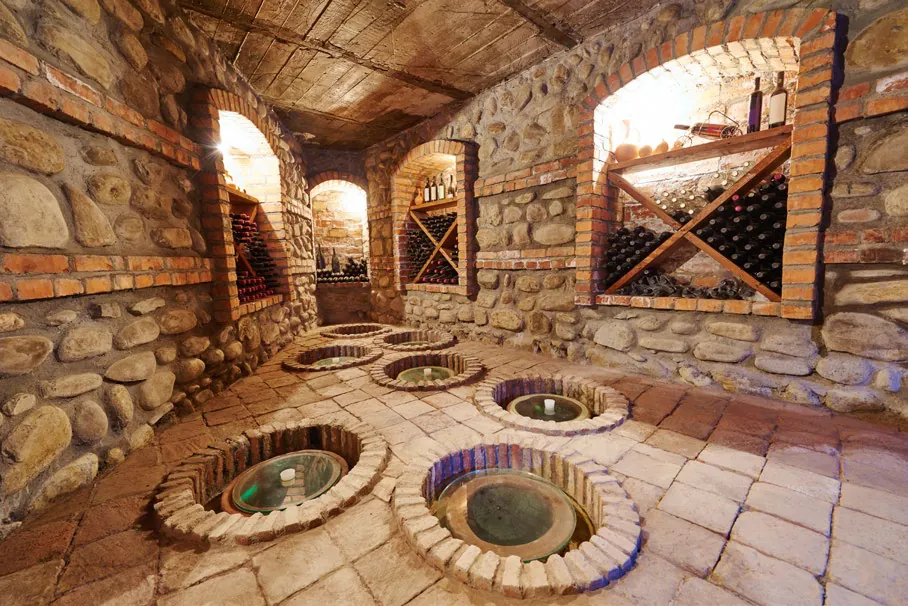
Building a traditional Georgian marani (wine cellar) has always required careful planning, practical knowledge, and experience. A marani was never an ordinary outbuilding. Its location was chosen with great care: it needed to remain cool throughout the year, be protected from direct sunlight, and stand on dry ground so that the qvevris buried beneath the floor would remain safe from excessive moisture and groundwater.
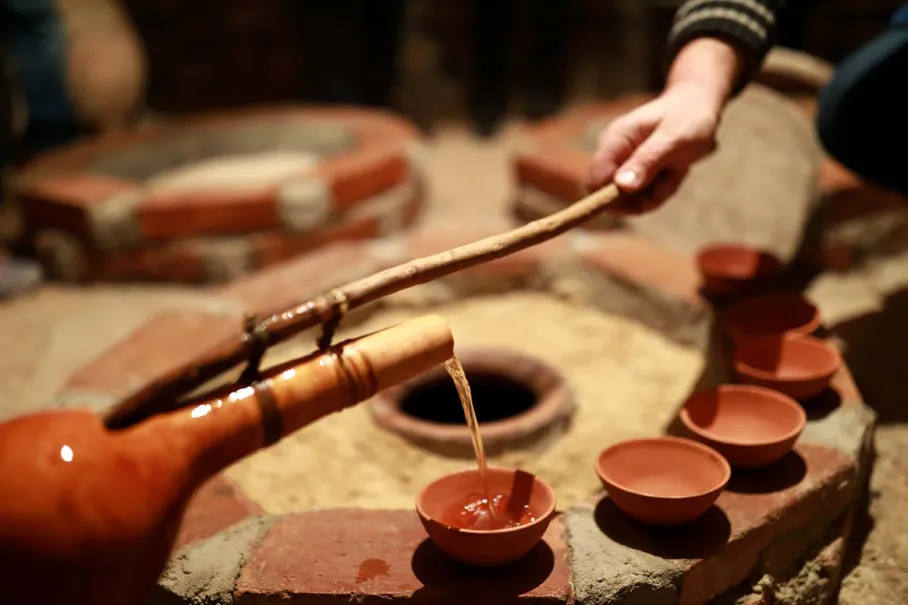
Traditional wine cellars were constructed with thick stone walls that naturally maintained a stable temperature in every season. At the heart of every marani were the qvevris buried beneath the floor. Only the mouths of the vessels remained visible above ground, carefully lined with stone or brick and sealed with lime mortar to prevent dust and water from entering. Every item inside the cellar had its designated place. In one corner stood the satsnakheli (traditional wine press), carved from wood or built of stone, while the walls held the traditional scrubbing tools used to clean qvevris (sartskhi), and the orshimo, the vessel used to draw wine from them.
It was within this carefully arranged space that the remarkable process began that gave both the marani and the qvevri their special place in Georgian culture.
In Georgian tradition, the marani was never simply a storage room or basement. It was regarded as one of the most respected places in the household - a sacred family space where important rituals took place for generations.
In earlier times, candles were lit inside the marani, prayers were offered for the family’s well-being, and the family’s “zedashe” was kept there - a special qvevri containing wine reserved exclusively for major religious holidays and important celebrations. Even today, being invited into a family’s marani is considered a great honor. When a host opens the cellar door and uncovers a qvevri before your eyes, they are welcoming you into one of the family’s most treasured traditions. It is a place where time seems to stand still and the true spirit of Georgian hospitality comes alive.
Traveling through Georgia is about much more than discovering mountains, ancient towns, and historic monuments. It is an opportunity to experience a culture shaped over thousands of years. One of its greatest treasures is Georgian wine, and its true spirit lives in the country’s traditional wine cellars.
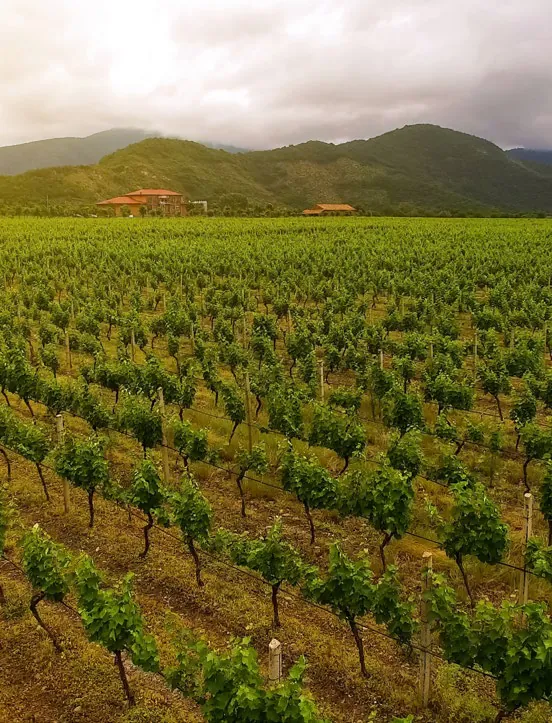
Georgian maranis offer visitors a truly unique experience. Here, wine is far more than a beverage - it is history, family tradition, and a symbol of hospitality. Many wineries still use the ancient qvevri winemaking method, recognized by UNESCO as part of the Intangible Cultural Heritage of Humanity. A visit to a wine cellar allows guests to stroll through vineyards, learn about the traditional winemaking process, taste a variety of wines, and hear fascinating stories from local winemakers. The experience is especially memorable during Rtveli, the grape harvest, when the entire wine region comes alive with celebration and activity.
Although wine cellars can be found throughout Georgia’s wine-producing regions, Kakheti remains the country’s best-known wine destination. Endless vineyards, the sunlit Alazani Valley, centuries-old maranis, and family wineries make the region an unforgettable experience for visitors.
Visiting Georgian wine cellars offers travelers a deeper understanding of the country’s character. Every glass of wine tells its own story, and every marani welcomes guests with genuine warmth. Wine tourism in Georgia is therefore not simply about discovering exceptional wines; it is also one of the most authentic ways to experience Georgian culture and its people.
Georgia is remembered not only for its spectacular landscapes but also for the warmth of its people, its ancient traditions, and a culture that continues to thrive today. Among its greatest treasures is Georgian wine, whose true home is the marani.
Georgia is widely recognized as the cradle of wine. Archaeological discoveries confirm that wine was being made here around 8,000 years ago. Throughout history, wine has represented far more than a drink for Georgians - it symbolizes family, friendship, celebration, and hospitality. That is why the doors of the marani have always remained open to guests.
When visitors step inside a traditional Georgian wine cellar, they come for much more than a tasting. They enter a world where every qvevri has its own story, every vineyard its own character, and every winemaker possesses knowledge passed down through generations. Here, time seems to slow down, allowing visitors to discover the authentic spirit of Georgia.
The Georgian supra (traditional feast) and wine are inseparable. Traditional toasts, polyphonic songs, and gatherings of family and friends form part of a living cultural tradition that has been passed down for centuries. Visitors soon discover that, in Georgia, wine brings people together and creates a unique sense of warmth and belonging.
Today, many wineries offer much more than wine tastings. Visitors can walk through vineyards, observe the ancient qvevri winemaking process, sample traditional Georgian cuisine, and gain a deeper appreciation of the country’s way of life. These experiences reveal how closely Georgian identity remains connected to the land, the vine, and family values.
The beauty of Georgia lies in its diversity, yet many be-
lieve its soul is found inside the marani. Here, centuries of knowledge are preserved in clay vessels, every guest is welcomed with a sincere smile, and every glass of wine tells a story of love for the homeland.
For travelers, a Georgian wine cellar is far more than a tourist attraction. It is an encounter with history, tradition, and the extraordinary hospitality that has earned Georgia admiration around the world. Anyone who visits a Georgian marani carries home not only the taste of remarkable wine but also memories of a people whose greatest treasures are their culture, generosity, and openness.
No two Georgian wine cellars are exactly alike, yet they all share one defining characteristic: heartfelt hospitality. Some preserve centuries-old qvevris, while others combine ancient traditions with modern winemaking techniques. Everywhere, however, visitors encounter the same deep respect for the vine and the wine it produces. For this reason, following Georgia’s wine route is much more than traveling between wineries – it is a journey through the country’s history, traditions, and soul.
You can taste Georgian wine in many places. But to truly understand the spirit of Georgia, you must step inside a traditional marani.