Khevsureti
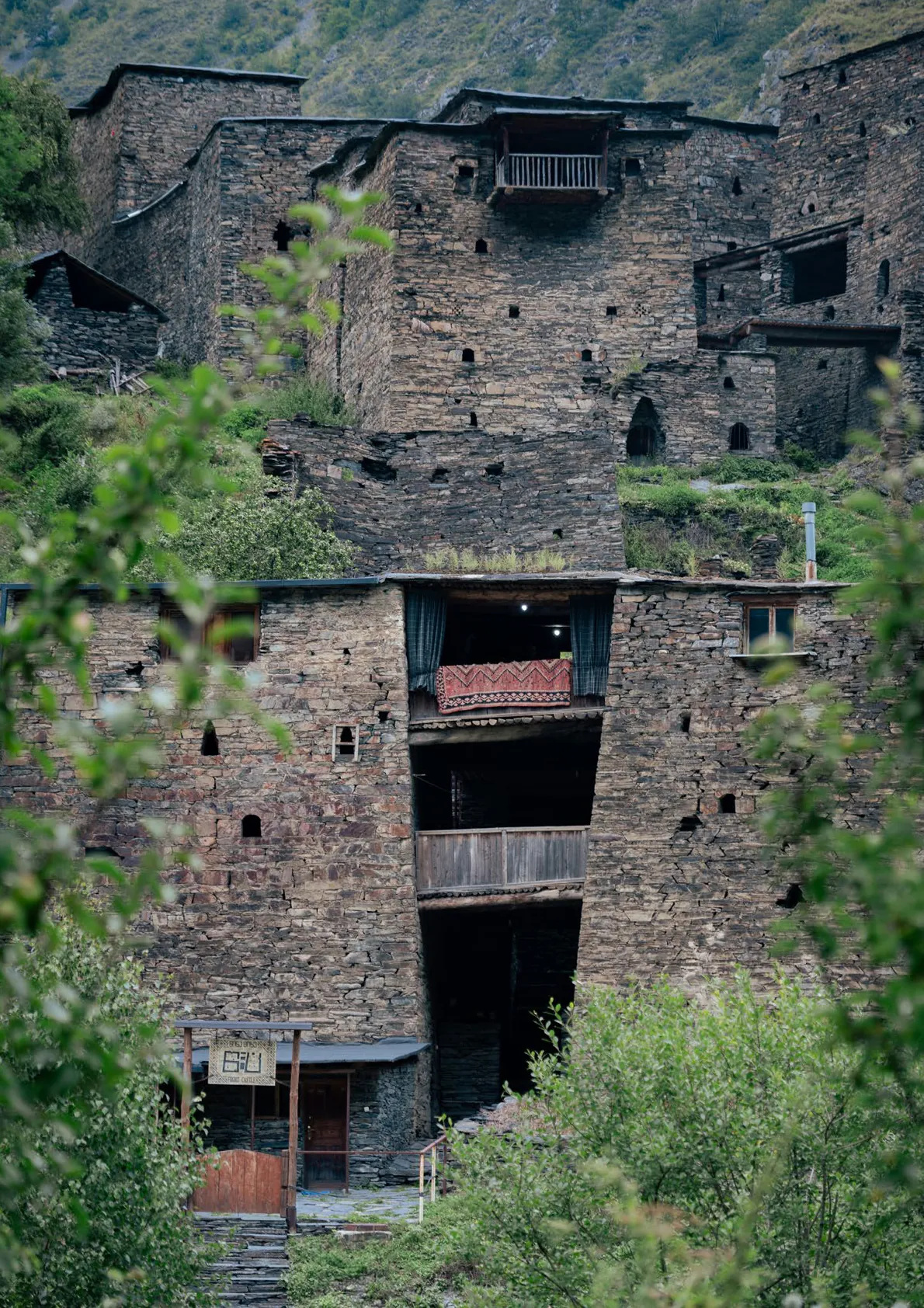
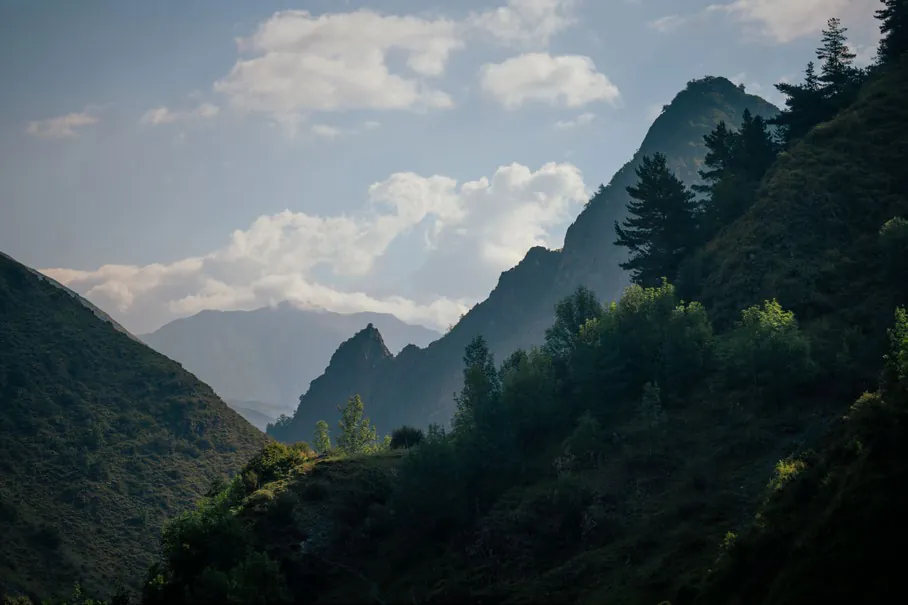
Khevsureti is one of the most beautiful regions, located in the highlands of eastern Georgia. The Caucasus Range divides Khevsureti into two parts: Pirikita (further, northeastern) Khevsureti, which includes the Mighmakhevi, Shatili, and Arkhoti valleys, and Piraketa (nearer, southwestern) Khevsureti, which includes the Aragvi Valley.
The name “Khev-sureti” comes from the words khevi and sureti, meaning a place of deep ravines, which is why it has been referred to by this name in historical sources since the 15th century. The watershed dividing Pirikita and Piraketa Khevsureti is located at the head of Arkhoti, where the Arkhoti–Roshka Pass crosses. The people of Arkhoti call this route the Roshka path, while the people of Roshka refer to it as the Arkhoti path. The Arkhoti Gorge is surrounded by high mountain peaks and glaciers reaching heights of 3,000 - 4,000 meters. The climate in the gorges of Khevsureti varies, but it is generally cold throughout the year. Winters are extremely harsh, with temperatures dropping to –18°C, while summers are short and cool. In winter, Khevsureti was historically cut off from the outside world.
The forests of Khevsureti are mainly deciduous, and its rocky landscapes and forests provide habitats for many species of birds and wildlife. The rivers are rich in trout.
Among the most remarkable natural sights are the three colorful glacial lakes of Abudelauri: Green Lake, White
Lake, and Blue Lake. Green and Blue Lakes lie almost side by side, while White Lake is located a bit farther away at the foot of the Chaukhi Massif and is more dif- ficult to reach. The best time to visit these lakes is in
June and July.
Shatili, Mutso, Ardot, and Khakhabo are historical and cultural heritage sites dating back to the Middle Ages.
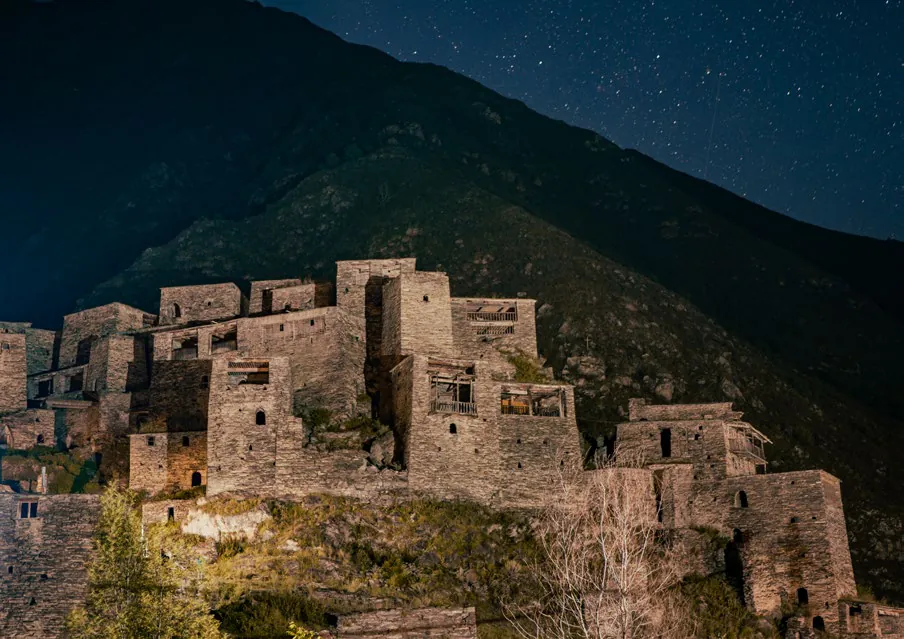
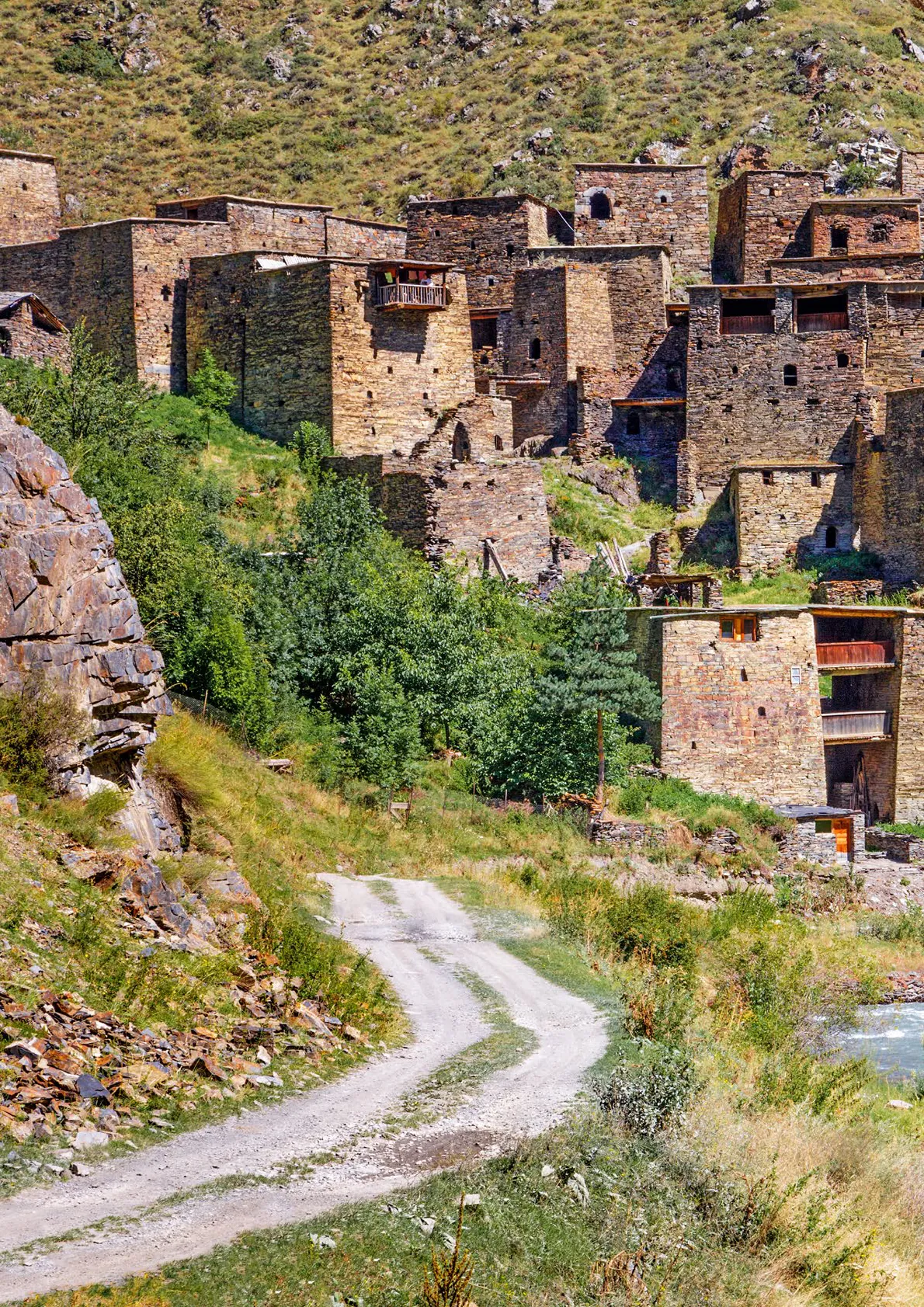
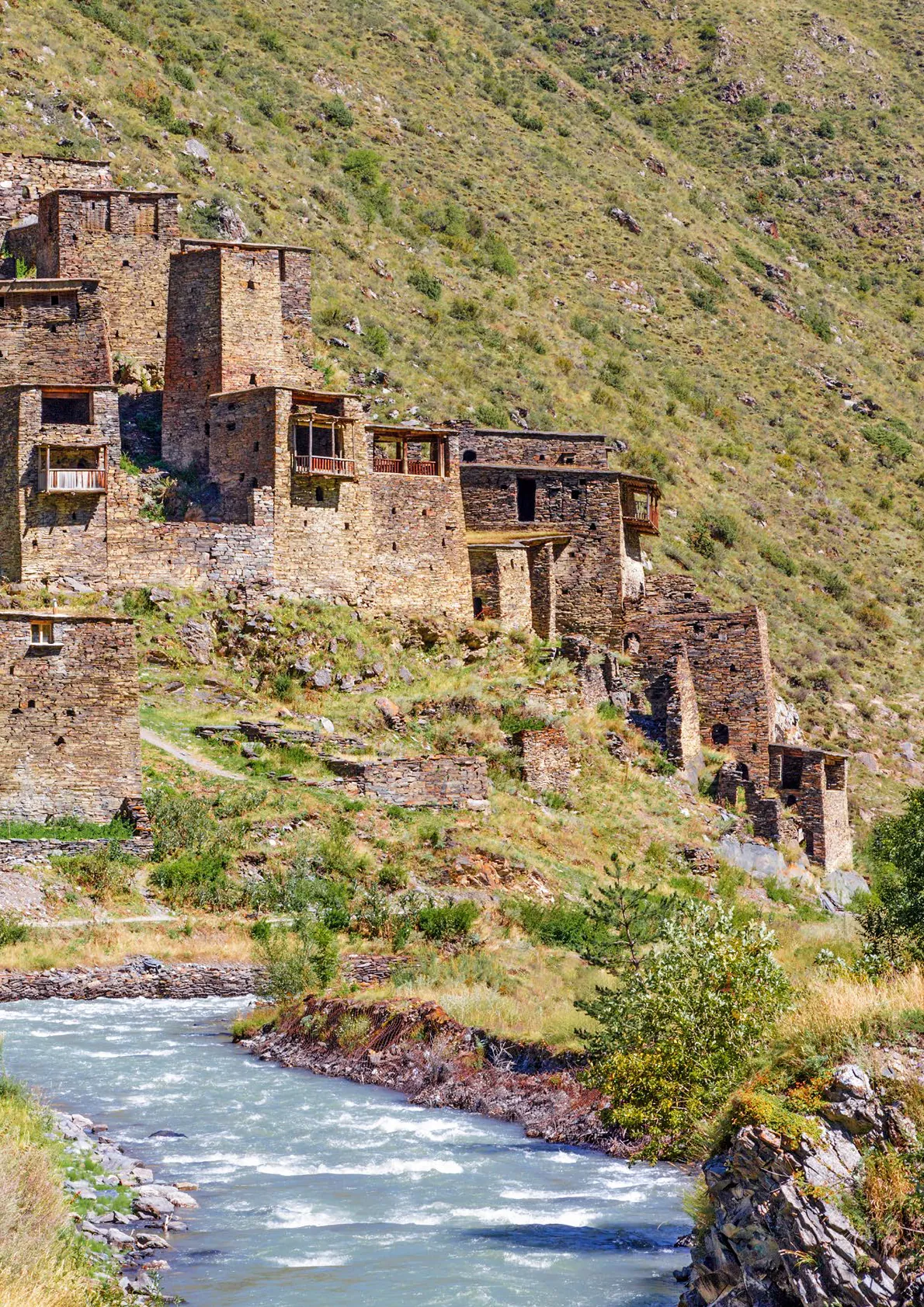
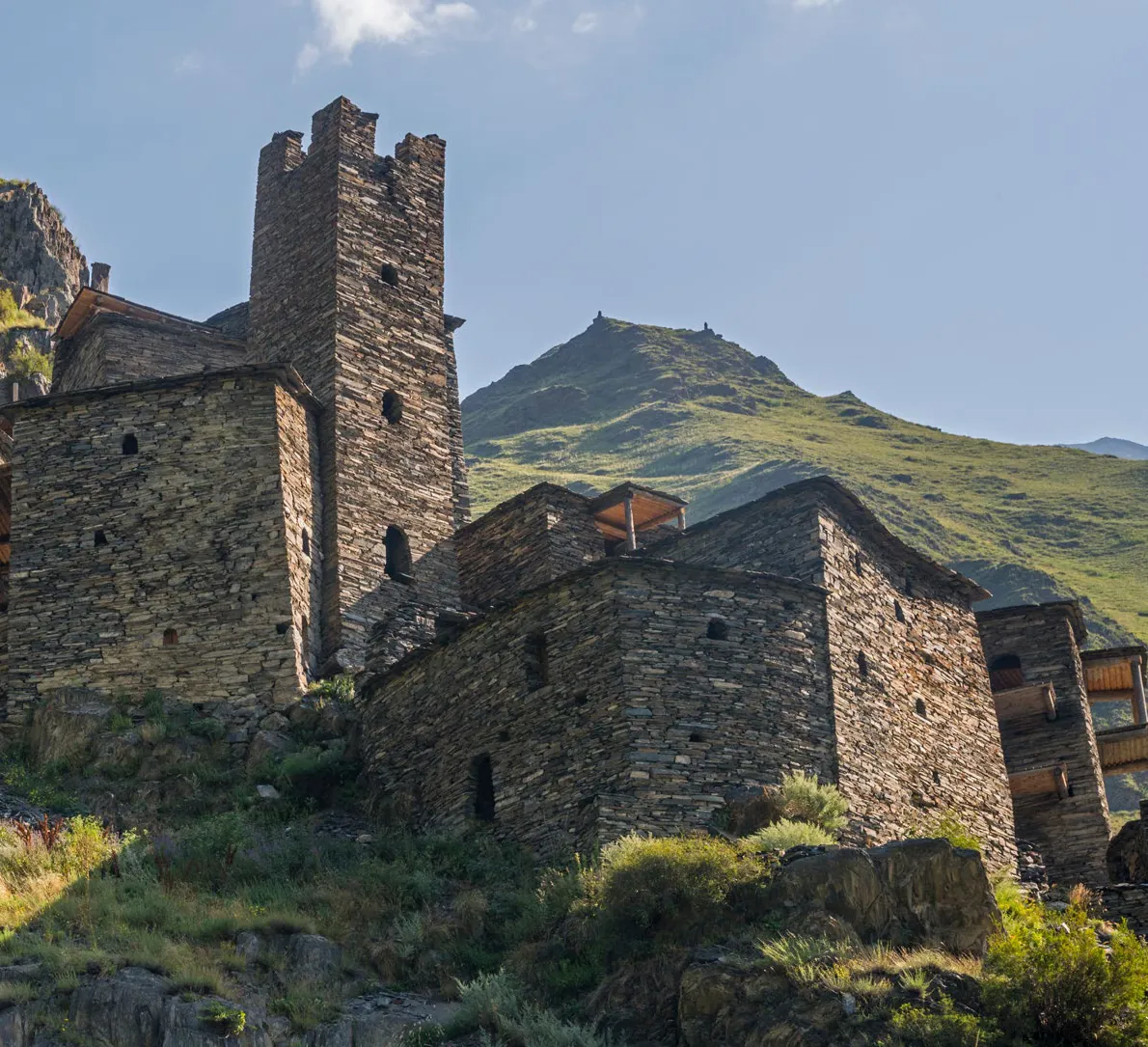
The fortress village of Shatili is one of the most famous historical monuments in Georgia and consists of up to 60 towers. The towers are connected by narrow passages and form a unique architectural complex. Today, Shatili is included in the UNESCO World Heritage Tentative List.
Mutso, like Shatili, is also a fortress village.
Historically, Khevsureti was divided into communities governed by Khevi elders. The religious beliefs of the
Khevsur people were largely syncretic, combining elements of pre-Christian traditions with Christianity. Although there were no Christian churches in the region, the population considered themselves Christian.
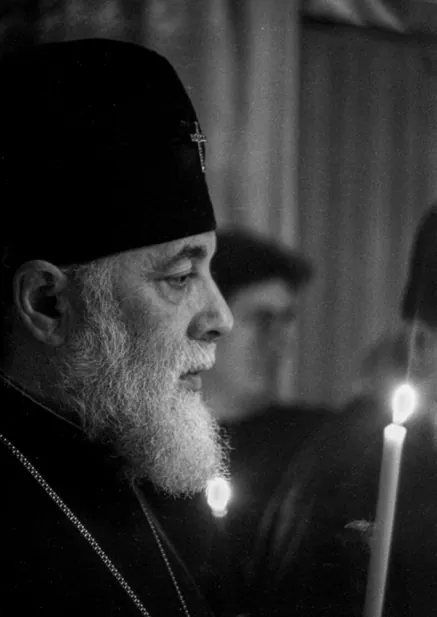
The Gudani Cross was regarded as the most powerful sacred shrine. Public rituals and religious ceremonies were conducted by local priests. Another unique feature of Khevsureti was the presence of so-called “religious and irreligious” shrines, places of worship that protected even those considered nonbelievers, where anyone could pray.
Agricultural traditions also followed strict rituals. The harvest had to begin on Tuesday. Before the harvest started, people fasted on Saturday or Sunday. On the chosen day, an animal was sacrificed, beer was brewed, and large, festive breads were baked. Only men participated in the feast. After the sacrifice, they would prepare vodka, bake nine ritual breads, light candles, and pray to the icons for a safe harvest and prosperity.
Khevsureti was also famous for its strong traditions of hospitality and brotherhood. The ritual of brotherhood involved drinking from a shared cup into which a piece of silver had been placed.
Children were raised with a strong spirit of courage and readiness to defend their homeland. Boys as young as ten were trained in combat techniques, including fencing, archery, martial skills, and horseback riding. Girls learned weaving, embroidery, and household skills from an early age.
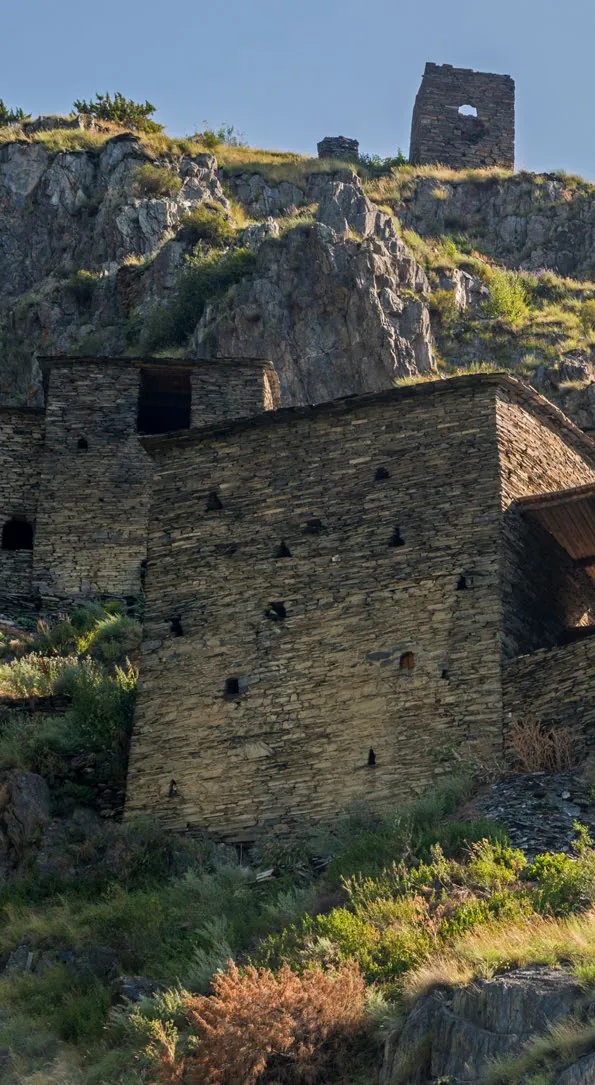
Traditional Khevsur architecture was distinctive. Towers were typically of two types: square towers with flat roofs and square towers with crown-shaped roofs.
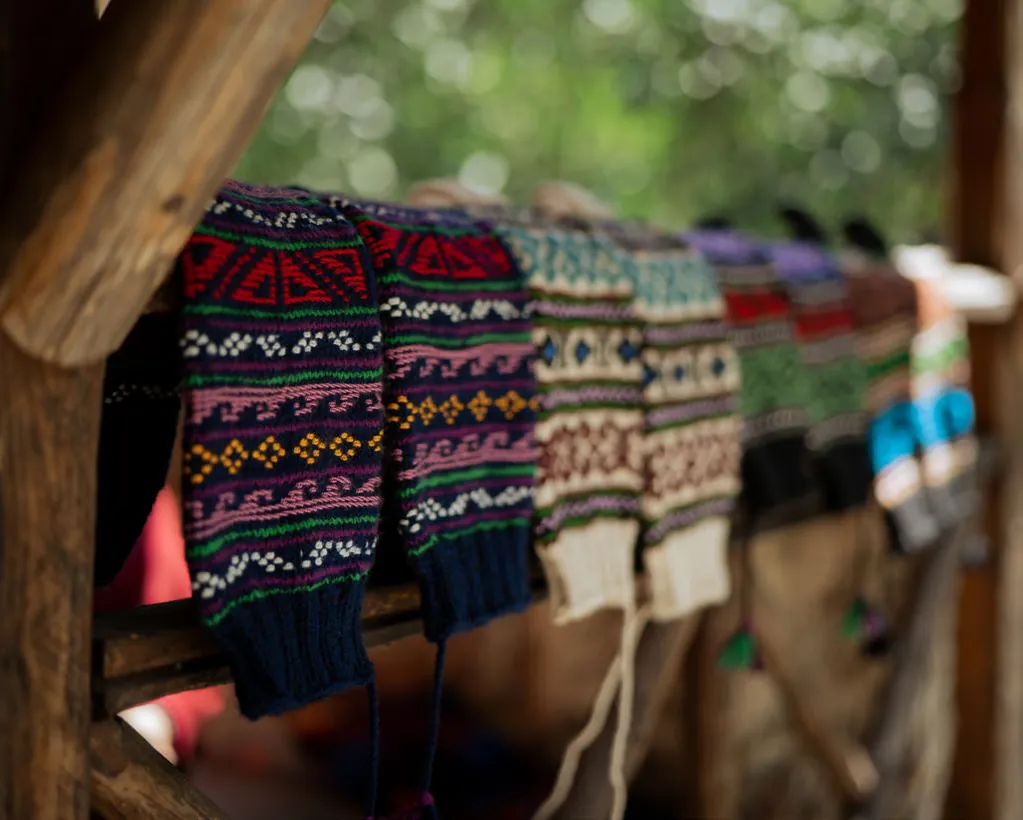
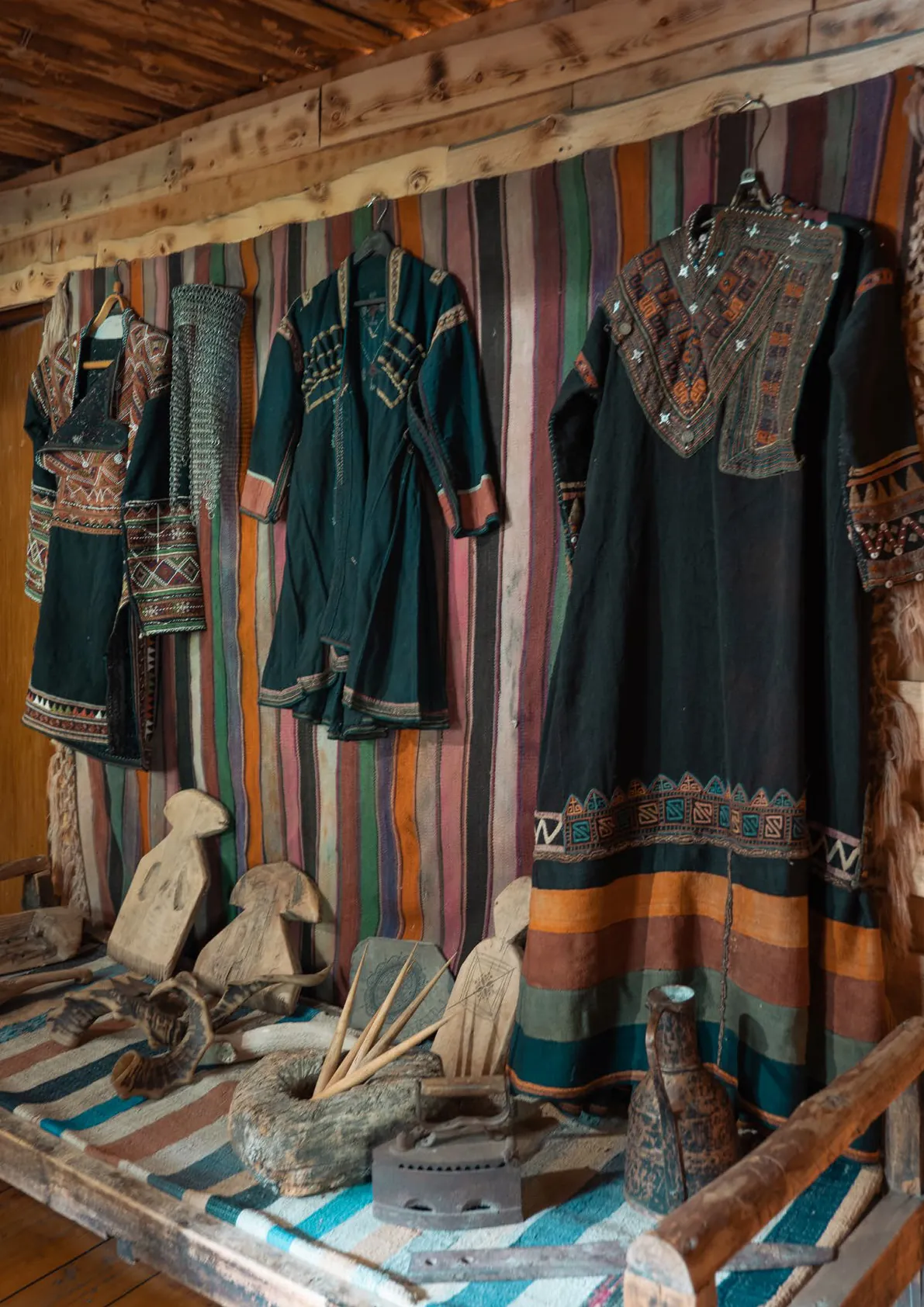
Traditional clothing was decorated with distinctive crosses and symbolic ornaments. Women’s attire included a special headdress consisting of an embroidered ring worn on the head, along with silver belts and jewelry. Men’s clothing was also richly embroidered and included garments such as the colorful “chokha-style” shirt, the sagule akhalukhi, a silver belt with a dagger, knitted socks, leather footwear known as “kalamani,” and a woven hat.
Folk oral tradition held a special place in Khevsureti culture. One of its unique forms was “kafiaoba,” an improvised poetic exchange between two individuals or groups. Traditional music accompanied by the “panduri” instrument was also widespread and played an important role in village life.
Today, Khevsureti offers visitors opportunities for hiking, horseback riding, and cultural tours, leaving unforgettable impressions on travelers who explore this remarkable mountain region.