From Soviet Tbilisi to the International Art Stage
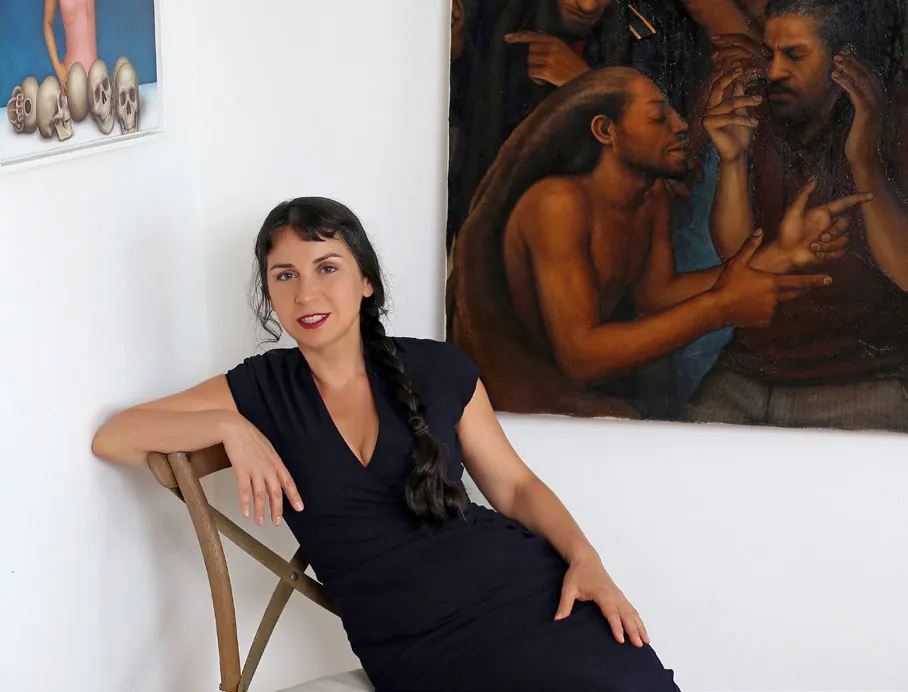
Artist Eteri Chkadua
In the arts, some stories reflect not only the individual path of an artist but also the spirit of an era. The life and work of Georgian artist Eteri Chkadua is one such story, a journey that begins in a student studio in Soviet Tbilisi and continues in international galleries and museums.
Born in Tbilisi in 1965, the artist later moved to the United States. Working in New York and other cities, she became one of the Georgian artists who introduced international audiences to her culture and personal experiences.
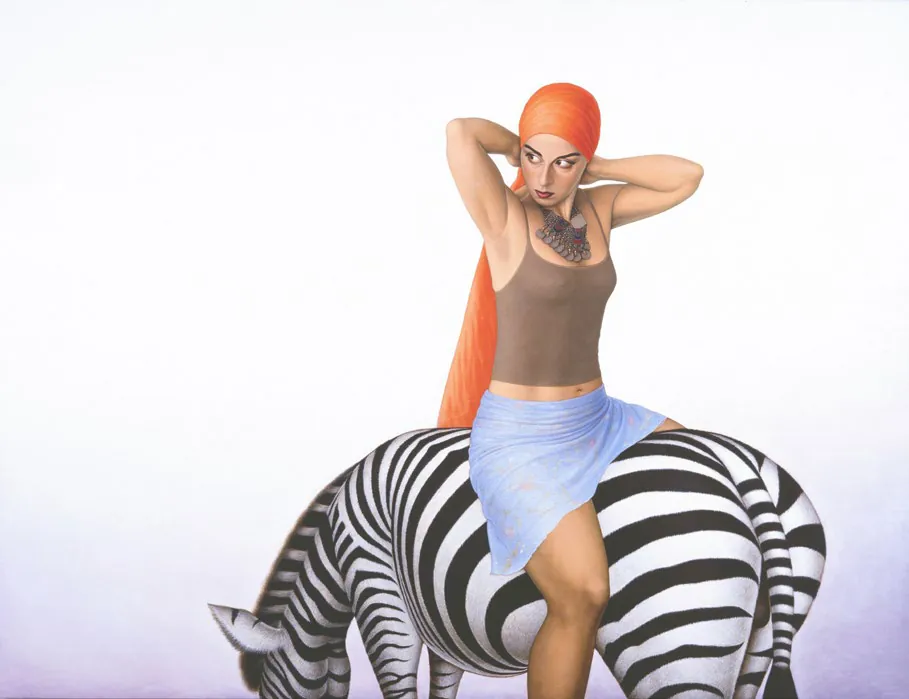
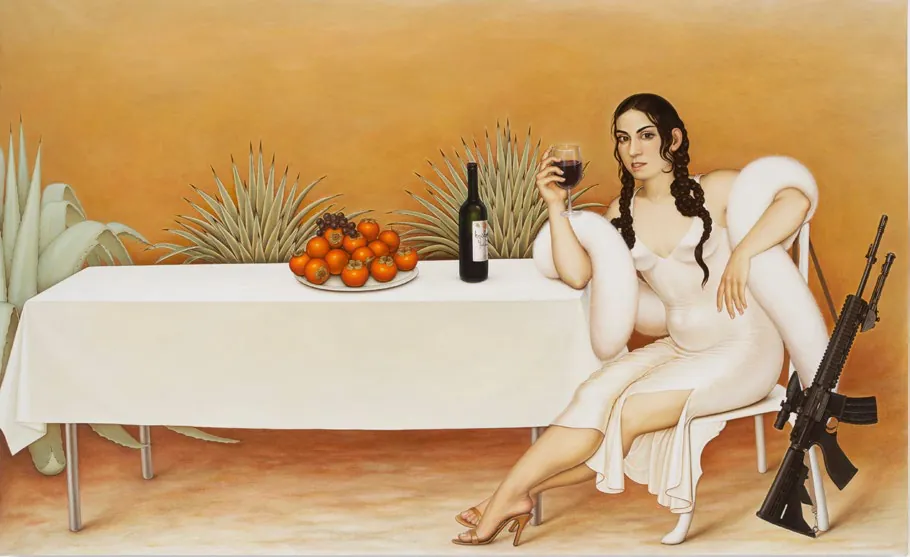
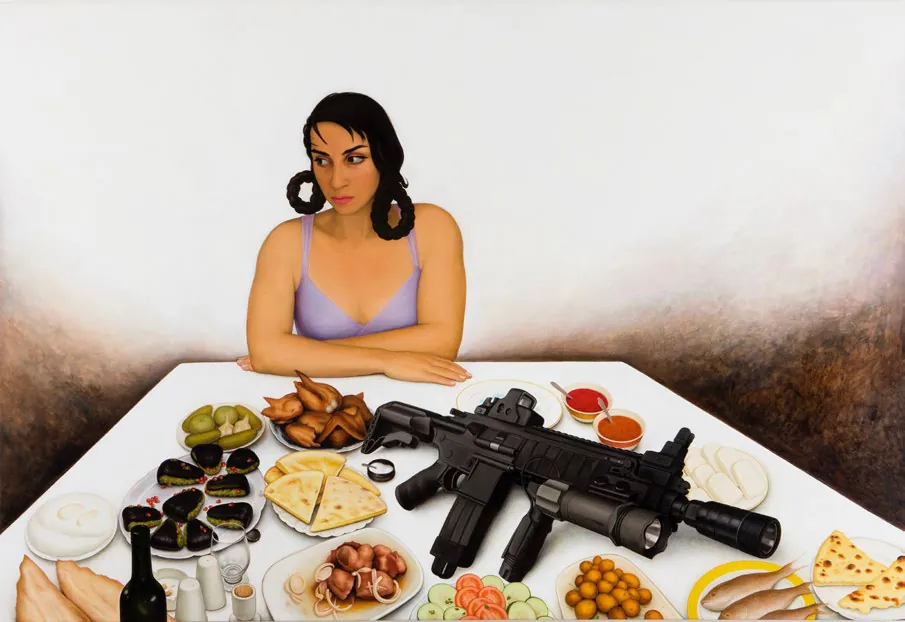
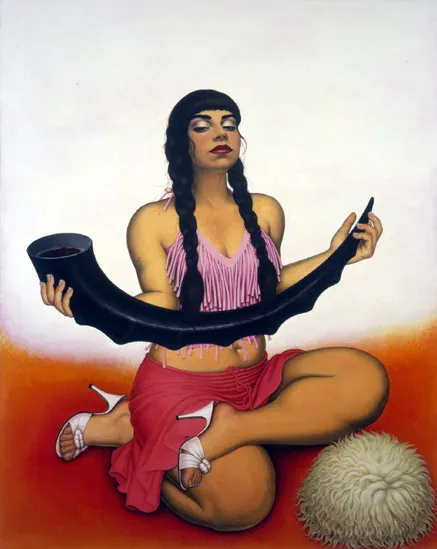
Chkadua’s paintings are distinguished by their detailed, realistic style, combining autobiographical elements,
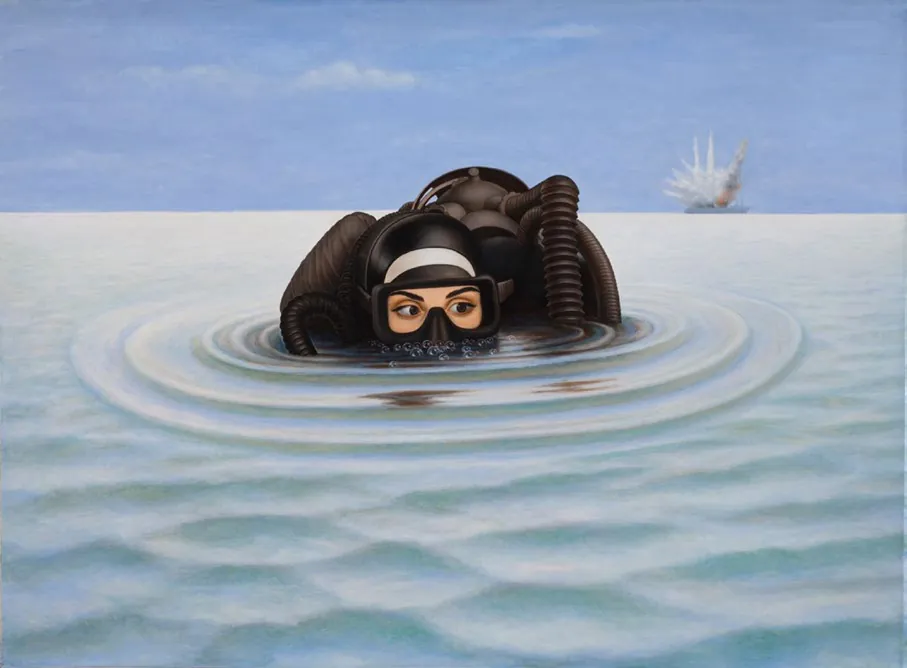
DIVER (111,76x152,4 cm)
Georgian cultural references, social themes, and ironic symbolism. In her canvases, people often appear as central figures: their facial expressions, gestures, and emotions create narratives that feel both deeply personal and universally relatable.
Yet behind this international success lies a story that began in childhood. The first landscapes she painted with oil paints purchased on the Soviet “black market” eventually led to her participation in exhibitions while she was still a teenager. From that moment on, painting became not only her profession but also an inseparable part of her life.
In this interview, Eteri Chkadua speaks about her creative journey, the evolution of her artistic style, the beginning of her international career, and the themes that have shaped her work for decades.
How did your journey in art begin, and when was the first moment you realized that painting would become your main path?
My mother encouraged my brother Gocha and me to draw from a very young age. During the Soviet era, my father bought me oil paints and many brushes on the illegal, so-called “black market.” My first oil paintings were landscapes.
At the age of 14, these works were exhibited at the school. The opening was attended by the artist Ucha Japaridze, who said that I should definitely continue my studies at the Academy of Arts.
My mother wanted me to apply to a medical institute, but she later changed her mind, and at the age of 16, I enrolled in the Academy. From that time on, painting became inevitable for me.
How would you describe your artistic style, and how has it changed over the years?
During my time as a student at the Academy, our teachers encouraged us to paint in an impressionistic style, with free brushstrokes. They did not want us to create realistic paintings, so that we would not follow the obligatory “Socialist Realism” direction imposed in the USSR. At that time, I painted portraits in a style similar to Modigliani’s and worked very quickly, finishing them in one or two days.
UNFAITHFUL WIFE, OIL/LINEN (193x147.3cm)
However, in my final year at the Academy, for my diploma work, I unexpectedly created a highly detailed, multi-figure, realistic painting titled “Hunters.” This work was an experiment for me and took six months to complete. I was training my own hands in an old masters oil painting technique that was new to me. Because of its complexity, my interest in realism grew.
At that time, we had no opportunity to see the masterpieces of the Middle Ages in person, since it was impossible to leave the USSR. I knew them only from small black-and-white images in art history books.
It was precisely my diploma work, “Hunters,” that defined the technique and style of the paintings I create to this day. Since I did not like hunting, the killing of animals, I used technique, detailed figures and facial expressions to convey a sense of sarcasm.
Almost every ten years, my colors and themes change. I believe that surrounding circumstances and living in different countries transform my perspective.
When and how did your activity on the international stage begin? What was the first opportunity or exhibition that opened the way for you abroad?
Before the collapse of the Soviet Union, in 1988, I moved to Chicago after marrying Kevin Tuite, an American bio- chemist who later became a linguist. He had encountered the Georgian alphabet at the University of Chicago and was so captivated by it that he left his career in biochemistry and, in 1985, traveled to Tbilisi to study the Georgian language.
Soon after we arrived in Chicago, Kevin was invited to the University of Tokyo. While living there, I painted on small canvases in a small room.
At the end of 1989, I returned from Japan for a few months and rented a very cheap room in an old three-story building on the south side of Chicago, which at that time was considered a “dangerous” neighborhood. “Hippies” lived there, and the building’s doors were never locked. In the entrance, my painting “Hunters” was hanging on the wall.
One day, while I wasn’t there, a real estate broker who was looking at houses in the area came in, saw “Hunters” on the wall, and asked about me. Two months later, I had already moved to another neighborhood, but he tracked me down through one of my former housemates. He told me that a woman he knew was opening a gallery, and soon he brought Maya Polsky, a Jewish woman from Ukraine who had immigrated to America long before, when Jews were allowed to leave the USSR.
Maya Polsky was interested in exhibiting artists from the Soviet Union - something that had never been shown in America at that time. My first exhibition was organized in 1990. On the opening day, all the paintings were sold at quite high prices for an unknown artist. Newspapers and magazines in Chicago wrote about the exhibition, noting that the paintings were associated with medieval masterpieces. I was even interviewed on television and invited to teach for a semester at the Santa Barbara University.
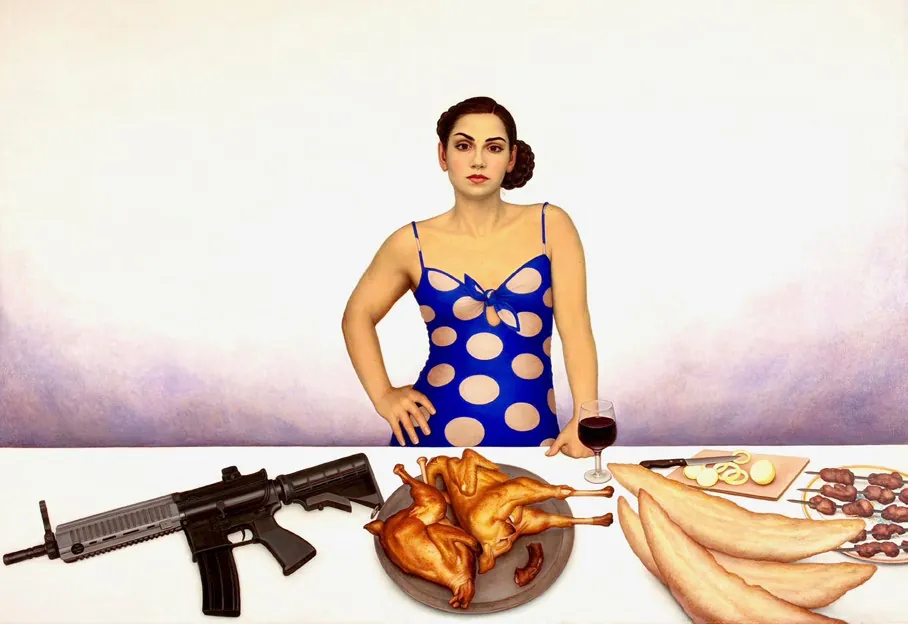
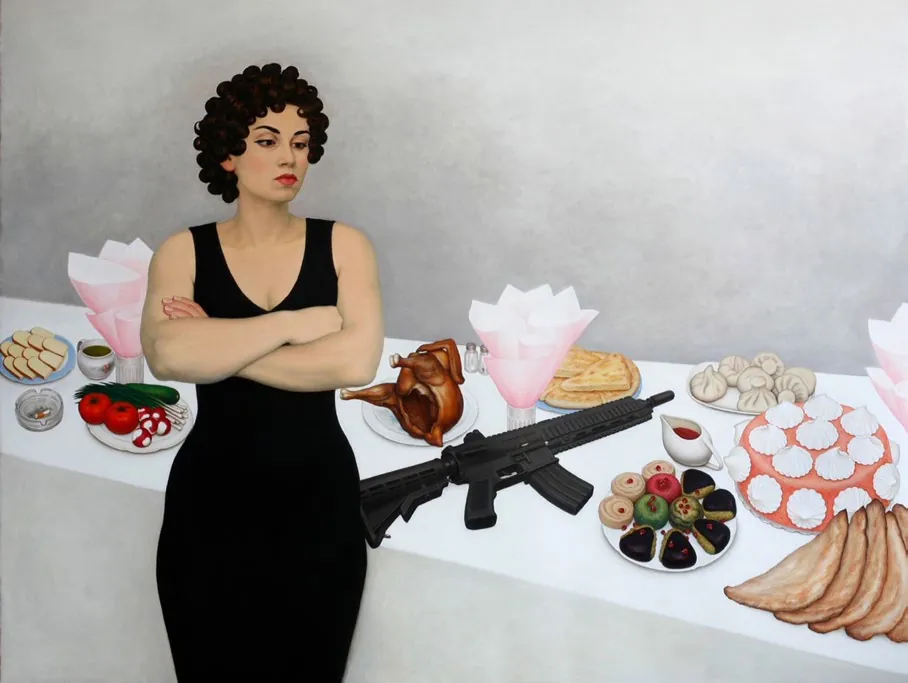
TAMADA, 2010, OIL/LINEN, (132x193 cm)
The success of this first exhibition gave me great confidence. I did not want to live in Japan anymore, and I left my husband, whom I loved very much.
(The painting “The Unfaithful Wife” was created from this experience.)
How are the ideas for your works born — more spontaneously or through a pre-planned process?
As I mentioned above, the ideas for my works arise in my mind from my surroundings, the people close to me, personal challenges, emotions, and nostalgia for my homeland. When I attend concerts in jazz bars or when I dance, sometimes an idea for a new painting may come to me.
What is your working process like — how does a painting begin and how is it completed?
Before I start painting on canvas, I always make several pencil sketches, which can sometimes take one or two months, until I feel confident in the composition I have created.
What themes or emotions most often inspire you to paint?
I always paint people and spend a lot of time on their facial expressions. Through expressions and gestures, I want the viewer to enter deeply into the subject of the painting and share what I am trying to convey. At different periods of my life, different themes have interested me.
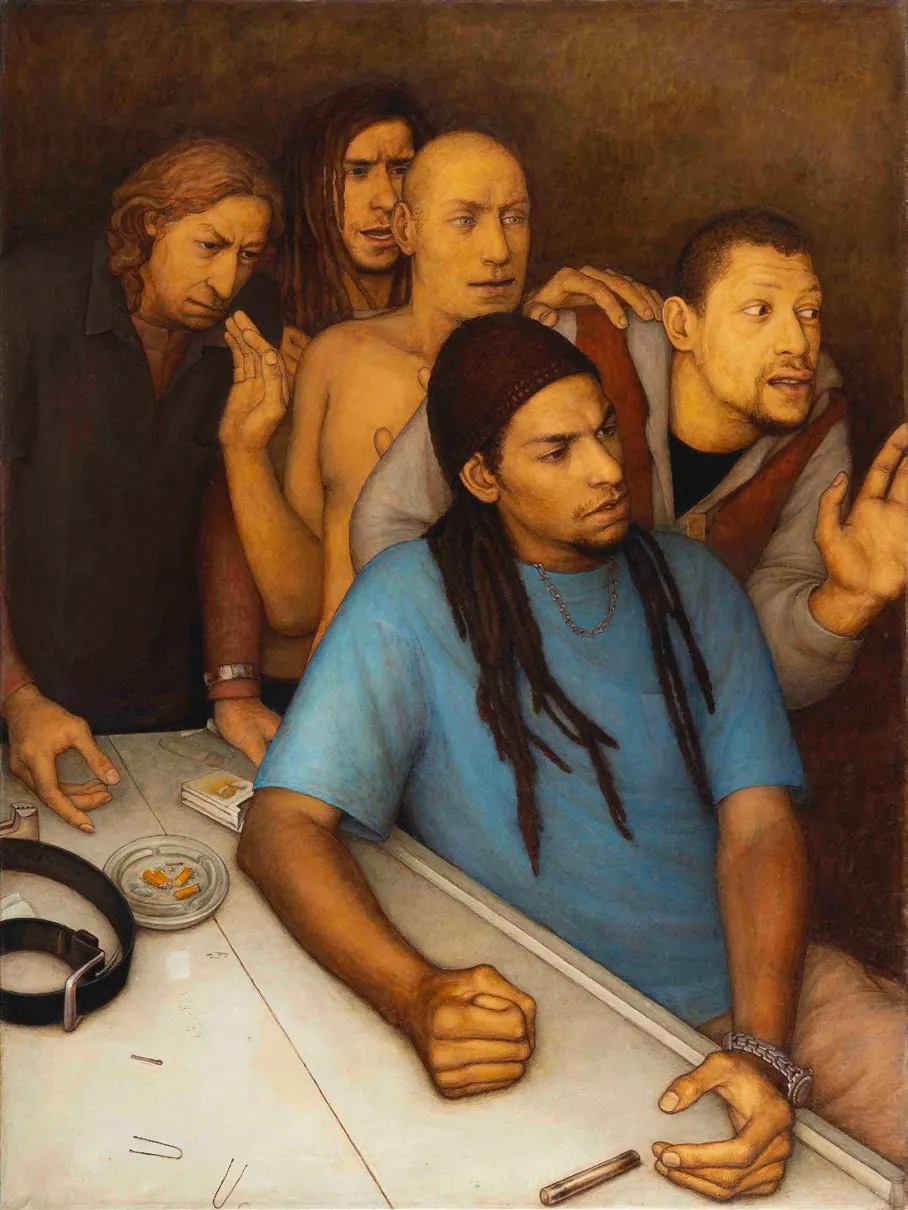
After my first exhibition, I moved to New York. I fell in love with Jamaican Reggae music and used to go dancing in nightclubs. When I returned home, I would paint Rastafarians from memory who had been there. They used to smoke and sell marijuana, which is why they were often regarded as criminals. However, for me they are saint-like people: they are vegetarians, they do not eat animals, and they do not drink alcohol. For three years, I painted them continuously, wanting to show their inner spirituality through their facial expressions.
From 1996, I was in a depressed state because my boyfriend at the time was addicted to heroin, and I believed I could help him overcome it.
The emotions of disappointment and frustration from this relationship were inevitably reflected in my paintings, often expressed through self-portraits.
From 2005, I moved to Jamaica, where I began creating
LATE GUEST, OIL/LINEN, (142,6x118,8cm) Collection of Gian Enzo Sperone large-scale paintings in a spacious studio. These works focused on the territories of Georgia that were occupied by Russia. I wanted people to learn about my country and its geopolitical struggles with its neighboring country.
From 2016, during the final months of my father’s life, when he had lost his memory, I painted portraits of my brother’s and my childhood in front of him, with background images of collaborative installations I had created with my brother. It was as if I was reminding my father of who we were. Unintentionally, during this difficult period of my life, I began using very bright and vivid colors.
What place do Georgian culture and traditions hold in your work?
Since many people were unaware of the existence of Georgia as a country and a nation, often assuming it was part of Russia, I would always tell foreigners about the uniqueness of the Georgian language and its alphabet, our hospitality, and our tradition of delivering long toasts at dinner gatherings.
While living in the United States and other countries, Georgian traditions, which I had once resisted, prompted deeper reflection. I felt compelled to portray them in a way that would engage international audiences, while also encouraging Georgian viewers to question certain outdated customs that have often led to tragic consequences.
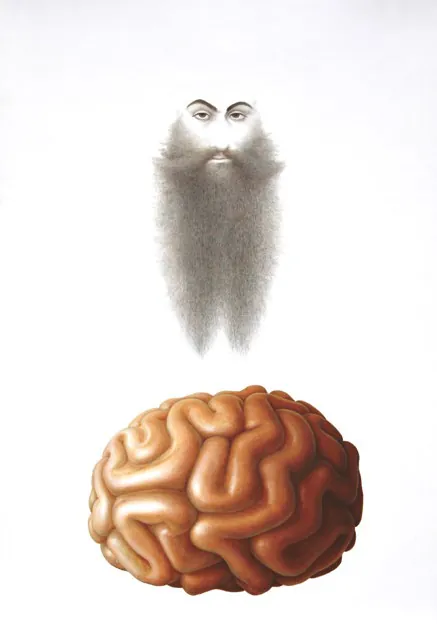
BEARDED MAN (132,08x193,04 cm)
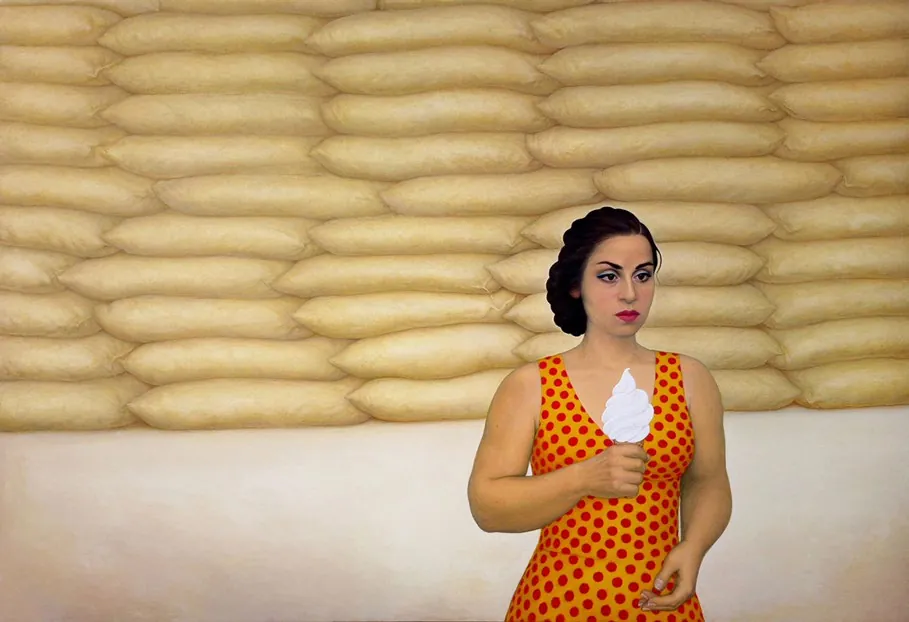
ICE CREAM (183x132,08 cm)
When I moved to New York City, I was told that figurative, realistic painting was no longer in fashion and that if I wanted to succeed in the art world, I should shift my focus toward abstraction, minimalism, and installation art.
However, against this advice, I continued creating detailed figurative paintings so that the visual language of my themes and subjects would be easily understood by viewers of different generations and mindsets.
In articles written about my work during various exhibitions, my paintings have been described as Magic Realism, Magic Feminism, and Hallucinatory Realism.
Your works have been presented in many countries, including the United States and Italy. Which international exhibitions or projects would you highlight in particular, and why?
For the first time in the United States, my painting was exhibited alongside very well-known artists in the exhibition “The Nude” at the Aldrich Contemporary Art Museum.
“The Unfaithful Wife” was exhibited in the very interesting group exhibition Gender Check at the MUMOK in Vienna.
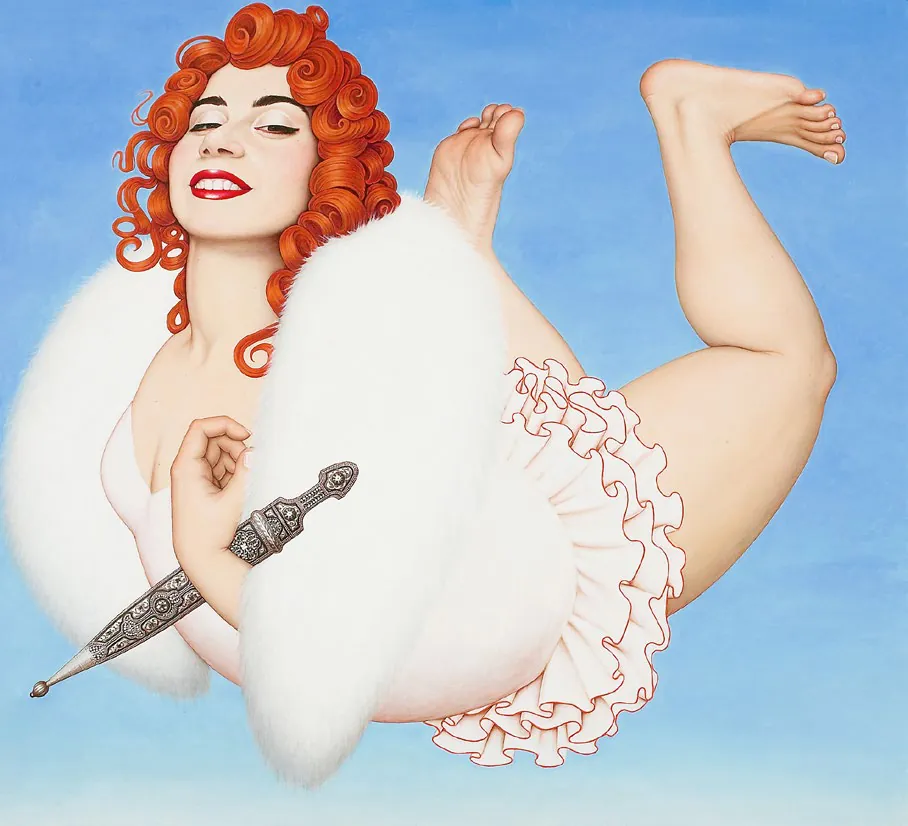
Painting “Dancer” was displayed together with medieval masterpieces at the Sperone Westwater Gallery in New York City.
My solo exhibition took place at Luna Kulturhus Konsthallen in Switzerland, where, according to the director, they had never welcomed so many visitors before.
For me, it means a lot when the themes in my paintings draw attention to things that people often do not want to see in reality. No one wanted to exhibit my paintings of Rastafarians, but when they were finally shown in Brooklyn at the Corridor Gallery, founded by the artist Garry Simmons, viewers responded very positively and spent a long time observing the works, even those who had previously told me not to waste my time in Reggae bars painting Rastafarians.
My series on homelessness, which I worked on for two years, was exhibited in the affluent town of Southampton at the Southampton Arts Center.
Wealthy visitors spent a long time thoughtfully observing the plight of the homeless people depicted in the paintings.
At the Istanbul Modern Museum, an exhibition titled “Neighbors” showcased artists from countries bordering Turkey. The concept was particularly compelling, given that these neighboring nations have, over the centuries and up to the present day, often been in conflict or under occupation. My paintings “The Diver” and “In Black” were featured in this exhibition.
In addition, my paintings were presented in the Georgian Pavilion at the Venice Biennale.
Two paintings on the theme of the occupied territories of Abkhazia were exhibited in a former prison building that had been transformed into the art space Imago Mundi by the Benetton Foundation.
Since 2010, I have been collaborating with my brother Gocha on sculptural installations called Alien Bloom, made from discarded plastic bottles constructed by him. They were exhibited at the FiveMyles Gallery in Brooklyn. The intentionally crafted visual appeal of each sculpture captivated viewers, including children, who were amazed to learn that the works were made from plastic waste. Through these installations, we aim to draw attention to the environmental harm caused by plastic, in the hope that its use may one day be limited.
What advice would you give to young Georgian artists who are just beginning their path?
I have never relied on the advice of others. I have always followed my own intuition, which may have disrupted many things in my career.
There are no standards in art; therefore, I have no advice to give.