Nino Chubinishvili, Chubika
Synthesis of Fashion and Art
Clothing production in Georgia has an ancient history, and Georgian fashion has always been distinguished by its original style. The 90s represent an interesting period in the history of Georgian fashion. Despite the influence of the Soviet Union and trends from various countries, Georgian fashion managed to maintain its individuality and unique Georgian character throughout its centuries-long development. Today’s respondent, Nino Chubinishvili, also known as CHUBIKA, has been an important figure in the contemporary Georgian art scene since the 90s.
First encounter with the field of art...
I grew up in a large family, all of whom were artists working in various fields of art. Each of them shared with me the world they perceived. Without even realizing it, I began drawing and listening to music...
The first work you created that you liked...
While working on my diploma at the Academy of Arts, Dato Doiashvili, Gogi Dzodzuashvili, and I staged a play based on Peter Weiss’s Marat/Sade. I liked the sketches for the play so much that I submitted them for my diploma. This was my first favorite work.
Tell us about your experience working with famous fashion houses...
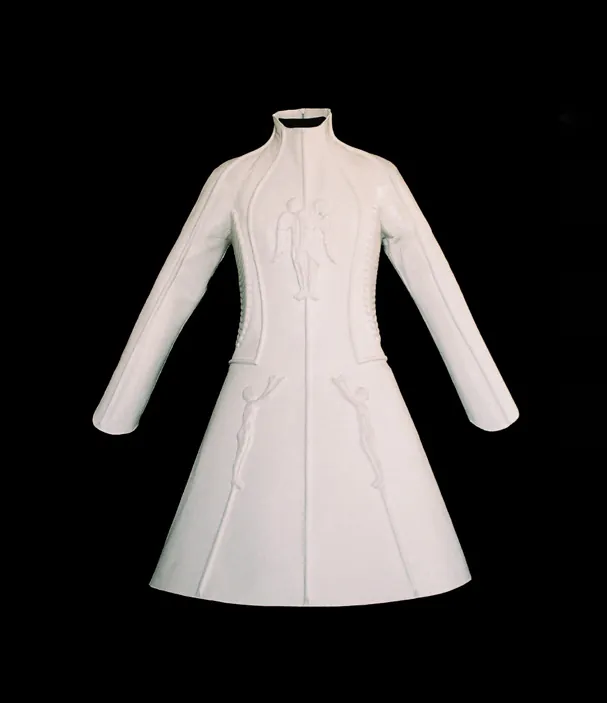
I started working in fashion in 1994. In the late 90s and early 2000s, I won a competition and began working at the Kenzo fashion house, where the head designer was Gilles Gozier. I was one of the assistants in this large team. The team members were given inspirations, and based on these, I created sketches. That was when I first saw how a fashion house operated—the hierarchy, the work culture, and the number of people involved in bringing an idea to life. There, the work of each team member was equally important. I would compare their working principle to an orchestra, where someone plays the violin, someone plays the cello, and someone plays the saxophone—everyone has an irreplaceable role.
How has your professional path evolved over the years?
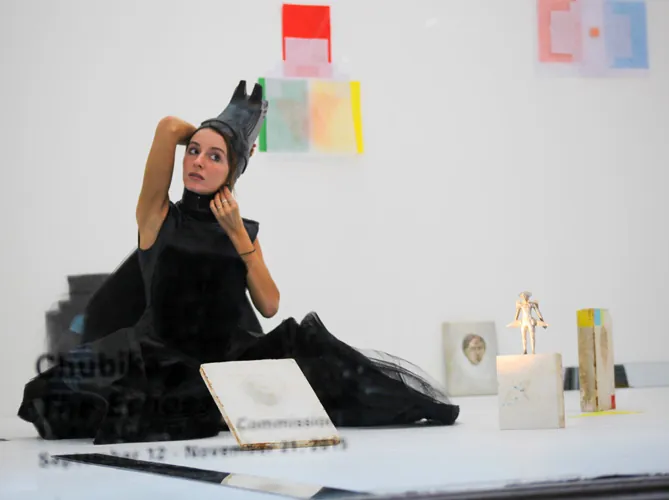
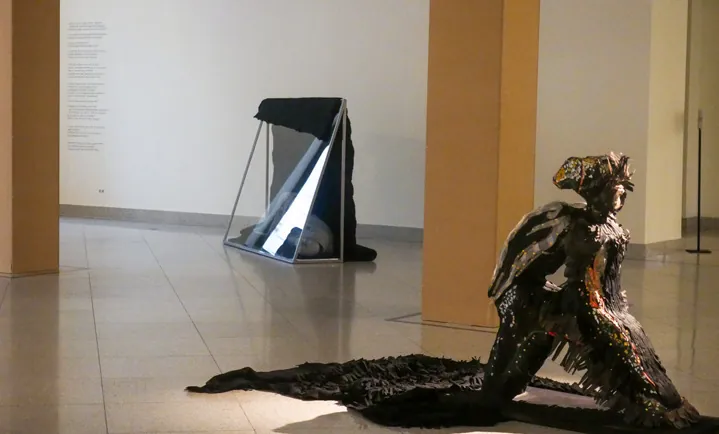
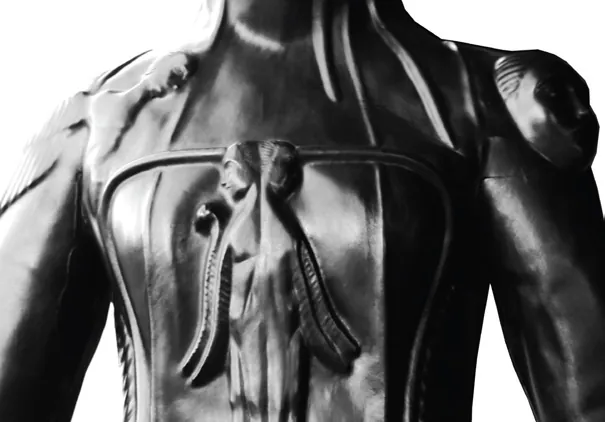
The process of searching has been a constant companion in my life. I always listen to my inner voice and the path it dictates to me. I feel like a border guard, constantly navigating the edge of art. Being in this border state is an organic condition for me. My exhibitions are like still shots in theatrical time, using various expressive means: sculpture, carpet, graphics, video, and sound. This approach is simply called multidisciplinary artistry.
Tell us more about your recent exhibition, what would it mean to leave tiptoe dancing? Or maybe you stayed a butterfly in the war? And the handmade book Elene...
The exhibition came into its current format as a result of certain events. I drew this book for my eldest daughter, Elene, in 1998 and kept it at home until last year. The pencil drawings had started to fade. The book was my first serious work, which I love very much. Facing the possibility of losing it, I decided to publish it. Mariam Kakabadze, the director of the David Kakabadze Foundation, greatly helped by managing the process with support from TBC. Then, Mariam Tsikaridze, the curator of TBC Concept, suggested organizing an exhibition.
When I asked myself what I wanted to exhibit, I didn’t want it to be just a collection of works painted over different years. I reflected on that time—how I felt, what I experienced, and what resonated with me. Of course, war and current global events are critical topics for me. I followed my emotions and exhibited two dead army officers from the 90s lying in a glass triangle, a winged horse—a semi-mythical creature that connected to all of this for me—and carpets. These elements came together in the exhibition.
The book is a journey between my daughter, Elene, and me. Through visual language, I share with her what I couldn’t express in words. The paintings reflect reality, conveyed through free imagination.
What gives you energy during the process of work?
The process itself is the greatest pleasure for me. During this time, I feel most alive because I become part of a living process. This state is a gift, a source of great happiness and joy. I am more interested in the process than the result, because as soon as a work is finished, it takes on its own life, and my connection with it ends.
What is your day like?
Until I was 41, I lived the life of a fully creative person. It was difficult in some ways because complete freedom and solitude are not easy—they come with their own challenges. I felt that wherever I went, the whole world was my laboratory. Back then, I had only one role: being an artist, and I worked everywhere. Now, the role of a mother has actively become part of my daily life, bringing many new aspects that I love. Today, I divide these roles into different parts of my time. When I have a project, I take a break from motherhood, and vice versa.
Interior design has been a part of your life since 2019. Tell us about it...
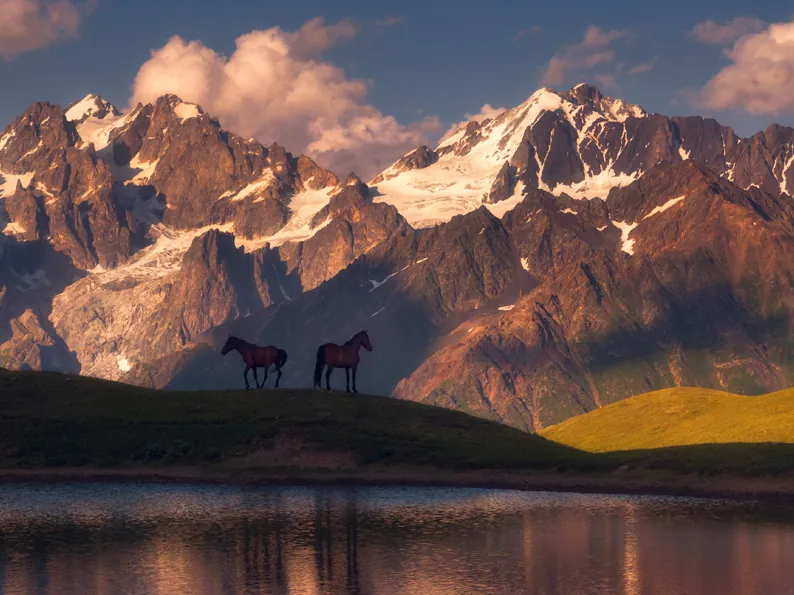
It was a very interesting and enjoyable experience. The environment where I worked was impressive. My task was to find forms that wouldn’t disrupt the surroundings and express one aspect of this amazing place— creating a space where a person would feel connected to the environment and share in the overall coziness that characterizes Lake Kvareli. For me, this process was about finding a connection between people and their surroundings.
What is your favorite movie?
I love movies. My father was a screenwriter, and we used to watch films together. I love many movies, but right now, I’d like to share Women Under the Influence by John Cassavetes.
Favorite book?
I love many genres, but right now, I’m reading poetry—T.S. Eliot and Mayakovsky.
What are your future plans?
At this stage, my plans involve opening a shop near my house, where my works will be displayed and sold. I also want to create a foundation for my grandfather, Vakhtang Beridze, and publish his works.