George Balanchine: Music Translated into Dance
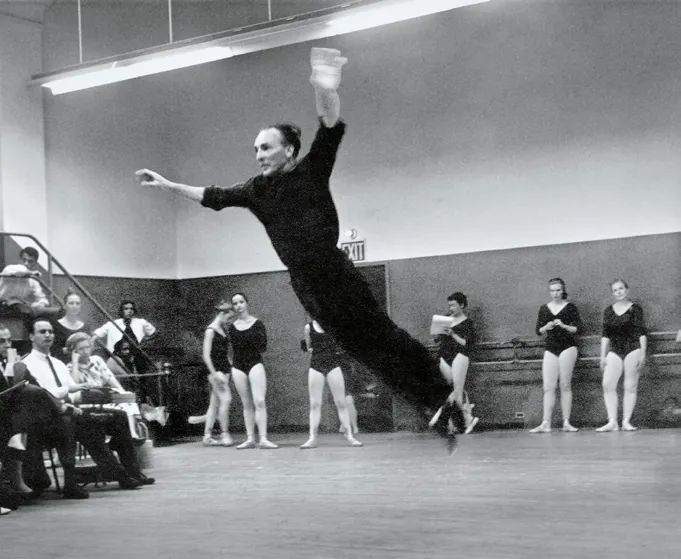
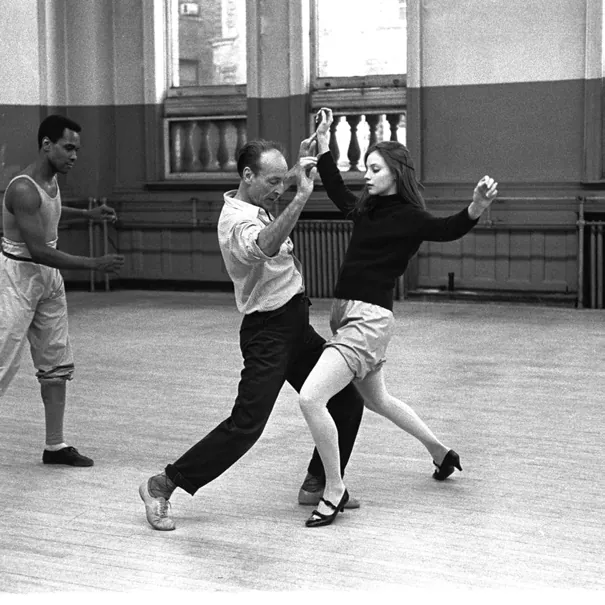
“When you look at a flower garden, you don’t demand meaning from it; you don’t ask what it means. Dancers are also flowers, and flowers grow without any specific meaning. They are simply beautiful. We are like flowers too,” said George Balanchine in response to those searching for deep philosophical meaning in his abstract productions.
The sharpness of movement, the harmony of music, the symmetry of scenes, the interplay of dissolution and connection, and the endless variation—this is
Balanchine’s legacy. His work encompasses over 400 productions, combining elements of classical ballet choreography, stage aesthetics, and the complete transformation of a ballet dancer’s presence on stage.
Born Giorgi Balanchivadze, George Balanchine is widely regarded as the greatest choreographer of all time. A proud Georgian, he revolutionized ballet, introducing it to the United States in the 1930s and shaping its future.
Giorgi Balanchivadze was born on January 22, 1904, in Petrograd, the son of Meliton Balanchivadze, the founder of Georgian opera music. In 1918, amidst the growing dangers of revolutionary Petrograd, Meliton decided to return his family to Georgia. Giorgi’s younger brother, Andria, joined the family in Kutaisi, but Giorgi stayed behind in Russia. The brothers would not see each other again for 45 years.
Giorgi excelled as a student at the Imperial Theater School and, upon graduation, was immediately recruited into the corps de ballet of the Mariinsky Theater in St. Petersburg. At just 20 years old, he embarked on a tour of Germany with his ballet partner. After the tour, he chose not to return to Soviet Russia.
Settling in Paris, Giorgi became the principal ballet master of Sergei Diaghilev’s renowned Russian Ballet Company. Following Diaghi- lev’s suggestion, Giorgi adopted the name George Balanchine to make it more recognizable to European audiences. Despite the name change, his connection to his Georgian roots remained unbroken. He often reminded colleagues, “I am Georgian, I will live to be 100.” He preserved icons, wore the traditional chokha, and celebrated Easter with red eggs and Paska (traditional Easter bread).
During his tenure with Diaghilev’s company, Balanchine staged nine productions and remained loyal to Diaghilev until his death. He later became the ballet master for French companies Ballets de Monte Carlo and Ballet 1933. A severe leg injury in 1929 forced him to retire from dancing, redirecting his focus entirely to choreography. This pivotal moment marked the beginning of his extraordinary American journey.
In the 1930s, American impresario Lincoln Kirstein invited Balanchine to establish a ballet company in the United States. At the time, there was no professional ballet school in America. Balanchine and Kirstein co-founded the School of American Ballet, laying the foundation for professional ballet in the country. In 1948, Balanchine established the New York City Ballet, where he served as artistic director for an impressive 50 years.
“You have to see the music, hear the dance,” Balanchine often said. His sharp eye for talent helped launch the careers of many renowned dancers. Today, he is celebrated worldwide as the greatest choreographer of the modern era.
Initially, Balanchine created narrative ballets, later transitioning to abstract, plotless works. Most of his ballets were one-act performances, with a central focus on transforming music into a visual experience. His sharp choreographic outlines, iconic movements, and innovative techniques reshaped the language of classical ballet, creating an entirely modern style.
Among Balanchine’s numerous works, Tchaikovsky’s The Nutcracker received the greatest acclaim, becoming a cherished Christmas tradition in America. Experts note that Balanchine infused The Nutcracker with Georgian elements, enriching it with national movements—an unprecedented contribution to ballet history.
Balanchine first visited Georgia in 1962, a deeply emotional trip for him and his family. After 45 years apart, he reunited with his brother, Andria, at the airport. Spotting each other amidst the crowd, George immediately called out, “Andryusha, brother.” The bond between the brothers had endured despite their long separation.
George Balanchine passed away on April 30, 1983, in New York City at the age of 79. He is buried at Oakland Cemetery in New York. Having no children, he left his entire estate to the New York City Ballet, as outlined in his will.
In recognition of his unparalleled contributions to ballet, a small street on Broadway, leading from Lincoln Center to the New York City Ballet, was named Balanchine Road. Idolized in America for his groundbreaking work, Balanchine remains an icon of the 20th century, hailed as the founder of American ballet and one of the greatest choreographers in history.