Jighaura
In Georgia, vine cultivation has long been regarded as a “divine plant,” often referred to as the Tree of Life. Thanks to the region’s exceptional landscape, climate, and soil conditions, 525 local varieties of cultivated vine (Vitis vinifera L. sativa) have developed across the ethnographic regions of Georgia: 80 in Kakheti, 72 in Kartli, 26 in Meskheti-Javakheti, 74 in Imereti, 50 in Racha-Lechkhumi, 60 in Samegrelo, 53 in Guria, 53 in Adjara, and 51 in Abkhazia.
More than 400 forms of wild vine (Vitis vinifera L. silvestris), the ancestor of the cultivated vine, have been recorded in Georgia. Most of these varieties are preserved alongside local cultivated varieties in national collection plantations throughout nearly all regions of the country.
The political and economic changes in Georgia during the 1990s significantly affected nearly all branches of agriculture, including viticulture and winemaking. Famous collections, such as those in Dighomi, Vashlijvari, Mukhrani, Telavi, Zestafoni, Skra, Martvili, and Gudauta, were destroyed. These collections contained a rich gene pool of local varieties and wild forms of Georgian vines, meticulously gathered and distinguished by our ancestors through centuries of folk selection.
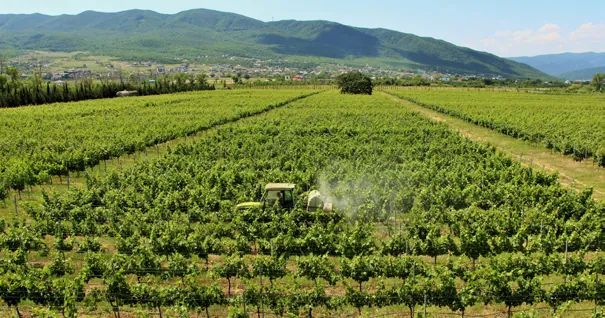
In 2007, the “National Center for Vine and Fruit Tree Production” was established in the village of Jighaura to restore destroyed and forgotten varieties. The project’s main goal was to discover and identify local Georgian grape varieties, produce planting material, and cultivate these varieties in a collection plantation. This initiative was gradually accompanied by large-scale outreach and infrastructural development.
Expeditions to find grape varieties covered all viticultural regions of Georgia, as well as Tao-Klarjeti, Shavsheti, and the Kingdom of Hereti (a medieval Georgian monarchy). It also extended to regions of the former Soviet Union, including Ukraine, Moldova, the Central Asian republics, Azerbaijan, France, and beyond. Over the years, local Georgian vine varieties and wild vine forms were gradually collected.
Levan Ujmajuridze – Director of the Scientific Research Center of Agriculture and a professor:
What was the initial collection base in Jighaura, how many vine varieties were planted in the first year, and how has it expanded since then?
Since there was virtually no nursery in Georgia at that time, we started by selecting a suitable location for the nursery and initiated efforts to produce planting material from selected Georgian grape varieties. We imported certified phylloxera-resistant rootstocks from France and tested the bud materials of Georgian grape varieties for viral diseases at the Geisenheim Institute of Viticulture in Germany. In 2008, we established a vine nursery in the village of Jighaura, Mtskheti Municipality, where we collected cuttings of various Georgian vine varieties from Sakartvelo and beyond.
That same year, leading international wine and table grape varieties were planted in Jighaura, along with phylloxera-resistant vines, whose basic planting material was imported from France, Germany, Italy, and other countries.
In 2009, we planted the first collection of over 300 local vine varieties using grafted seedlings we developed. Expeditionary work continues today, with intensive searches for ancient vine varieties both in Georgia and abroad. Each discovery is a significant achievement, often accompanied by the emotional weight of feeling we found them “too late.” This year, we identified the oldest vine variety, Khevarduli, during research in Meskheti as part of an expedition. Many varieties remain to be discovered, and our efforts will continue.
How many varieties are represented in the Jighaura collection base, and what makes it unique?
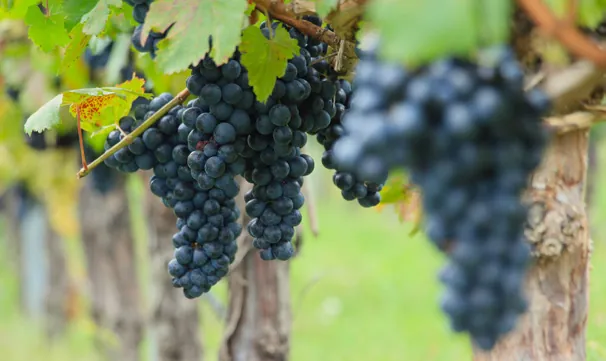
The collection at Jighaura is notable for its wide varietal diversity. Today, it houses over 1,000 specimens of local vine cultivars, more than 140 forms of wild adolescent vines, and over 550 foreign wine and table grape varieties from various European countries, Asia, the USA, and beyond. Additionally, phylloxera-resistant rootstock vine variety clones are crucial, as they are essential for producing healthy planting material. Notably, the primary imported American and Asian varieties are intended for grape breeding efforts. Beyond grape varieties, the nursery also features clones of leading Georgian grape varieties, which are essential for developing modern vineyard types.
What is the process for finding and breeding endemic species?
The national collection at Jighaura holds both local and
international significance and has been assigned the United Nations Food and Agriculture Organization (FAO) code GEO-038. Many international projects, including those from FAO, Cost Action, IPGRI, ECPGR, and “Vine and Wine Culture Research,” are implemented here, focusing on breeding as well as the ampelographic and oenological characteristics of varieties. Notably, an ongoing project with Spanish colleagues involves complete sequencing of grape varieties and molecular genetic research. To date, approximately 750 samples of Georgian grape varieties have been identified, with work still underway.
What role does Jighaura farming play for our country?
Raising awareness of ancient, restored Georgian local grape varieties is crucial, both within Georgia and abroad. A clear example of this was the 33rd World Congress of the International Organization of Vine and Wine (OIV), held in Georgia in 2010, where Jighaura served as the host. Representatives from 65 countries gained in-depth knowledge of the varietal diversity of Georgian vines. Our research, involving youth participation, also focuses on studying the organoleptic and oenological characteristics of restored grape varieties. This work has identified unique varieties that have often replaced well-known standard varieties such as Rkatsiteli, Green Kakhuri, Khikhvi, and Saperavi in regional contexts.
The list of varieties is extensive from an ethnographic perspective, including Kakheti-Mkhargrdzeli, Ubakluri, Grdzelmtevana, Mtsvivani Kakhuri, and others; Kartli-Jvari, Shavkapito, and Danakharuli; Meskheti-Meskhur Green and Tamaris Vazi; Imereti-Kundza and Adanasuri; Racha-Lechkhumi-Kudurauli and Rachuli Mtsvane; Guria-Sakmiela and Tetri Mauri; Samegrelo-Chvitiluri and Godaaturi; Adjara-Brola; and Abkhazia-Achikig, Lakoiazh, among others.
In addition to grape varieties, there are also unique fruit orchards at the Jighaura collection base. Could you tell us about them?
Yes, while our primary focus is on grape varieties, we also engage in significant activities related to fruit cultivation. Since 2009, alongside our search for grape varieties, we’ve been cultivating collection and nurs- ery plots of common fruit crops in Georgia, including seeds, nuts, berries, and other local and introduced varieties.
Each crop is represented in separate sectors, including a demonstration plot, with more than 400 varieties in total. Similar to our work with vines, we continually expand our collection each year by adding both traditional Georgian and foreign fruit varieties adapted to Georgia’s conditions.
What are your future plans?
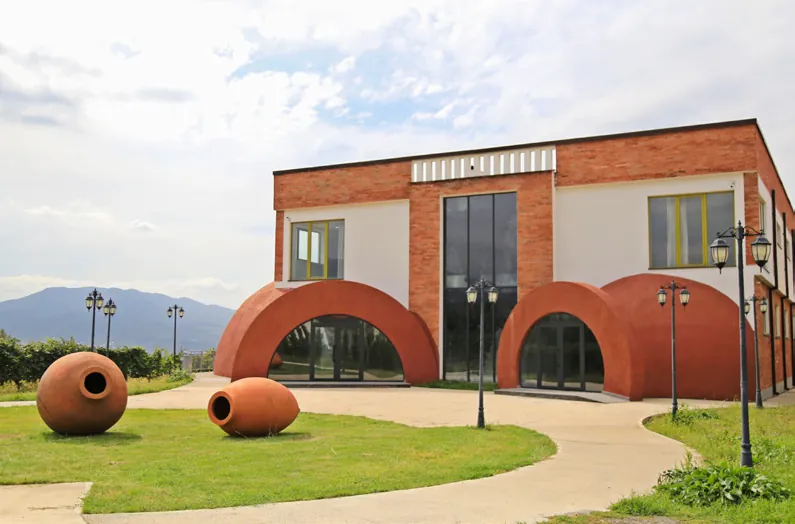
Soon, a new administrative building will be inaugurated in Jighaura. This facility will house scientific and research laboratories, storage and processing areas for agricultural products, an experimental space for winemaking research, a tasting hall, a wine library, and the main “Vine and Wine Museum.” The museum will feature important ancient exhibits alongside modern advancements in the field.