Old Tbilisi
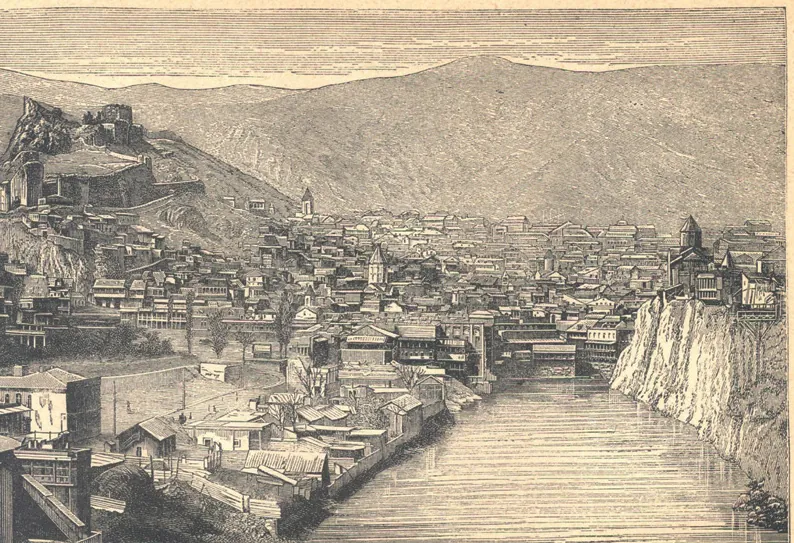
The capital of Georgia is Tbilisi. This decision was made in the 5th century, and the name originates from this period as well. Immortality has been attributed to historical facts through folklore. Tbilisi’s founding legend is steeped in the history of ancient Georgia. According to tradition, the city’s establishment is attributed to King Vakhtang I Gorgasali of the ancient Georgian Kingdom of Iberia. The legend recounts that while hunting, King Vakhtang’s falcon fell into a hot spring. Impressed by the healing properties of the hot waters, the king decided to establish a city near the springs. This city came to be known as Tbilisi, derived from the Georgian word “tbili,” meaning warm. Thus, Tbilisi emerged as a strategic settlement due to its natural resources and favorable location along trade routes, ultimately evolving into the vibrant capital it is today.
Vakhtang Gorgasal is revered as the principal architect behind the establishment of Tbilisi, as he initiated its construction and reconstruction. His successor, Dachi I of Ujarmeli, continued his legacy by completing the city’s fortifications. These enhancements included the construction of city walls, which not only expanded Tbilisi’s borders but also fulfilled the decree of Vakhtang Gorgasal by relocating the royal seat from Mtskheta to Tbilisi. Thus, the combined efforts of Vakhtang Gorgasal and Dachi I laid the foundation for Tbilisi’s development into a prominent political and cultural center in the region during the 6th century AD.
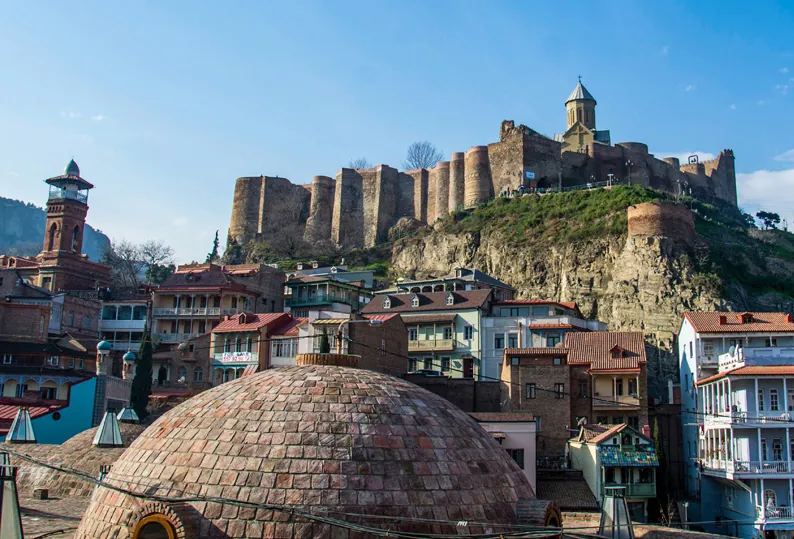
Later, at the site where the legend originated, sulfur baths were constructed, giving rise to the historical district of Tbilisi known as Abanotubani. These baths, which remain operational to this day, continue to attract both locals and tourists, renowned for their therapeutic and rejuvenating qualities.
Archaeological artifacts unearthed before the Common Era provide compelling evidence of human habitation in the territory of Tbilisi. These findings indicate that life thrived in this area even before Vakhtang Gorgasali’s time. Excavations have revealed traces of human settlement dating back to the 4th millennium BC, shedding light on the ancient history and continuous occupation of Tbilisi’s lands.
Until 1936, the capital was known as Tiflis. This vibrant city has long served as a significant industrial, social, and cultural hub within the Caucasus region. Historically, Tbilisi has occupied a pivotal position along the Silk Road, one of the most significant trade routes in history. Its strategic location at the convergence of routes linking the Russian North Caucasus, Turkey, Armenia, and the Republics of Azerbaijan has cemented its status as a vital trade and transit center. Even today, Tbilisi remains a key hub for commerce and transportation in the region, capitalizing on its enduring legacy as a crossroads of cultures and commerce.
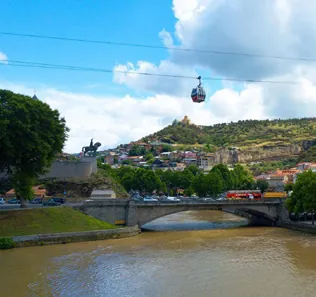
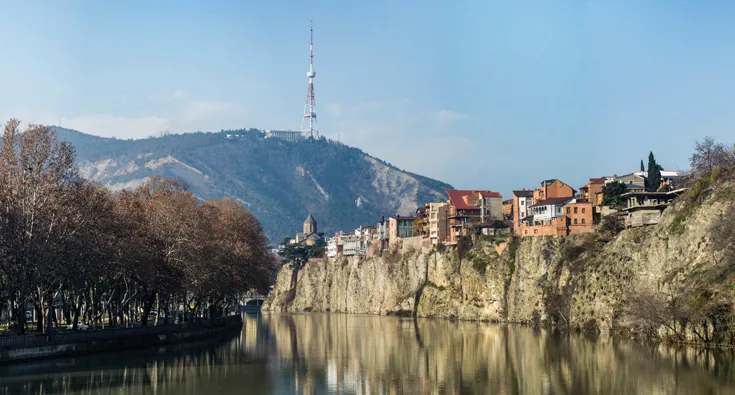
The rich tapestry of history is palpable throughout Tbilisi, evident in its architecture, urban landscape, and the spirit of its people. This profound connection to its past has given rise to distinct districts within the city, notably “Old Tbilisi” and “Modern Tbilisi,” each exuding its unique energy. Despite being just a short drive apart, these areas embody contrasting vibes and atmospheres. The inherent duality of Tbilisi has been acknowledged since its inception, with the city deliberately divided by the Mtkvari River into right and left banks. This planning underscores Tbilisi’s multifaceted identity, where tradition and modernity harmoniously coexist.
In Tbilisi, there’s a keen awareness of what is changeable and what remains unchangeable, a wisdom ingrained in its inhabitants. The weight of 16 centuries of history is palpable, yet the city pulsates with modernity. This modern essence transcends mere architectural aesthetics; it permeates through the fabric of society, touching people of all ages and tastes. Tbilisi’s modernity is not just skin-deep; it embodies a spirit of tolerance and acceptance, making it a city that embraces diversity and inclusivity with open arms.
Indeed, it is a rarity to find a city on Earth that seamlessly and harmoniously integrates the diverse tribes, laws, and beliefs that peacefully coexist within Georgia, particularly in Tbilisi. Symbolized by landmarks such as synagogues, mosques, Catholic churches, and Orthodox churches, Tbilisi serves as a beacon of tolerance and pluralism. Its ability to embrace and assimilate such diversity without conflict is a testament to the city’s inclusive spirit and its commitment to fostering understanding and unity among its inhabitants.
The natural blend of Georgian, Roman, Arabic, Persian, Turkish, Jewish, and German architectural influences create a unique tapestry that invites both visitors and residents to partake in something truly significant.
In this architectural harmony adorning the banks of the Mtkvari River, a wealth of historical monuments and modern structures awaits exploration. From Bronze Age settlements to medieval temples and fortresses bearing scars of battles past, Tbilisi offers a journey through time. Delightful discoveries include intricately carved and stained-glass courtyards, showcasing the city’s rich cultural heritage. These historical treasures seamlessly blend with exquisite examples of European architecture from the 19th and 20th centuries, creating a captivating juxtaposition. Moreover, museums, shopping centers, hotels, restaurants, and café bars dot the cityscape, adding layers of contemporary charm to Tbilisi’s vibrant tapestry of the past and present.
This city epitomizes a fusion of diversity akin to Asia and sophistication reminiscent of Europe. It pulsates with a dynamic energy, mirroring the independent spirit of Tbilisi itself.