History of Georgian Wine
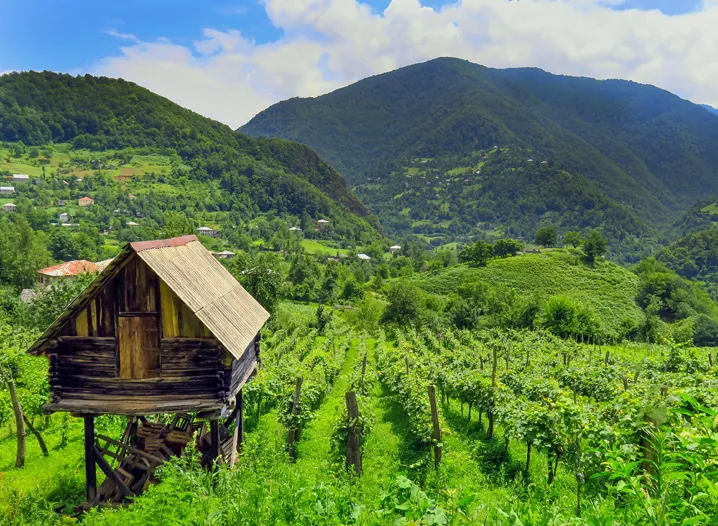
“We can boldly say that nowhere else do people drink as much and as high-quality wine as in Georgia” – Jean Chardin.
When the French traveler Jean Chardin uttered these words, Georgia was not widely recognized as the birthplace of wine. It wasn’t until archaeological excavations revealed the earliest signs of viticulture and winemaking in Kvemo Kartli, south of Tbilisi, specifically in the Marneuli Valley, that scientific circles began to acknowledge Georgia as the homeland of wine.
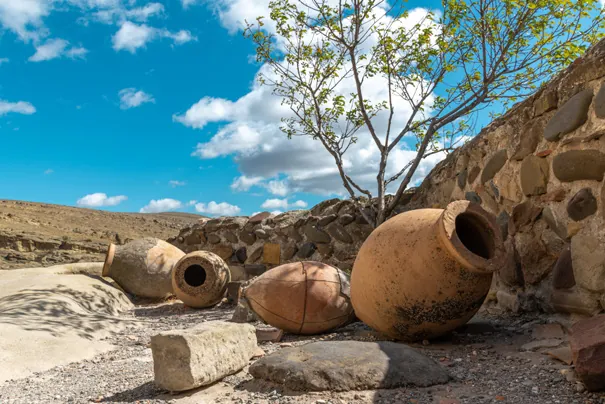
Additionally, an Eneolithic wine cellar was unearthed in Georgia, showcasing the early use of clay pitchers for storing wine. Remarkably, a portion of one of these discovered pitchers was determined to be 8 000 years old, leading to the recognition of Georgia’s status as the birthplace of wine.
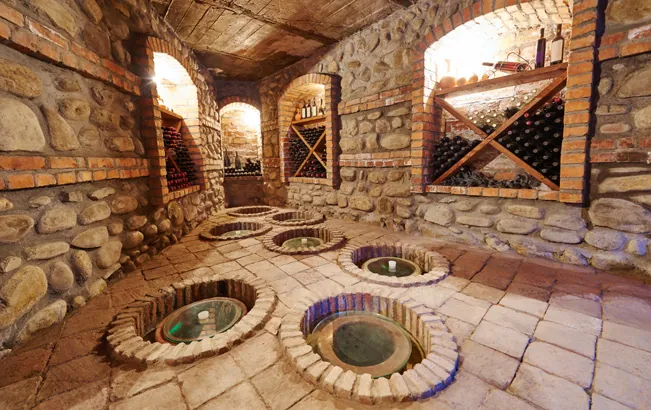
Indeed, in Georgia, wine has traditionally been stored in clay vessels known as Qvevri. A Qvevri is a unique vessel crafted from clay and buried underground. Grapes are pressed inside the Qvevri, where they ferment naturally. Once the fermentation process is complete, the Qvevri is hermetically sealed with clay, initiating a sacred period of anticipation as the winemaker awaits the final product – the exquisite creation of wine.
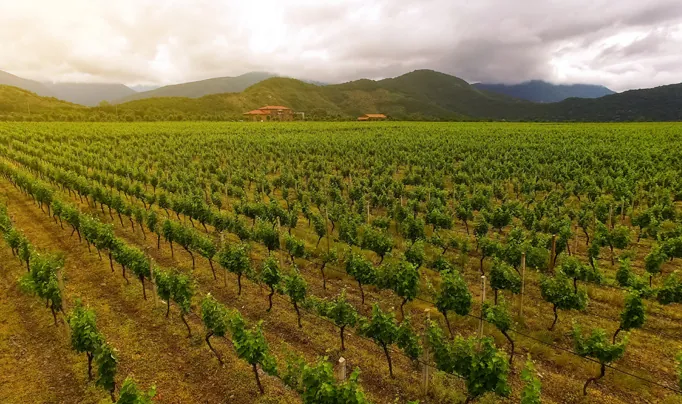
Georgia holds the distinction of being the birthplace of grapevine cultivation and the origin of many wine grape varieties that have since spread across the globe. Researchers suggest that this legacy dates back up to 1 500 years. Today, in the cradle of winemaking, over 500 varieties of indigenous grapevines continue to thrive, showcasing the rich diversity and enduring heritage of Georgian viticulture. The most popular and widely cultivated grape varieties in Georgian winemaking include Rkatsiteli, Saperavi, Kakhuri Mtsvane, Khikhvi, Kisi, Chinuri, Tsolikauri, Tsitska, Krakhuna, Aleksandrouli, Ojaleshi, Chkhaveri, Aladasturi, Kindzmarauli, Mukuzani, Tvishi, Manavi, Tsinandali, Khvanchkara, and numerous others. Each variety contributes unique flavors, aromas, and characteristics to the diverse tapestry of Georgian wines, showcas- ing the country’s rich viticultural heritage. Indeed, the diverse array of grape varieties available to Georgian winemakers offers a unique opportunity to produce wines with distinct qualities that reflect their terroir and heritage.
The diversity of Georgian wines mirrors the diversity of the country itself. Just as Georgia boasts varied landscapes, from the lush valleys of Kakheti to the rugged mountains of Svaneti, its wines exhibit a wide range of flavors, aromas, and characteristics.
In the modern world, wine has become an integral part of daily life for many, serving as a means to unwind, relax, and enhance social experiences. However, in Georgia, wine holds a sacred significance deeply rooted in cultural and religious traditions. It is not merely a beverage but an essential component of various sacred rituals and ceremonies.
For instance, in Georgia, each holiday carries its own set of customs and traditions, which Georgian men adhere to with utmost sincerity. Nowhere else do
Georgians display such seriousness and dedication as they do at the dining table. Here, the rituals surrounding food and wine are upheld with great zeal.
Wine serves as a powerful symbol of Georgian identity, deeply ingrained in the fabric of the culture. Its significance has even been studied and scientifically validated as a marker of Georgianness. From the meticulous preparation of traditional dishes to the elaborate toasts and rituals performed during feasts, wine plays a central role in fostering a sense of community and preserving cultural heritage in Georgia.
The structure of the Georgian table is elegantly simple, comprising four essential elements: wine, bread (representing food in general), toasts, and songs. It is the interplay and harmonious combination of these elements that define the essence of a Georgian table.
The Georgian table is a nuanced institution, with various types tailored to different occasions and settings. There’s the table of happiness, where celebrations abound, and the table of mourning, where sorrow is shared. Official gatherings feature grandiose tables, while intimate family dinners offer warmth and familiarity. Spontaneous gatherings bring friends together around a simple table. Regardless of the setting, each table is accompanied by its own wine, reflecting the diverse expressions of Georgian hospitality and cultural identity.